

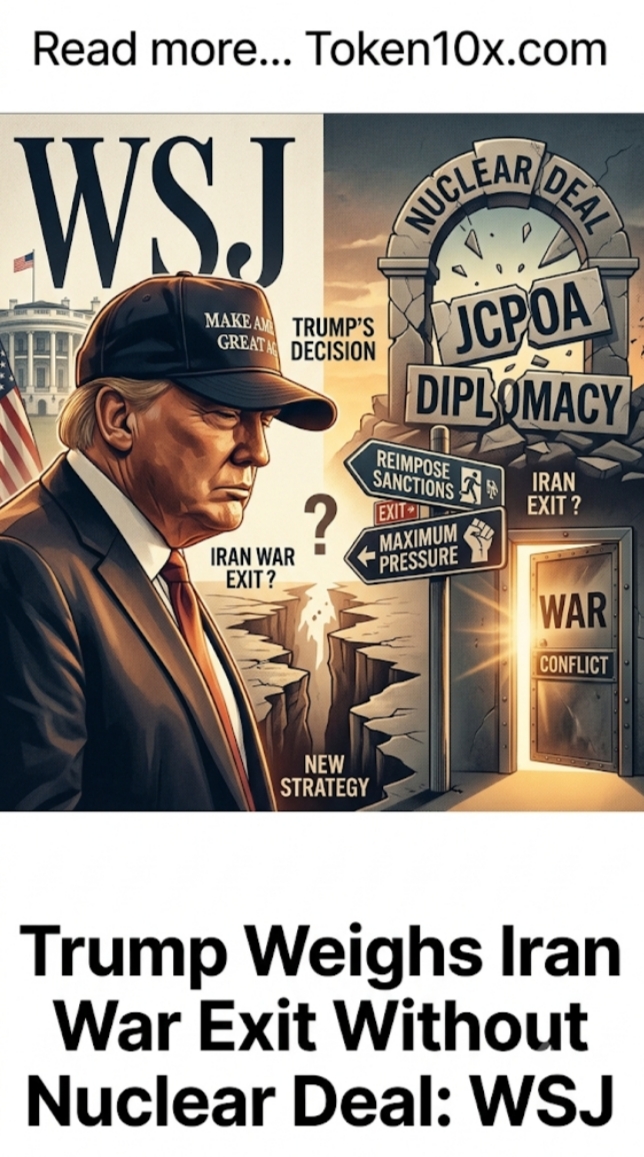
According to the Wall Street Journal, President Trump is weighing options for an exit from the conflict with Iran that may not include a comprehensive nuclear agreement. The deliberations reflect shifting assessments of diplomatic prospects and military objectives.
This reported consideration highlights the complex trade-offs between ongoing operations, negotiation leverage, and strategic priorities.
The Drivers of This Deliberation
Senior officials have discussed the challenges of securing a lasting nuclear arrangement with Iran amid continued tensions. Reports indicate the administration is evaluating pathways that could wind down major combat activities even if a full nuclear deal remains elusive, while maintaining pressure through other means.
For perspective, the conflict has involved significant military engagement and parallel diplomatic efforts, creating pressure to define an achievable end state that balances security goals with the costs of prolonged involvement.
It is important to note the fundamental difference: a comprehensive nuclear agreement would aim to constrain Iran’s nuclear program through verified commitments, while an exit without such a deal would rely more heavily on residual deterrence, sanctions, or limited arrangements.
Impact and Broader Context
Any decision to pursue an exit without a nuclear deal could reshape regional dynamics, influence oil markets, and affect alliances. It may also set the terms for future engagement or containment strategies toward Iran.
This development sparks important discussions about the objectives of the conflict, the feasibility of nuclear diplomacy, and the long-term management of regional security challenges. Supporters of flexible exit options emphasize the need to avoid indefinite entanglement. Critics caution that leaving without stronger nuclear constraints could leave key risks unaddressed.
Analysts observe that high-stakes geopolitical decisions of this nature often involve balancing immediate operational realities against longer-term strategic outcomes. The final approach will influence perceptions of US resolve and diplomatic effectiveness.
As internal discussions continue and further reporting emerges, the direction chosen will shape the next phase of US-Iran relations. Diplomatic, military, and economic tools will all play roles in whatever path is selected.
This analysis is based on published reports from the Wall Street Journal and related coverage for accuracy and reliability. Policy decisions remain subject to ongoing deliberations and developments.