

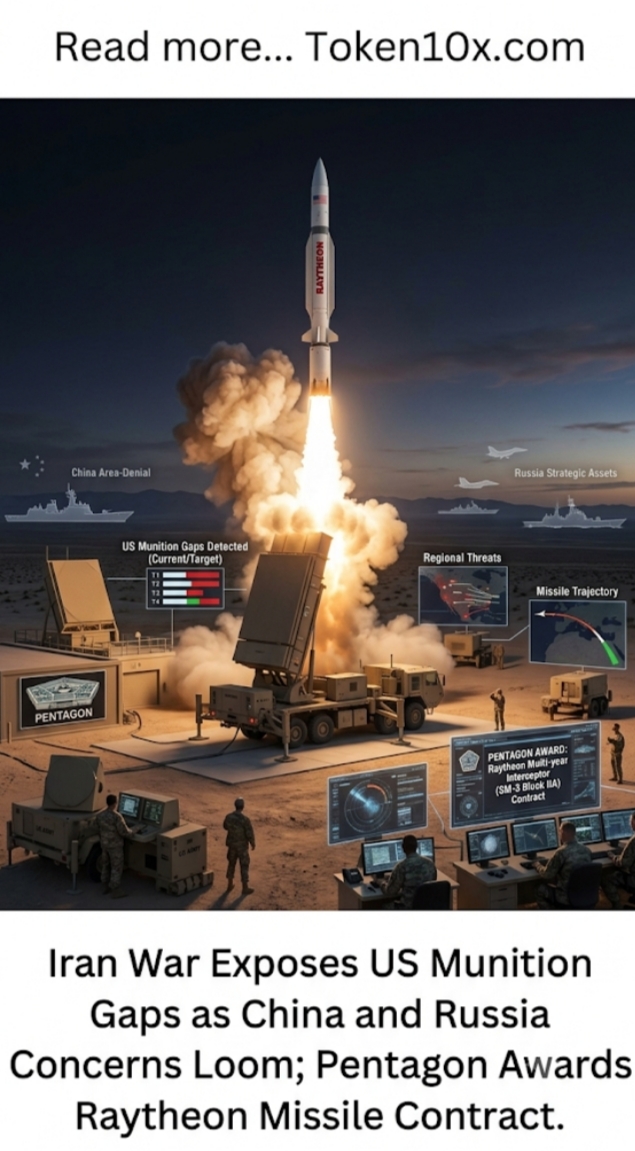
The ongoing conflict involving Iran has exposed significant gaps in US munition stockpiles, raising concerns about readiness for potential contingencies involving China and Russia. In response, the Pentagon has awarded contracts to Raytheon and other suppliers to accelerate missile production and replenish inventories.
This situation highlights the strain of sustained high-intensity operations on long-range precision munitions and air-defense interceptors.
The Drivers of This Development
Reports indicate substantial expenditure of key munitions, including long-range precision missiles and interceptors, during months of operations. Officials and analysts have noted reduced stock levels for systems such as Tomahawks and Patriot-related interceptors, prompting urgent efforts to expand industrial capacity. The Pentagon has entered multi-year framework agreements with Raytheon (RTX) and partners to increase output of critical missiles.
For perspective, the depletion has fueled debates about the time required to rebuild inventories—potentially several years even with accelerated funding—and the implications for deterrence in other theaters.
It is important to note the fundamental difference: operational use of existing stockpiles addresses immediate conflict needs, while production contracts focus on long-term industrial capacity and future readiness.
Impact and Broader Context
The munitions shortfalls have drawn attention from policymakers and think tanks assessing US preparedness for simultaneous or sequential challenges. Contracts with Raytheon aim to ramp up manufacturing rates for key systems as part of a broader push to restore and expand inventories.
This development sparks important discussions about defense industrial base resilience, the costs of prolonged engagements, and strategic prioritization among global competitors. Supporters of rapid replenishment emphasize the necessity of maintaining credible deterrence. Critics highlight the challenges of scaling production quickly and the budgetary trade-offs involved.
Analysts observe that sustained demand is driving record backlogs for major defense contractors and longer-term framework deals designed to give industry clearer production signals. The outcome of these efforts will influence perceptions of US military posture.
As production ramps and further assessments emerge, the balance between current operational demands and future readiness will remain a central focus. Industrial capacity expansion and alliance coordination will shape longer-term implications.
This analysis is based on public reports and official statements for accuracy and reliability. Details remain subject to ongoing developments and further disclosures.