

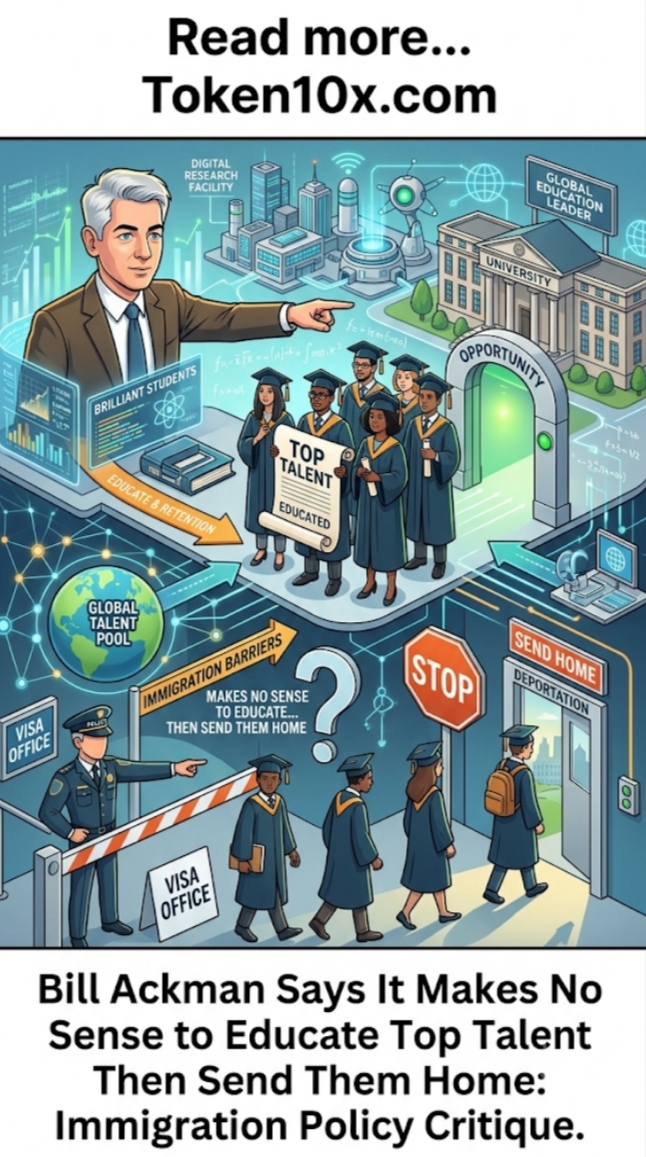
Bill Ackman has sharply criticized current US immigration policies, arguing that it makes no sense to educate top international talent at elite American universities only to send them home afterward. The prominent investor highlighted the loss of human capital and innovation potential.
This stance draws attention to the tension between education, workforce needs, and immigration rules, especially as global competition for skilled professionals intensifies.
The Drivers of This Policy Critique
Ackman points to the high proportion of foreign students in STEM fields at top US institutions who face visa restrictions and return to their home countries. He advocates for streamlined pathways to retain graduates, emphasizing economic benefits from keeping innovators and entrepreneurs who contribute to companies and job creation.
For perspective, international students contribute billions annually to the US economy through tuition and spending, while many pursue advanced degrees in critical sectors. Ackman’s comments reflect broader debates on talent retention amid tightening immigration scrutiny.
It is important to note the fundamental difference: education policies focus on knowledge transfer and cultural exchange, while immigration rules prioritize national security, labor market protection, and domestic priorities.
Impact and Broader Context
Bill Ackman, a successful hedge fund manager and activist investor, frequently engages on economic and societal issues. His remarks underscore concerns that restrictive policies could diminish America’s technological edge against global rivals.
This perspective sparks important discussions about talent attraction, economic competitiveness, and immigration reform. Supporters of retention policies emphasize growth, innovation, and filling skill shortages. Critics stress the need to prioritize American workers and manage cultural integration.
Analysts observe that such views reflect winner-take-most dynamics in the global knowledge economy where top talent drives disproportionate value. Policymakers face pressure to balance openness with domestic concerns.
As debates continue in Washington and universities assess enrollment trends, Ackman’s input adds to calls for strategic talent policies. Future legislative outcomes will influence America’s ability to attract and retain the world’s brightest minds.
This analysis is based on public statements, economic data, and policy discussions for accuracy and reliability. Positions remain subject to evolving political and economic developments.