

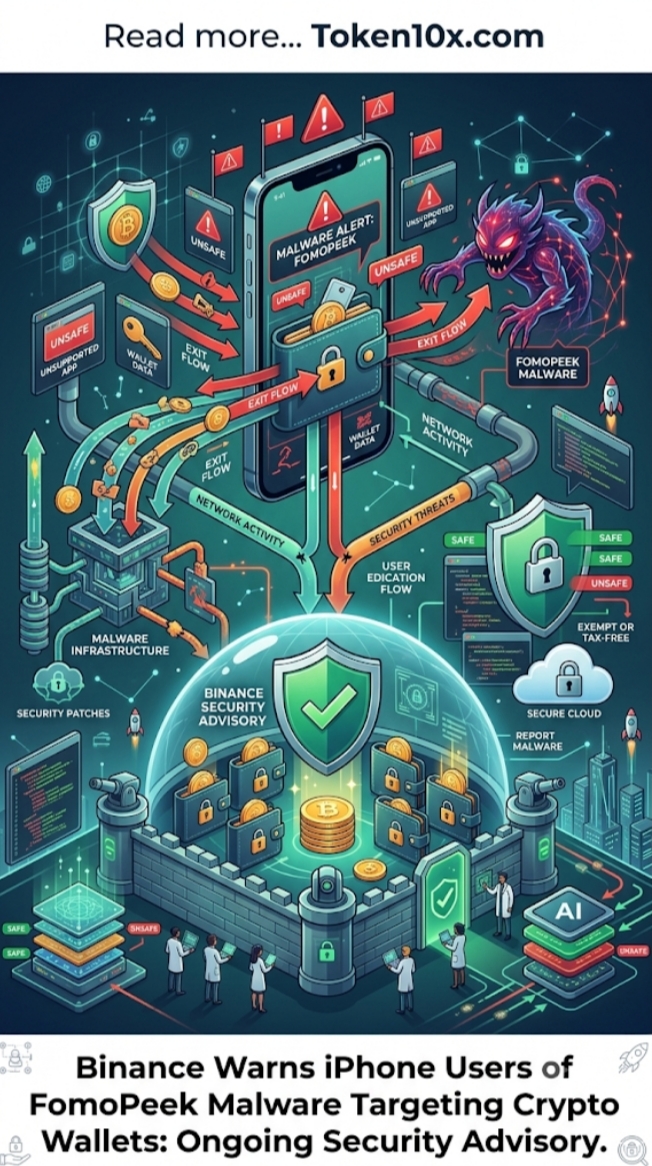
Binance continues to issue security alerts to protect users, warning iPhone and iPad owners to check whether they have installed the FomoPeek application after researchers linked certain versions to malicious code. As of the advisory published around September 19–21, 2026, Binance Wallet stated that versions 1.1 and 1.2 of FomoPeek were found to contain code capable of exposing private keys, seed phrases, login credentials, and other sensitive data stored on affected devices.
The warning still follows disclosures by the community and findings from blockchain security firms including SlowMist. Users running iOS 26.x or earlier versions who previously installed the app are advised to take immediate protective steps. This comparison underscores the persistent risks facing self-custody crypto holders from third-party applications.
Context from the Official Advisory
The key public guidance centers on Binance’s recommendation that affected users delete the FomoPeek app, avoid reinstalling it, and update their operating system to the latest available version. Self-custody wallet users are specifically advised to create new wallets on a clean device that has never had FomoPeek installed and to transfer remaining assets to the new addresses.
These steps form part of standard incident-response advice issued when potentially compromised applications are identified. Security firms have associated the flagged versions with the ability to access sensitive information across the device.
It is essential to distinguish: the public statements focus on the existence of the risk, the affected app versions, and the recommended user actions, whereas any description of technical methods or exploitation techniques is not included here.
Broader Impact and Response
These alerts contribute to ongoing efforts by major platforms and security researchers to notify users of threats targeting cryptocurrency wallets on mobile devices. The advisory fuels attention on the importance of verifying third-party apps, maintaining up-to-date operating systems, and practicing careful key management for self-custody holdings.
Exchanges and security firms continue to monitor and publicize such incidents to limit potential losses. Users who followed the guidance to migrate assets to fresh wallets on clean devices grow the record of successful risk mitigation.
As further updates from Binance, SlowMist, or other researchers emerge, this warning offers insight into current mobile security challenges in the crypto space. Prompt user response to official advisories remains a primary defense.
This high-level summary draws exclusively from Binance Wallet’s public security advisory and related reports by security firms for precision. No technical methods or operational details of the malware are described.