

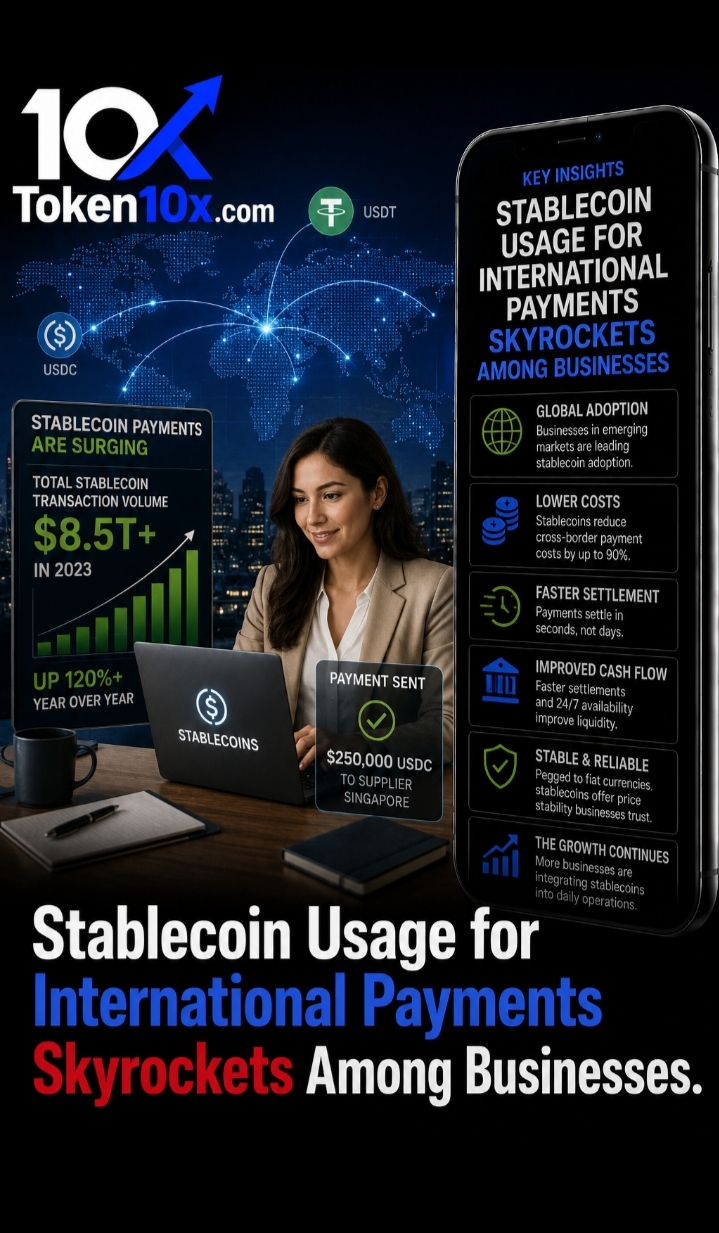
In a major shift in global finance, stablecoin usage for international payments has skyrocketed among businesses. The surge in late May 2026 reflects growing corporate adoption of USDT, USDC, and other dollar-pegged stablecoins as efficient alternatives to traditional cross-border payment systems.
Companies across e-commerce, remittances, supply chain, and trading sectors are increasingly turning to stablecoins to settle invoices, move funds between subsidiaries, and pay international suppliers. Transaction volumes have reached record highs, driven by near-instant settlement, significantly lower fees compared to SWIFT, and 24/7 availability regardless of banking hours or holidays.
Several factors appear to have fueled this rapid growth. Persistent challenges with legacy banking systems — including high costs, slow processing times, and regulatory friction — have pushed businesses toward blockchain-based solutions. Improved regulatory clarity in key jurisdictions, better integration with enterprise treasury systems, and the reliability of major stablecoins backed by reserves have also boosted corporate confidence. Additionally, volatile local currencies in emerging markets have encouraged companies to use stablecoins as a neutral bridge for international trade.
The news has sparked lively debates across finance, crypto, and business communities about the skyrocketing stablecoin usage for international payments. Some view it as a concerning signal of traditional banking losing relevance and potential risks around regulation and reserve transparency. Others regard it as a transformative and positive development that enhances efficiency and financial inclusion for global commerce.
This surge does not indicate the end of traditional financial infrastructure. Banks and payment networks continue to operate at massive scale while many are now exploring their own stablecoin and blockchain solutions. Still, it reignites conversations around the future of cross-border payments, the role of stablecoins in global trade, regulatory oversight, and how businesses can best manage digital asset risks.
For more stablecoin and fintech analysis, visit Token10x Blog https://token10x.blog and explore Token10x https://token10x.com.
As corporate adoption accelerates, this development provides nuance: while stablecoin usage for international payments is skyrocketing, the trend represents both efficiency gains and new considerations around compliance and volatility. Businesses and investors should perform their own research and evaluate solutions carefully, recognizing that rapid technological shifts can offer competitive advantages but require robust risk management.
The coming months will reveal how traditional financial institutions respond and whether further regulatory frameworks shape the continued growth of stablecoins in global business payments.