

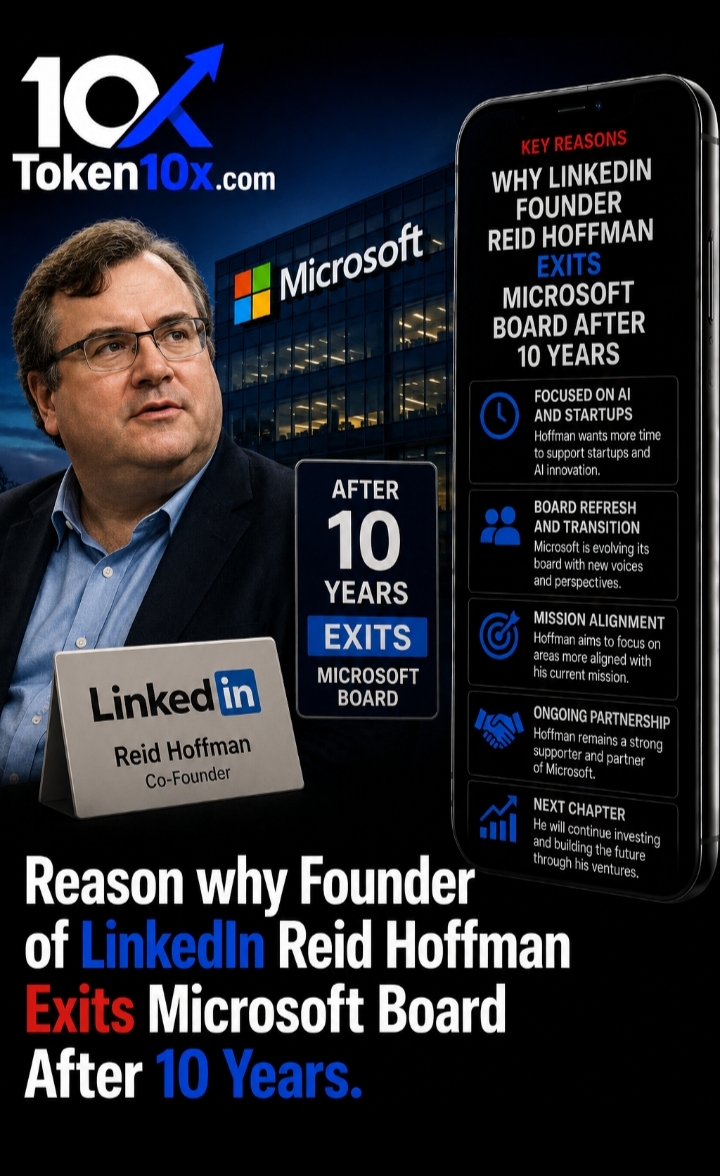
In a notable development in the tech industry, LinkedIn co-founder Reid Hoffman has decided to exit Microsoft’s board after serving for 10 years. The announcement in late May 2026 has prompted questions about the reasons behind his departure and its implications for the relationship between Microsoft and the professional networking giant it acquired in 2016.
Reid Hoffman, who played a key role in Microsoft’s acquisition of LinkedIn, cited a desire to focus more on his entrepreneurial ventures, philanthropy, and other board commitments as the primary reasons for stepping down. After a decade of service, Hoffman stated that the timing feels right to transition and allow fresh perspectives on Microsoft’s board as the company navigates rapid advancements in artificial intelligence and cloud computing.
Several factors appear to have influenced Hoffman’s decision. His growing involvement in AI initiatives, venture capital investments through Greylock Partners, and various policy and philanthropic efforts have increased his commitments outside Microsoft. The company has also evolved significantly since the LinkedIn acquisition, with a sharpened focus on AI under Satya Nadella’s leadership, potentially reducing the need for Hoffman’s specific expertise on the board.
The news has sparked lively debates across tech, business, and investing communities about Reid Hoffman’s exit from the Microsoft board. Some view it as a natural transition after a long and successful tenure. Others regard it as potentially signaling subtle shifts in strategic priorities or governance at Microsoft.
Hoffman’s departure does not indicate any rift with Microsoft. He has expressed continued admiration for the company and plans to maintain a strong relationship as a shareholder and advisor in spirit. Still, it reignites conversations around board refreshment, the evolving demands on tech directors in the AI era, and the balance between founder influence and professional governance.
For more Microsoft and tech leadership analysis, visit Token10x Blog https://token10x.blog and explore Token10x https://token10x.com.
As Microsoft continues its transformation, this development provides nuance: while Reid Hoffman exits the board after 10 years for personal and professional focus reasons, his contributions to the LinkedIn integration and Microsoft’s growth remain significant. Investors and industry watchers should perform their own research and monitor board changes, recognizing that such transitions are common in long-standing public company governance.
The coming months will show how Microsoft fills the board vacancy and whether Hoffman’s exit leads to any noticeable strategic adjustments.