

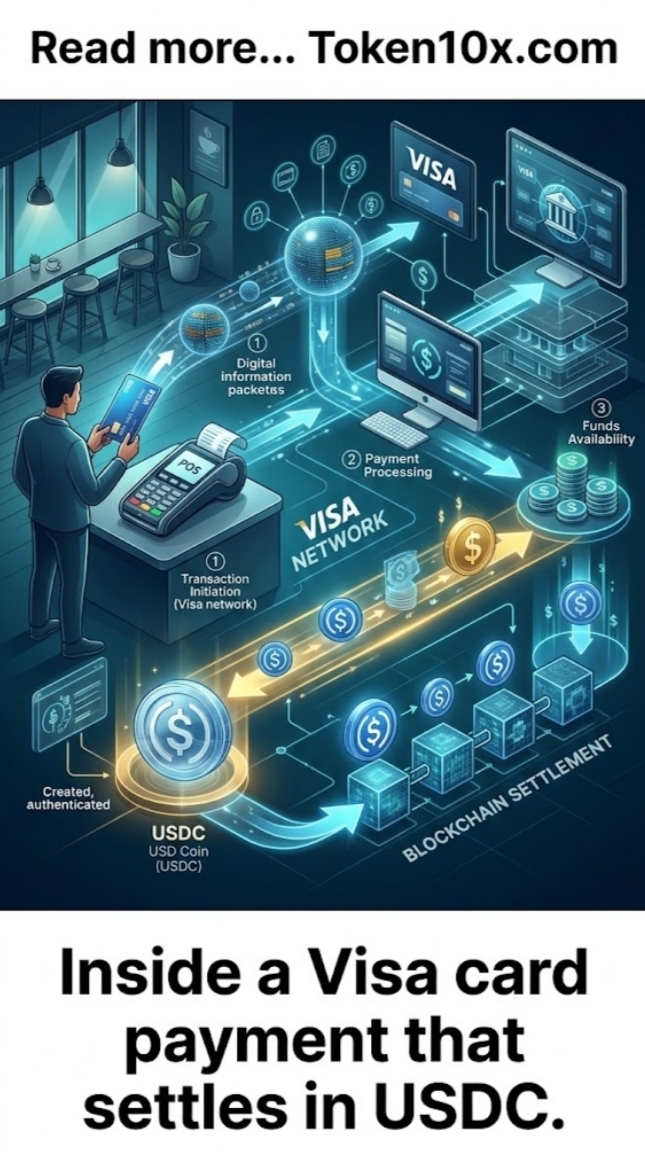
A shopper can complete a Visa card purchase and a merchant can receive ordinary fiat currency even when a participating bank settles its network obligation in USDC. Visa’s U.S. stablecoin settlement capability, launched on December 16, 2025, allows select issuer and acquirer partners to move funds in Circle’s dollar-backed USDC on supported blockchains such as Solana instead of traditional bank wires.
Authorization, institutional settlement, and merchant payout remain separate steps. The cardholder experience and the merchant’s receipt of local currency are unchanged. Early U.S. participants include Cross River Bank and Lead Bank. Settlement can occur seven days a week, including weekends and holidays, potentially within hours rather than the conventional multi-day banking window. Visa’s annualized stablecoin settlement volume later reached approximately $25 billion, reflecting broader adoption across multiple stablecoins and blockchains.
The Drivers of the Current Situation
The core process is the separation of the consumer-facing card transaction from the back-end settlement between financial institutions and the network. Confirmed elements include the ability of issuers or acquirers to settle VisaNet obligations in USDC on-chain, the unchanged authorization and merchant payout flows, the initial U.S. rollout with named banking partners on Solana, the seven-day availability advantage over traditional rails, and the subsequent growth of overall stablecoin settlement activity. These steps modernize liquidity and treasury operations for participating institutions without requiring the cardholder to hold or spend USDC.
Further expansion of participating banks, additional chains, or measured reductions in settlement friction will indicate broader uptake.
Impact and Broader Context
USDC settlement demonstrates how blockchain rails can sit behind conventional card payments to improve institutional efficiency while preserving the familiar consumer and merchant experience. It raises questions about the speed and cost advantages of on-chain settlement versus fiat wires, the scalability of multi-stablecoin and multi-chain support, the competitive dynamics among networks adopting similar capabilities, the implications for weekend and holiday liquidity management, and the distinction between settlement volume and actual card spending volume. Coverage emphasizes that moving the institutional leg onto a blockchain does not alter the timing or currency of the merchant payout or the shopper’s statement.
Subsequent partner onboarding, volume disclosures, or refinements to the settlement framework will shape the practical reach of the model.
This analysis draws from Visa’s U.S. stablecoin settlement announcements, technical explanations of the multi-step payment flow, and contemporaneous reporting. Exact per-transaction timings, full lists of participating institutions, and the share of volume settled in USDC versus other assets remain subject to ongoing operational details and further company updates.