

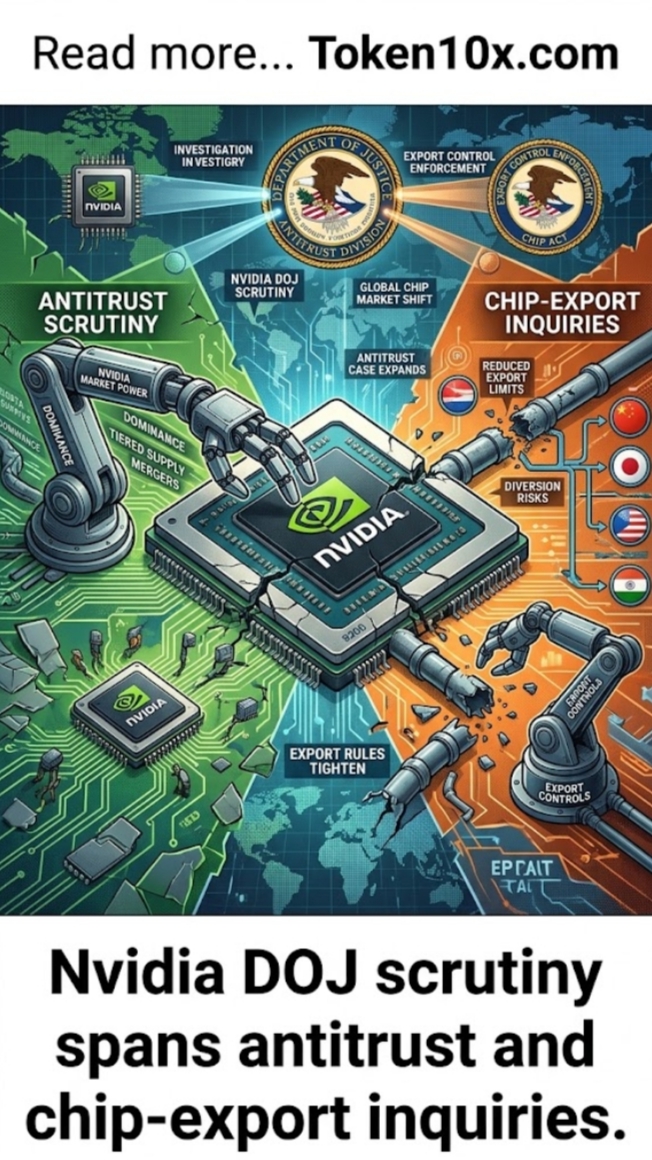
The U.S. Department of Justice is conducting multiple inquiries that touch Nvidia, including a dedicated antitrust probe into the chipmaker’s business practices and separate investigations involving customers Megaspeed and Supermicro that center on potential chip diversion and related compliance issues. The developments, reported around Jensen Huang’s recent resignation, build on earlier multi-year scrutiny and remain active with no public indication of imminent criminal charges against the company or its former CEO.
The Drivers of the Current Situation
According to reporting citing administration officials, one DOJ inquiry focuses specifically on Nvidia’s antitrust conduct, examining acquisitions (including the proposed $12.93 billion Hugging Face deal), investments, sales practices, and whether the company has used its dominant position in AI chips to pressure customers or favor its own ecosystem. Parallel probes involve Singapore-based Megaspeed—long scrutinized for possible diversion of restricted Nvidia AI chips to China—and Supermicro, which has disclosed a grand jury subpoena related to an earlier export-control indictment of associated individuals and ongoing Commerce Department information requests. Investigators have examined the role of Alice Huang, an alleged Chinese intelligence operative with whom Jensen Huang admitted an affair. Earlier Commerce Department work on Megaspeed was transferred to DOJ after Nvidia outreach, and congressional figures such as Sen. Michael Bennet have pressed for updates and potential Entity List action by late November.
Impact and Broader Context
The overlapping inquiries heighten regulatory, compliance, and reputational pressure on Nvidia and its partners at a time of intense U.S. focus on AI-chip export controls and competition in the AI supply chain. Potential outcomes range from no action to remedies affecting deals, sales practices, or customer relationships, while related congressional interest could influence future export rules. For the broader industry, the situation underscores risks around intermediary customers in Southeast Asia, the enforceability of diversion controls, and the intersection of personal, commercial, and national-security issues. Nvidia has maintained compliance with applicable laws; Megaspeed has denied diversion allegations. Market and policy reactions continue to evolve alongside the probes.
Developments remain fluid. Further official statements, responses to congressional requests, outcomes of the antitrust review, and any updates on the Megaspeed or Supermicro matters will clarify the scope and trajectory. The analysis draws from public reporting (including Semafor, Reuters, and company filings) and administration-sourced accounts; the precise status of each inquiry and any eventual enforcement actions are still unfolding.