

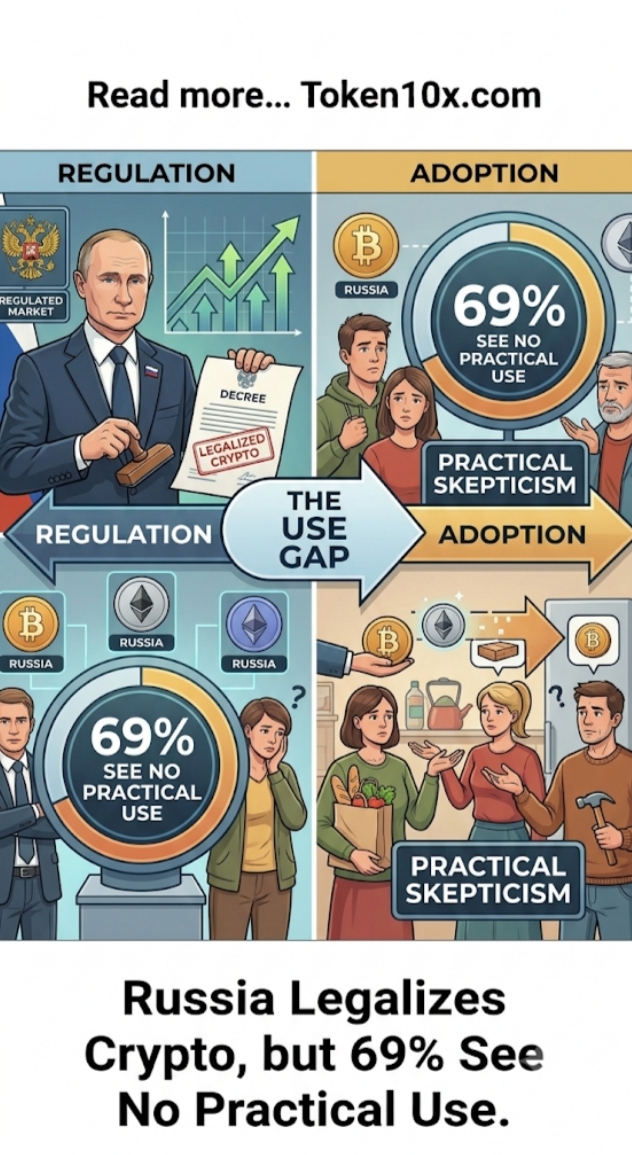
Russia has legalized cryptocurrency in certain contexts, yet a survey finds that 69% of people see no practical use for it. The contrast highlights a gap between official policy and public perception.
This situation reflects Russia’s selective approach to digital assets amid economic and geopolitical considerations.
The Drivers of This Situation
Authorities have opened limited pathways for crypto in areas such as international settlements and specific operations, while keeping broader retail restrictions in place. Survey results show most respondents do not view the technology as relevant to their daily financial needs.
For perspective, the 69% figure underscores limited awareness or perceived utility among the general population despite formal legalization steps.
It is important to note the fundamental difference: legalization establishes regulatory frameworks and strategic permissions, while public views are shaped by accessibility, education, and tangible everyday benefits.
Impact and Broader Context
The policy provides flexibility for targeted institutional and cross-border uses while domestic retail adoption remains constrained. High levels of skepticism may slow wider grassroots engagement even as the legal environment evolves.
This disconnect sparks important discussions about crypto utility, public education, and the limits of top-down regulatory change. Supporters of the legalization emphasize potential advantages in trade and financial resilience. Critics note the lack of clear practical value for average citizens.
Analysts observe that winner-take-most dynamics in crypto adoption favor environments that combine clear rules with real accessibility and use cases. Russia’s current path appears to prioritize strategic over retail applications.
As further rules are implemented and awareness campaigns or practical tools develop, the gap between legalization and perceived usefulness will influence actual adoption rates. Education and demonstrable benefits will be essential to shifting public attitudes.
This analysis is based on policy reports and survey findings for accuracy and reliability. Usage trends remain subject to regulatory details and economic conditions.