

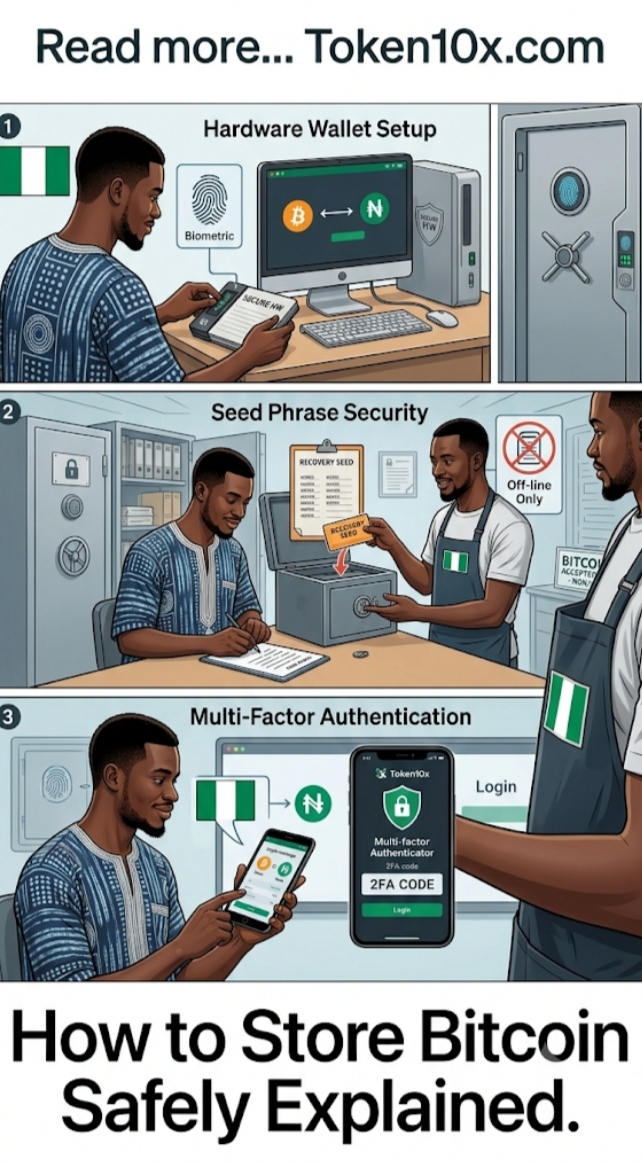
Storing Bitcoin safely begins with understanding that ownership equals control of private keys. A wallet does not hold the coins themselves; it holds the cryptographic keys that authorize spending on the Bitcoin network. Anyone who obtains those keys can move the funds. Choosing the right type of wallet and following basic security habits determines whether those keys stay protected.
Wallets fall into two broad custody models. Custodial wallets leave the private keys with a third party, typically an exchange or hosted service. The user logs in with a username and password and sees a balance, but cannot spend without the platform’s cooperation. This arrangement is convenient for frequent trading and small amounts. It also exposes the holder to exchange hacks, insolvency, account freezes or regulatory actions. Non-custodial wallets place the private keys solely under the user’s control. The trade-off is full responsibility: lose the recovery information and the Bitcoin is gone with no customer-service recovery option.
Within non-custodial options the practical distinction is hot versus cold. Hot wallets are software applications that run on internet-connected phones or computers. They generate and store keys on the device itself. Popular examples include mobile apps designed for everyday spending. Transactions can be signed quickly, which suits daily use or small balances. The downside is continuous exposure to malware, phishing sites and device compromise. Cold wallets keep private keys offline. Hardware devices such as those from Trezor, Ledger, Coldcard or BitBox generate keys on a secure chip that never touches the internet. When a transaction is needed the device connects briefly, signs the data internally, and returns only the signed result. Air-gapped models go further by exchanging information through QR codes or microSD cards so the signing device never plugs into a networked computer.
Most security researchers recommend a tiered approach. Keep a modest active balance in a hot software wallet for day-to-day needs. Move the bulk of holdings—anything the owner cannot afford to lose—to a hardware cold wallet. For larger sums many users adopt multisignature setups, typically 2-of-3. Three separate hardware devices each hold one key; any two can authorize a spend. Losing one device no longer means total loss, and a single compromised device cannot empty the account.
The recovery seed phrase is the single most critical piece of information. When a non-custodial wallet is created it generates a sequence of 12 or 24 words. Those words can recreate every private key in the wallet on any compatible device. Write the phrase on paper or, better, stamp it into metal that survives fire and water. Store copies in at least two physically separate, secure locations. Never photograph the words, never type them into a phone notes app, never email them, and never enter them on any website claiming to offer support. Adding an optional passphrase—sometimes called the 25th word—creates a hidden wallet that remains inaccessible even if the seed is discovered.
Practical habits reduce risk further. Buy hardware wallets only from the official manufacturer to avoid pre-tampered devices. Verify firmware updates through official channels. Enable a strong PIN on the device. Test recovery with a small amount before committing large balances. When receiving Bitcoin, double-check the address on the device screen rather than trusting a computer display that malware could alter. For everyday software wallets keep the device’s operating system and antivirus current, avoid public Wi-Fi for transactions, and use unique strong passwords with two-factor authentication that does not rely on SMS.
No method is risk-free. Hardware can be lost or stolen. Seed phrases can be misplaced. Firmware bugs, though rare, have occurred. Multisig adds complexity that some users find error-prone. Custodial services remove those self-custody risks but introduce counterparty risk. The right balance depends on the size of the holding, the owner’s technical comfort and how often access is needed.
Bitcoin’s design rewards long-term holders who keep keys offline and under personal control. As exchange failures and large-scale hacks continue to surface, the case for moving significant balances into properly managed cold storage grows stronger. Beginners can start small: withdraw a test amount from an exchange to a reputable hardware wallet, practice sending and receiving, and expand only after the process feels reliable. Secure storage is not a one-time purchase; it is an ongoing practice of protecting the keys that prove ownership on the network.
[…] The case highlights how digital tools can leave forensic traces that aid investigators. While artificial intelligence platforms are designed with safeguards, criminal use of publicly available information continues to appear in court records. Responsible handling of technology and awareness of digital footprints remain important considerations for users across many online activities, including those related to security. […]
[…] trade policy impacts should remain attentive to broader economic signals and maintain strong security practices for digital assets amid heightened […]
[…] How to Store Bitcoin Safely Explained […]
[…] How to Store Bitcoin Safely Explained […]
[…] these linkages should stay informed on evolving diplomatic signals while maintaining robust security practices for any digital […]
[…] How to Store Bitcoin Safely Explained […]