

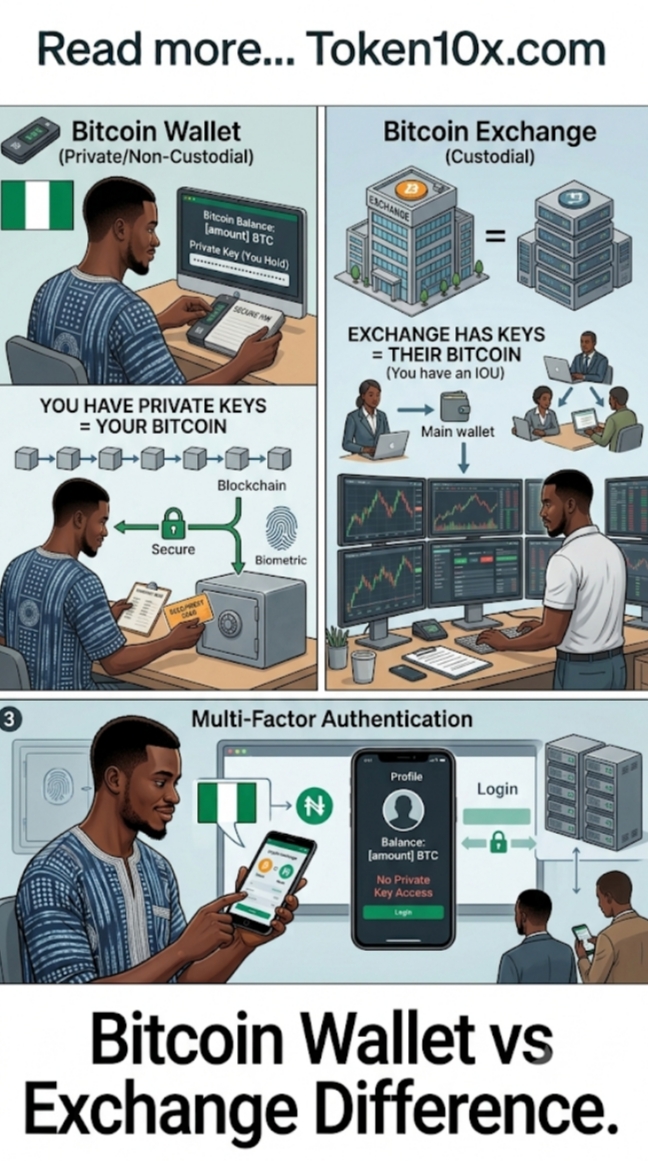
A Bitcoin exchange and a Bitcoin wallet serve different purposes even though both display a balance of coins. An exchange is a marketplace where users buy, sell and trade Bitcoin using naira, dollars or other cryptocurrencies. A wallet is the tool that holds the private keys needed to control those coins on the blockchain. The distinction matters because it determines who actually owns the Bitcoin and who can move it.
On an exchange the platform generates and keeps the private keys. When a user deposits funds or buys Bitcoin, the coins sit in addresses controlled by the exchange. The account balance is an internal ledger entry—an IOU. The user can request a withdrawal, but the exchange must approve and process it. This custodial model delivers convenience: fast trading, simple interfaces, customer support and the ability to convert between fiat and crypto without managing keys. It also introduces counterparty risk. Exchange hacks, insolvency, regulatory freezes or operational failures can restrict access or result in loss of funds. History has shown repeated examples of platforms that failed to return customer assets.
A wallet, by contrast, places the private keys under the user’s direct control. Non-custodial software wallets run on phones or computers; hardware wallets keep keys offline on dedicated devices. The wallet does not store the Bitcoin itself—the coins remain on the blockchain. It stores the cryptographic secrets that authorize spending. Anyone who obtains the recovery seed phrase or private keys can move the funds from any location. No company can freeze the coins, and no customer-service department can recover them if the seed is lost. This model delivers true ownership at the cost of full personal responsibility.
The practical workflow for most people combines both. Beginners usually open an account on a regulated exchange, complete identity verification, deposit local currency and buy Bitcoin. For amounts intended for long-term holding they then withdraw the coins to a personal wallet. Leaving large balances on an exchange is equivalent to leaving cash in a bank that is not covered by deposit insurance and that can change withdrawal rules overnight. Moving the coins to a wallet removes that platform risk while introducing the need to protect the seed phrase and device.
Security profiles differ sharply. Exchange accounts rely on passwords, two-factor authentication and the platform’s internal controls. Successful phishing or SIM-swap attacks can empty an account if the attacker gains login access. Wallets face different threats: malware on a phone that hosts a software wallet, physical theft of a hardware device without a PIN, or loss of the recovery seed. Hardware wallets reduce remote attack surfaces because the private keys never leave the secure chip. Multisignature arrangements that require two or more devices further raise the bar against single points of failure.
Speed and features also diverge. Internal transfers on an exchange settle instantly because they are only ledger updates. On-chain withdrawals require network confirmation and incur fees that fluctuate with congestion. Wallets interact directly with the Bitcoin network, so every send is a real blockchain transaction. Some wallets support advanced functions such as coin control or connection to decentralized applications, while exchanges focus on order books, leverage and fiat on-ramps.
Regulatory treatment follows the custody line. Exchanges must comply with know-your-customer and anti-money-laundering rules, report large transactions and can be ordered to freeze accounts. Self-custody wallets generally fall outside those obligations at the wallet level, although on-chain activity remains visible and taxable events still apply when coins are sold or spent.
Choosing between the two depends on use case. Active traders who need rapid conversion and liquidity often keep working capital on an exchange. Long-term holders who prioritize security and independence move the majority of their Bitcoin to wallets they control. Many users maintain both: a small hot balance for spending or trading and the bulk in cold storage. The phrase “not your keys, not your coins” captures the core difference. An exchange account grants a claim on Bitcoin. A properly managed wallet grants ownership. Understanding that distinction is the first step toward deciding how much risk and responsibility any given holder is prepared to accept.
[…] Bitcoin Wallet vs Exchange Difference […]
[…] Bitcoin Wallet vs Exchange Difference […]