

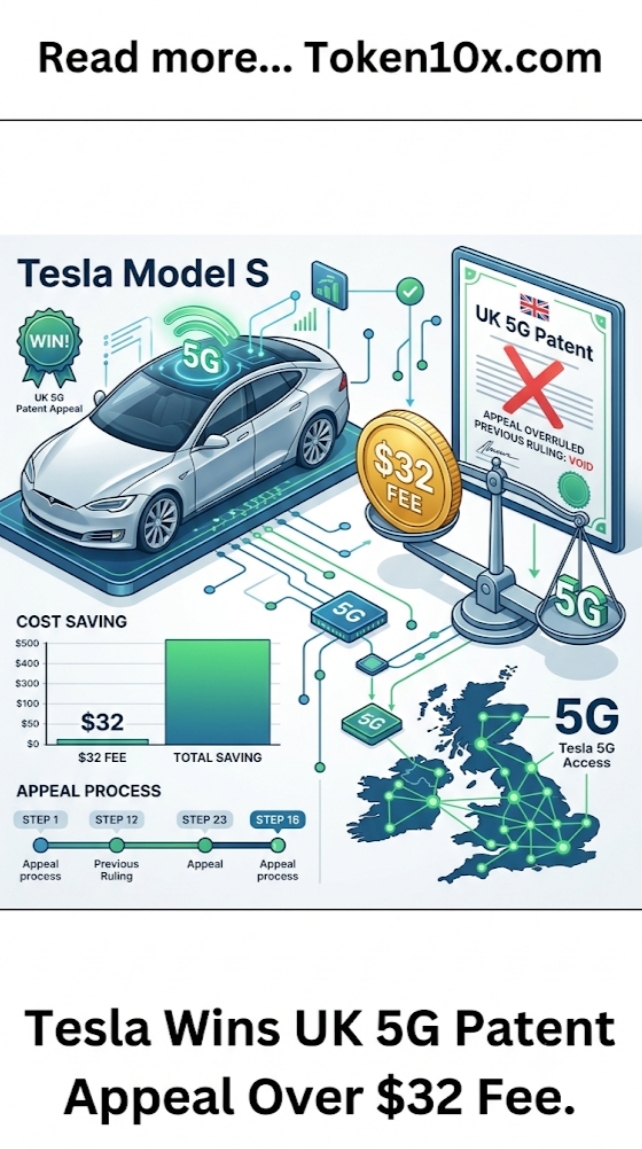
Tesla has secured a victory in a UK patent appeal involving a $32 fee related to 5G technology. The ruling removes a potential licensing burden and strengthens the company’s position in connected vehicle technologies.
This legal win provides Tesla with greater operational clarity in the British market.
The Drivers of This Legal Win
The appeal challenged the validity or application of a patent licensing demand tied to 5G connectivity features in Tesla vehicles. UK courts ruled in Tesla’s favor, determining the fee claim was not justified, delivering a favorable outcome for the electric vehicle maker’s defense.
For perspective, even small per-unit patent fees can result in substantial aggregate costs across large vehicle fleets. Avoiding the charge supports Tesla’s cost management and competitive pricing strategy.
It is important to note the fundamental difference: patent disputes center on legal interpretation and licensing rights, while 5G technology itself enables critical vehicle features including connectivity, software updates, and future autonomous capabilities.
Impact and Broader Context
Tesla has actively defended its intellectual property and freedom to operate across global markets. The UK decision reduces potential liabilities and reinforces its approach to technology integration in vehicles.
This outcome sparks important discussions about patent litigation in the automotive and tech sectors, licensing fairness, and innovation incentives. Supporters praise the ruling for preventing unnecessary cost burdens on manufacturers. Critics stress the importance of protecting original patent holders.
Analysts observe that winner-take-most dynamics in technology often extend to legal arenas where resources and scale provide advantages. Tesla’s success could influence similar disputes involving connected and autonomous vehicles.
As Tesla continues advancing its Full Self-Driving and connectivity roadmap, favorable patent rulings will aid smoother global operations. Future legal developments will shape the competitive environment for 5G-enabled mobility solutions.
This analysis is based on court decisions, industry reports, and technology trends for accuracy and reliability. Legal implications remain subject to potential further proceedings.