

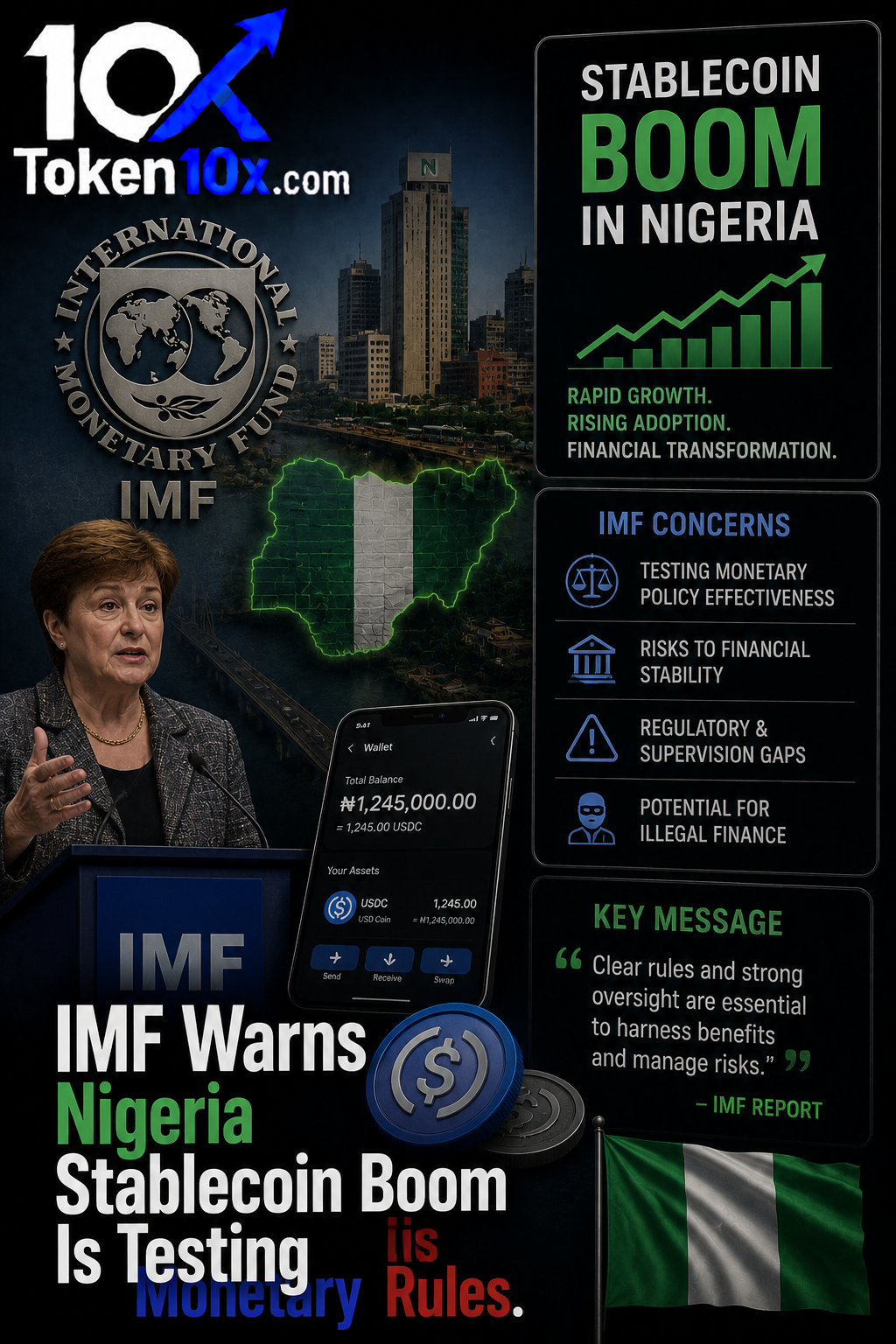
The International Monetary Fund has cautioned that Nigeria’s rapid adoption of stablecoins is increasingly challenging the country’s monetary policy framework and foreign exchange controls. In a new report released on June 16, 2026, the IMF highlighted how dollar-pegged stablecoins like USDT and USDC are being used at scale for remittances, trade, and savings, potentially undermining the Central Bank of Nigeria’s ability to manage liquidity and currency stability.
Nigeria has emerged as one of Africa’s fastest-growing crypto markets, with stablecoin transaction volumes surging in recent months amid persistent naira volatility and inflation pressures. Many businesses and individuals now prefer stablecoins to bypass capital controls, reduce remittance costs, and hedge against local currency depreciation. The IMF noted that this boom, while offering financial inclusion benefits, is complicating monetary transmission and complicating efforts to maintain official exchange rate policies.
The Fund recommended stronger regulatory oversight, improved data collection on crypto flows, and closer coordination between the central bank and financial authorities. It also urged Nigeria to accelerate reforms that address underlying economic issues driving citizens toward dollar-based digital assets. Central Bank of Nigeria officials acknowledged the challenges but emphasized that crypto innovations are being monitored closely, with existing guidelines already in place to regulate digital asset service providers.
The warning comes as several African nations grapple with similar trends. Stablecoin usage has helped millions of Nigerians conduct cross-border transactions more efficiently, yet authorities worry about potential risks including illicit finance, capital flight, and reduced effectiveness of monetary policy tools.
Analysts say the IMF’s intervention may push Nigerian regulators toward tighter rules on stablecoin on-ramps and off-ramps while balancing the need to harness blockchain technology for economic growth. As adoption continues to accelerate, the tension between innovation and monetary sovereignty in Nigeria is likely to intensify.