

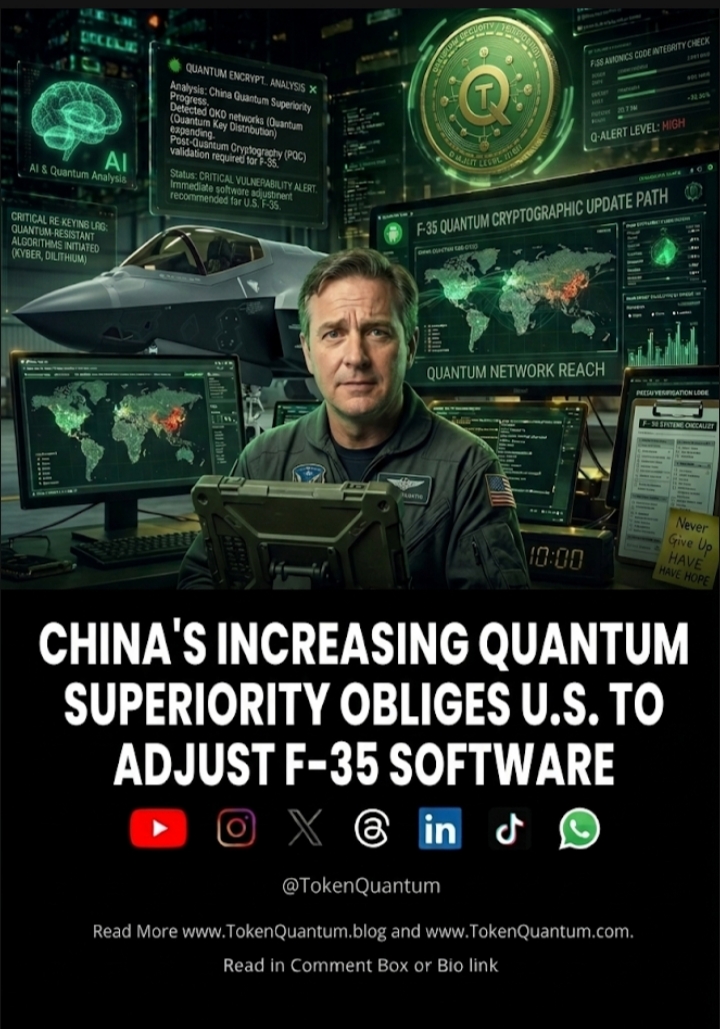
Growing concerns surrounding China’s rapid advances in quantum computing and next-generation military technology are reportedly forcing the United States defense sector to reassess software infrastructure tied to the Lockheed Martin F-35 Lightning II fighter program. The development is drawing widespread attention across defense industries, cybersecurity sectors, artificial intelligence markets, semiconductor companies, military technology analysts, and global geopolitical circles.
According to defense analysts, accelerating breakthroughs in Chinese quantum computing capabilities may create long-term cybersecurity risks for encrypted military communication systems, advanced battlefield networks, AI-powered defense infrastructure, and next-generation aerospace software. Experts say modern combat systems increasingly depend on secure software ecosystems capable of resisting sophisticated cyber threats, quantum decryption risks, and electronic warfare operations.
Industry observers note that the F-35 program relies heavily on advanced software architecture, AI-assisted targeting systems, encrypted communications, sensor fusion technologies, cloud-connected operational networks, and real-time battlefield analytics. As quantum computing technology advances globally, military strategists continue evaluating how quantum-capable systems could potentially impact cryptography, cybersecurity resilience, satellite communications, and secure defense infrastructure.
Defense and technology analysts believe the United States may accelerate investment into quantum-resistant encryption systems, AI-driven cybersecurity platforms, semiconductor research, secure cloud infrastructure, and advanced software modernization programs to maintain strategic advantages in military technology. Governments worldwide are increasingly prioritizing quantum security as competition intensifies across artificial intelligence, aerospace systems, cybersecurity infrastructure, and next-generation computing technologies.
Financial markets are also closely monitoring how rising geopolitical competition surrounding AI, semiconductors, quantum computing, defense technology, and cybersecurity infrastructure could influence technology investment flows, military contracting, cloud computing demand, and enterprise cybersecurity spending. Analysts note that defense modernization remains one of the fastest-growing sectors within global advanced technology markets.
Search interest surrounding terms such as “China quantum computing,” “F-35 software update,” “quantum cybersecurity,” “AI military technology,” “quantum encryption,” “defense AI systems,” “Lockheed Martin F-35,” and “quantum warfare” has reportedly surged across Google Search, Yahoo Search, Bing, Yandex, and Baidu as global markets monitor developments in strategic defense technologies.
Cybersecurity experts continue emphasizing that quantum-resistant encryption, secure AI infrastructure, decentralized cybersecurity systems, and advanced semiconductor technologies may become increasingly important across both military and civilian digital infrastructure in the coming years.
Explore More Market Analysis
Latest AI news, cybersecurity updates, defense technology analysis, blockchain trends, and fintech market insights:
www.Token10x.com
Full breakdown of quantum computing risks, F-35 software security, and AI defense systems:
Quantum & Defense Analysis at Token10x.blog
Several Factors Are Reinforcing This Story Right Now
Several factors are reinforcing this story right now. Rising geopolitical competition, expanding quantum computing research, accelerated AI development, increasing cybersecurity threats, semiconductor supply chain battles, and growing defense modernization spending are all driving attention toward advanced military technologies and secure software infrastructure.
Random Investment Trading Secrets for Higher Yields (Crypto 1000x Version)
The growing focus on quantum-resistant defense infrastructure demonstrates how artificial intelligence, cybersecurity systems, blockchain infrastructure, semiconductor technologies, and cloud computing continue converging across global financial and industrial markets. Investors increasingly focus on sectors positioned to benefit from long-term AI adoption, cybersecurity modernization, and digital infrastructure expansion.
Foundational digital assets like Bitcoin continue attracting institutional interest due to their decentralized structure and role as macro digital assets within evolving financial systems. Meanwhile, ecosystems such as Ethereum remain central to decentralized finance, tokenized infrastructure, AI-linked smart contracts, and blockchain-powered digital ecosystems.
Scalable ecosystems like Solana continue attracting venture capital investment, institutional participation, and developer growth due to transaction scalability, payment infrastructure expansion, and rapidly growing decentralized application ecosystems. Investors are also increasingly monitoring AI-linked blockchain systems, decentralized compute networks, quantum-resistant cryptography projects, and cybersecurity-focused digital networks as next-generation technologies continue evolving globally.
Experienced traders often analyze AI infrastructure growth, semiconductor demand, defense technology investment, institutional positioning, cybersecurity trends, and macroeconomic policy alongside technical analysis and on-chain data. Understanding how capital rotates toward emerging infrastructure technologies can help reveal projects positioned for sustainable long-term growth.
Live Top 20 Cryptocurrencies by Market Cap
Updated: Friday, May 15, 2026 — 16:08 UTC
| Rank | Crypto | Price (USD) | Market Cap |
|---|---|---|---|
| 1 | BTC | $85,040 | $1.69T |
| 2 | ETH | $2,642 | $317B |
| 3 | USDT | $1.00 | $198B |
| 4 | XRP | $1.69 | $98B |
| 5 | BNB | $908 | $142B |
| 6 | SOL | $133 | $61B |
| 7 | USDC | $1.00 | $89B |
| 8 | DOGE | $0.191 | $34.9B |
| 9 | TRX | $0.471 | $56.8B |
| 10 | ADA | $0.493 | $22.4B |
| 11 | AVAX | $20.55 | $10.9B |
| 12 | SHIB | $0.0000385 | $23.5B |
| 13 | LINK | $34.20 | $24.6B |
| 14 | BCH | $742 | $16.2B |
| 15 | DOT | $10.68 | $16.8B |
| 16 | LEO | $15.14 | $15.8B |
| 17 | NEAR | $3.38 | $8B |
| 18 | UNI | $7.62 | $9.3B |
| 19 | LTC | $132.10 | $11.5B |
| 20 | TON | $3.42 | $10.3B |
Last Updated: Friday, May 15, 2026 — 16:08 UTC
Trading Tips for 1000x Profits (Crypto High-Profit Strategy Explained)
The emergence of quantum cybersecurity concerns highlights how artificial intelligence, semiconductor infrastructure, blockchain technology, cloud computing, and advanced defense systems continue converging across global technology and financial markets. Investors increasingly focus on infrastructure ecosystems capable of supporting scalable AI security, decentralized systems, enterprise cloud expansion, and next-generation computing technologies.
Assets like Bitcoin continue benefiting from institutional demand and long-term macro positioning within the evolving global financial system. Ecosystems such as Ethereum remain deeply integrated into decentralized applications, AI-linked infrastructure, tokenization systems, and blockchain-powered financial technologies.
Meanwhile, scalable ecosystems like Solana continue attracting speculative and institutional interest due to developer ecosystem growth, payment infrastructure expansion, transaction scalability, and venture capital activity. AI-linked blockchain systems, decentralized compute networks, enterprise cybersecurity infrastructure, and quantum-resistant digital projects may also gain increasing relevance as global technology markets continue evolving.
Successful traders often focus on identifying infrastructure trends, AI adoption cycles, cybersecurity expansion, semiconductor investment growth, institutional positioning, and defense technology demand before mainstream capital fully enters emerging sectors. Monitoring liquidity flows, developer activity, macroeconomic policy, and technology regulation can help reveal projects positioned for sustainable long-term expansion.
However, cryptocurrency, AI, cybersecurity, and technology markets remain highly volatile and sensitive to geopolitical developments, regulation, semiconductor supply chain disruptions, cybersecurity risks, and global liquidity changes. Strong risk management and diversified positioning remain essential within rapidly evolving digital and industrial markets.
Read News from Previous Week from Token10x.blog
- Cloudflare, ServiceNow, and Guardant Health were among the top 10 large-cap losers last week
- Lockheed Martin Nails Historic Orion Splashdown With NASA, Paving Way for Moon Return
- US-Iran Talks Fail After 21 Hours, With Vance Calling It ‘Bad News for Iran’
- Nvidia’s CEO Encourages California Relocation Despite Billionaires’ Plans to Flee the State’s Proposed Wealth Tax
- Trump Warns China of ‘Big Problems’ Over a Reported Plan to Supply Iran with Anti-Air Missiles
- US Official Rejects Iranian Media Report Claiming It Agreed to Unfreeze Iranian Assets
- Michael Saylor’s Strategy May Surpass BlackRock’s BTC Holdings in Weeks
- Disney Announces Plan to Cut Nearly 1000 Jobs Under New CEO
- Binance April Delisting: Six Cryptocurrencies in Pipeline
Artificial intelligence expansion, quantum computing development, blockchain security innovation, and advanced cybersecurity infrastructure continue reshaping the future of global defense systems and digital technology markets.
Want a breakdown of how quantum computing could impact Bitcoin, AI infrastructure, cybersecurity, encryption systems, and military technology?
Watch: Quantum Computing Revolution Explained
🚀 Full analysis + exclusive high-conviction crypto and tech market insights at www.Token10x.com
Daily blockchain news, Bitcoin analysis, AI market trends & fintech updates → www.Token10x.blog
Join for Exclusive Alpha & Free Training
Join WhatsApp channel + group for free trading education → Click Here
🚨 Follow @token10x on TikTok → Click Here
📈 Follow @token10x on Instagram → Click Here
🎥 Subscribe to Token10x on YouTube → Click Here
💬 Join the Token10x Discord → Click Here
Disclaimer: This article is for informational and educational purposes only. It is not financial advice, investment advice, or a recommendation to buy, sell, or hold any securities or digital assets. Always conduct your own independent research before making investment decisions.