

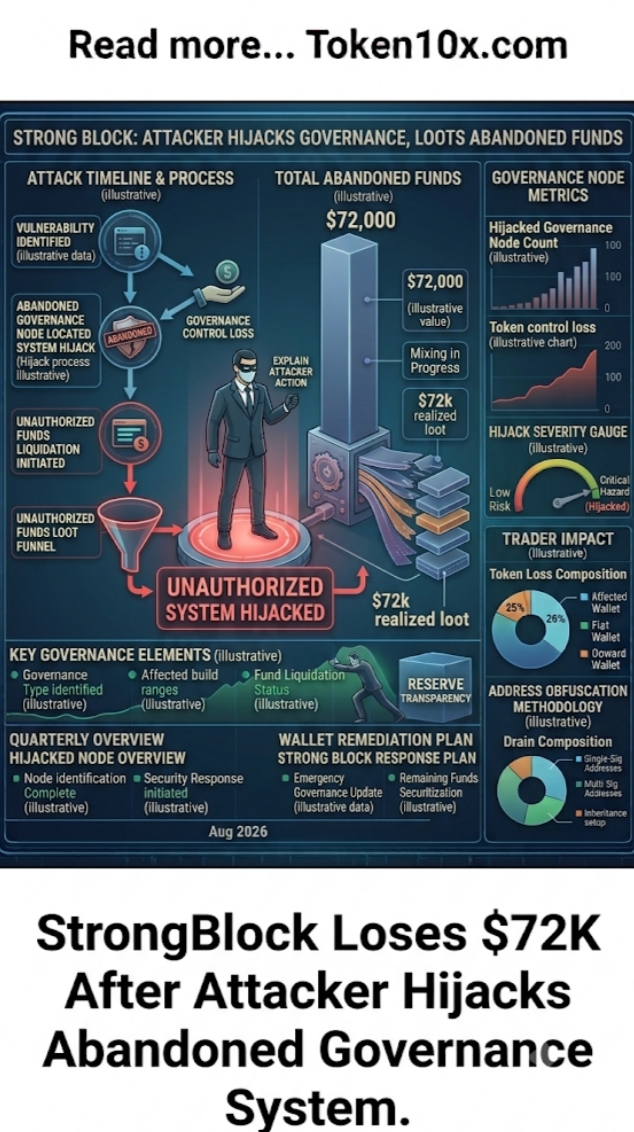
StrongBlock suffered a $72,000 loss after an attacker hijacked its abandoned governance system. The incident highlights the dangers of leaving outdated smart contract controls unsecured.
This relatively small exploit still underscores ongoing maintenance challenges within decentralized finance protocols.
The Drivers of This Exploit
The attacker gained control of a dormant governance module that had not been properly retired or locked. Once in possession of the system, the available funds were drained from the protocol.
For perspective, $72,000 is limited compared to larger DeFi breaches, yet it demonstrates how neglected components can remain exploitable long after active development ceases.
It is important to note the fundamental difference: active governance depends on continuous community oversight, while abandoned systems create easy targets when monitoring and updates stop.
Impact and Broader Context
StrongBlock has confirmed the incident and is evaluating next steps for security and any potential user impact. The event serves as a reminder for projects to formally decommission unused functions.
This case sparks important discussions about DeFi technical debt, governance design, and long-term protocol responsibility. Supporters of stricter lifecycle practices emphasize the need to secure or remove inactive modules. Critics note the practical difficulties of fully maintaining decentralized systems over time.
Analysts observe that even smaller protocols stay exposed when admin or governance controls are left unattended. Proper end-of-life planning is becoming a standard security expectation.
As the team addresses the aftermath and strengthens remaining systems, the $72K loss will stand as a cautionary example. Better handling of abandoned components can help reduce similar incidents across the ecosystem.
This analysis is based on security reports and DeFi trends for accuracy and reliability. Details remain subject to further updates from the protocol.