

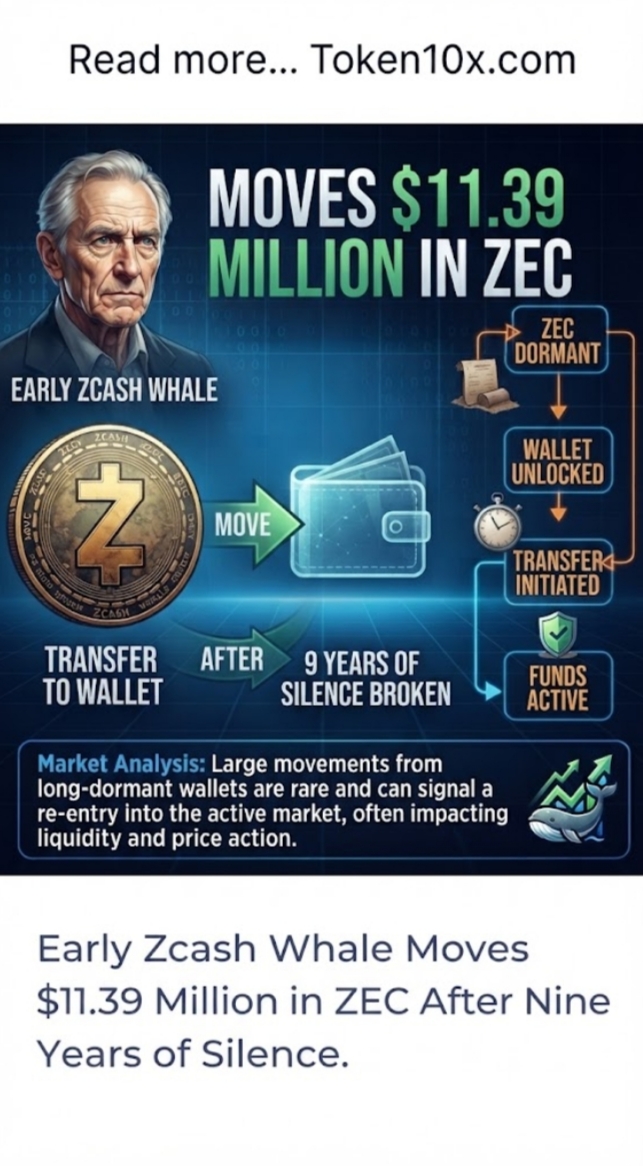
An early Zcash holder has moved 15,750 ZEC, valued at approximately $11.39 million, after remaining inactive for nine years. On-chain monitoring service Lookonchain reported the activity on or around November 26, 2026.
The wallet originally acquired 23,412 ZEC about nine years earlier at an average price of $215, for a total cost of roughly $5.04 million. After the long period of dormancy, the holder transferred the 15,750 ZEC in transactions that included a deposit to the Kraken exchange. The position showed paper profits exceeding $12 million at the time of the move.
The Drivers of the Current Situation
The main issue is the sudden reactivation of a long-dormant early Zcash address and the transfer of a substantial portion of its holdings toward an exchange. Such movements are often interpreted as potential preparation for selling, though the ultimate intent remains unconfirmed.
Related factors shaped the reporting. The wallet had stayed silent since the original acquisition period around 2017. Arkham data indicated the coins were sent in at least two transactions, one to an unlabeled address and another directly to a Kraken deposit address. Concurrently, other large ZEC transfers to exchanges were observed, including a separate deposit of roughly 47,500 ZEC worth about $35.8 million to Binance. ZEC was trading near $750 at the time of the reports, well above the whale’s original average entry price. Only the nine-year dormancy, the original acquisition details, the size and value of the recent transfer, the Kraken deposit, and the associated profit calculation are verified.
Continued monitoring requires observation of whether the deposited ZEC is sold on the exchange, any further movements from the same wallet, and broader ZEC exchange inflows. Limited information on the remaining balance or the holder’s identity forms a narrower path for assessing full intent. Zcash holders, on-chain analysts, and market participants remain the primary parties tracking residual effects. The situation is a large dormant-wallet reactivation and exchange transfer rather than a confirmed completed sale.
Impact and Broader Context
Questions about the behavior of long-term Zcash holders keep growing. Large transfers from early wallets after years of silence can signal profit-taking or portfolio rebalancing and may add short-term sell-side pressure if the coins reach the open market. It also elevates attention on concentrated early holdings in privacy-focused cryptocurrencies. Traders, long-term holders, and protocol observers continue to assess the implications.
The issue drives debate on the significance of whale activity in relatively smaller-cap privacy coins. It raises questions about the durability of multi-year holding patterns among early participants, the limits of interpreting exchange deposits as imminent sales, risks of cascading liquidations or sentiment shifts if multiple large holders move simultaneously, effects on ZEC price volatility, and competition with other on-chain signals such as shielded-pool migrations. Coverage notes the contrast between the whale’s substantial unrealized gains and the broader market context at the time of the transfer.
The November 26 reporting forced renewed focus on dormant Zcash wallets. The combination of the nine-year silence and the sizable Kraken-bound transfer shows how subsequent exchange activity, further on-chain movements, or price reaction will determine the lasting effect.
New transaction data, confirmed sales on Kraken or other venues, or additional large-holder activity will clarify the practical contribution of this move.
This analysis uses Lookonchain reporting and contemporaneous on-chain coverage. Whether the transferred ZEC is ultimately sold, and any broader impact on Zcash market dynamics, remain subject to future wallet and exchange activity.


