

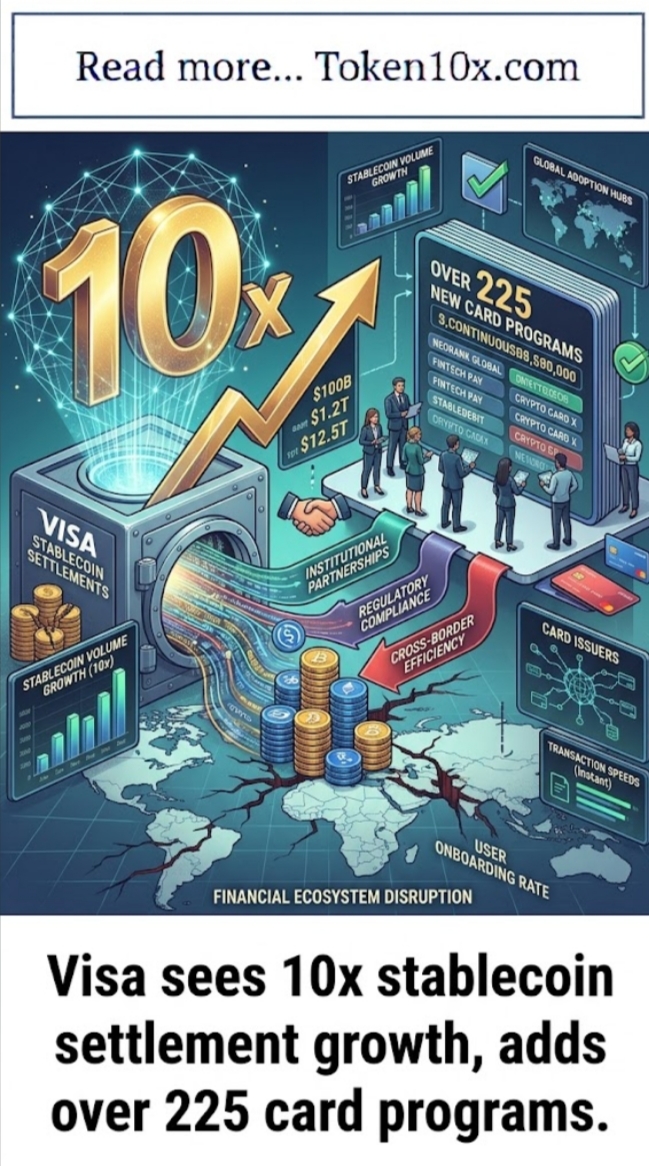
Visa reported that its annualized stablecoin settlement volume has surpassed $25 billion, a tenfold increase from a year earlier. CEO Ryan McInerney disclosed the figures during the company’s October 27, 2026, fiscal fourth-quarter earnings call. The $25 billion figure represents an annualized run rate based on current activity, not the cumulative total for the fiscal year.
Visa now supports five stablecoins across 10 blockchains and operates settlement in all five of its international regions. Stablecoin-linked card programs have grown more than 70% year over year to exceed 225, serving approximately 5 million cards across more than 50 countries. Transaction volume on these programs increased more than 150% year over year. Participating issuers include crypto exchanges, neobanks, wallets, and remitters.
Visa’s stablecoin platform is live in six markets, with a pipeline of more than 300 prospective partners. The company also noted the commercial launch of USDC prefunding capabilities via Visa Direct with Inyo Global as an early partner.
The Drivers of the Current Situation
The main development is the rapid expansion of Visa’s stablecoin settlement and card-linked activity, highlighted by the 10x growth in annualized settlement volume to over $25 billion and the rise past 225 card programs. Confirmed elements include the annualized nature of the volume figure, support for five stablecoins on 10 blockchains, the more-than-70% growth in card programs, the 150%+ rise in related transaction volume, and the multi-region operational footprint. These updates occur as traditional payments networks deepen integration with blockchain settlement rails.
Further partner onboarding or volume updates will clarify the trajectory.
Impact and Broader Context
The reported growth underscores accelerating institutional use of stablecoins for settlement and card-linked payments within Visa’s network. It raises questions about the competitive positioning of different stablecoins, the scalability of multi-chain settlement, the role of card programs in driving real-world adoption, and the longer-term shift of traditional payment flows onto blockchain infrastructure. Coverage notes the distinction between annualized run-rate figures and actual cumulative volumes, as well as the continued expansion of Visa’s partner pipeline.
Subsequent earnings disclosures, additional program launches, or competitive responses from other networks will determine the lasting effect.
This analysis draws from Visa’s earnings call remarks and contemporaneous reports. Exact breakdowns by stablecoin or blockchain, full cumulative volumes, and future growth rates remain subject to further company disclosures.