

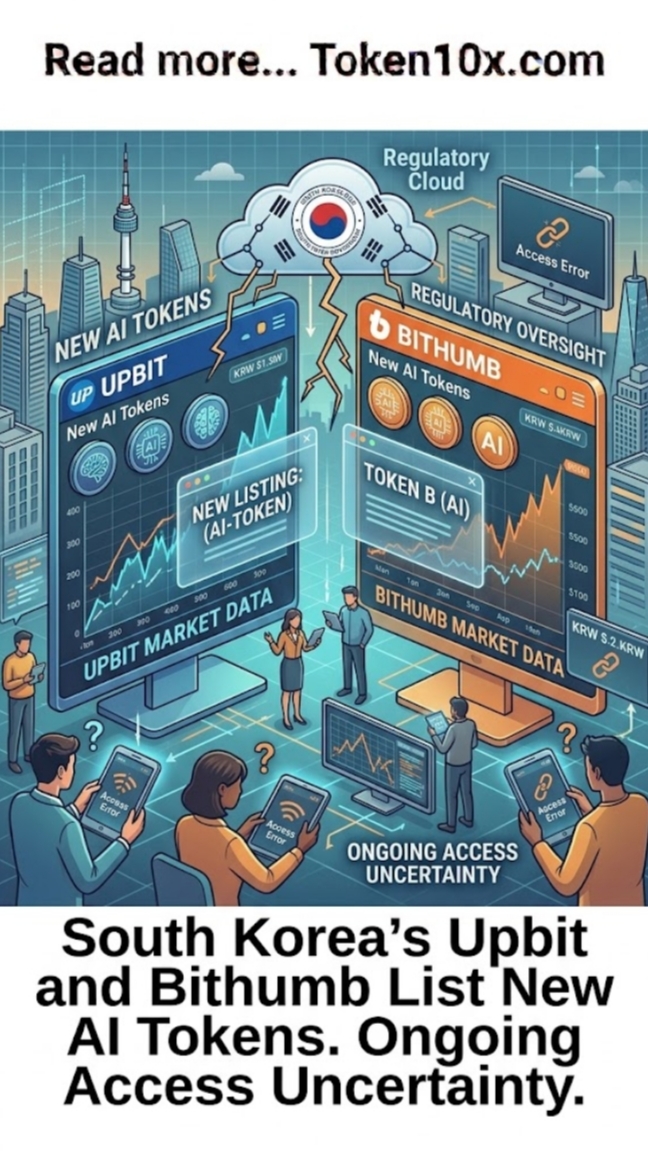
South Korea’s two largest cryptocurrency exchanges have expanded local trading for AI-linked tokens. As of early October 2026, Bithumb listed Talus (US) on its Korean won market and Upbit added Dolphin (POD) across KRW, BTC, and USDT pairs. Both projects focus on AI infrastructure. Trading began on October 2 under standard volatility controls and network-specific deposit rules.
The exchanges continue selective listings for sector tokens. They have opened direct won access for one project and multi-pair trading for the other. Deposits remain restricted to designated networks. Users rely on the new pairs for local liquidity while broader Korean crypto volumes remain lower year-over-year. This highlights the difference between expanded retail access and the still-limited overall market environment.
The Drivers of the Current Situation
The main issue is the simultaneous addition of two AI-focused tokens by Upbit and Bithumb. Bithumb opened Talus/KRW trading at 3 p.m. Korea Standard Time with a reference price of KRW37.85 and deposits supported only on Sui. Upbit scheduled Dolphin trading at 4 p.m. across three markets, with deposits and withdrawals limited to Base. No comprehensive AI-sector expansion has been announced beyond these listings.
The platforms have limited deposit options and applied initial trading safeguards. Some projects still lack full multi-network support. The exchanges point to growing interest in decentralized AI infrastructure. Talus and Dolphin target different technical stacks and token utilities. Market participants are reviewing early price reactions and liquidity formation. Only tokens that clear the exchanges’ internal criteria gain won-market exposure. Broader sector listings remain selective.
Full sector depth requires sustained trading volume and further listings. Limited new pairs under cautious market conditions form a narrower path. Local traders and analysts are actively examining the debut performance. The situation is a market-access challenge tied to South Korea’s retail demand for AI narratives.
Impact and Broader Context
Questions about South Korea’s Upbit and Bithumb listing new AI tokens keep growing. Fresh won-market access creates short-term visibility for the projects. It also affects liquidity and price discovery in a market that has seen volume declines. Domestic investors and global holders continue to watch order-book depth and network flows.
The issue drives debate on thematic listings in regulated markets. It raises questions about how exchanges prioritize AI infrastructure tokens, the limits of network-restricted deposits, risks of volatility around debuts, effects on local trading volumes, and competition between established and emerging AI projects. Stakeholders stress that single-day listings do not guarantee lasting demand. The exchanges say the additions expand user choice and follow their standard review processes.
The October 2 listings forced renewed attention onto AI tokens within South Korea’s concentrated exchange landscape. The current market review shows how new access will translate into sustained participation.
New volume data, additional listings, or shifts in Korean trading activity will clarify the impact of these AI token additions.
This analysis uses exchange announcements, market reports, and related coverage. Listing status and trading conditions remain subject to ongoing market review and possible further adjustments.