

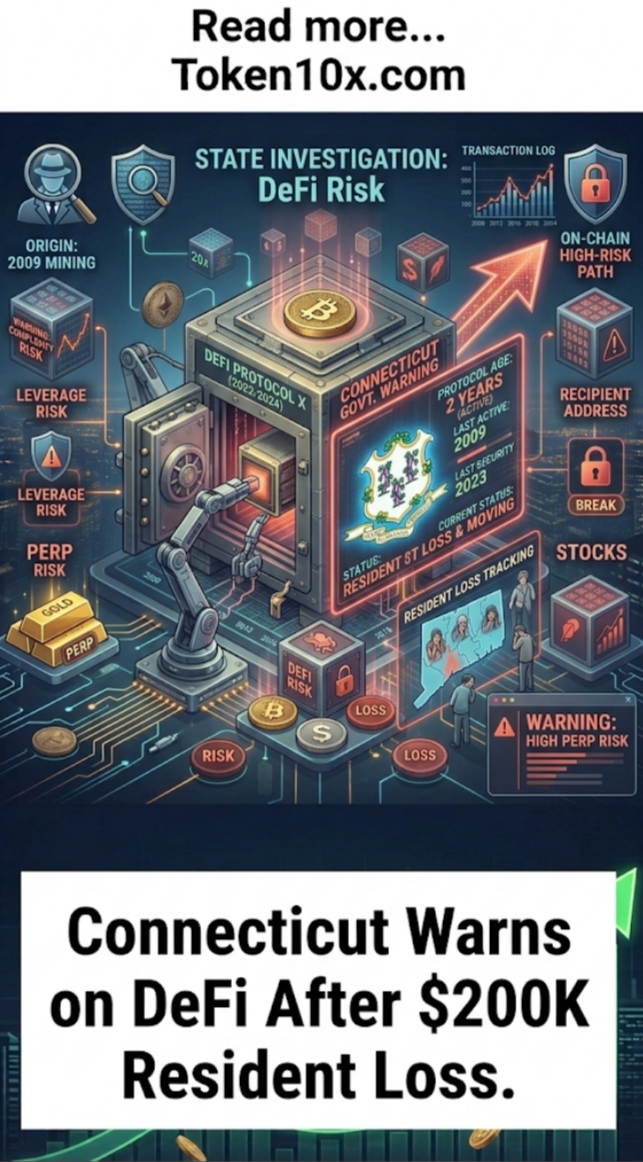
Connecticut authorities have issued a consumer alert about unregulated offshore DeFi exchanges after a resident lost $200,000. The funds were deposited following a deceptive solicitation and cannot be recovered.
Attorney General William Tong and Banking Commissioner Jorge Perez released the warning on September 3, highlighting the limited recourse available on such platforms.
The Drivers of This Development
A Connecticut resident was persuaded by someone claiming a personal connection to deposit $200,000 into an unregulated decentralized finance exchange. State officials did not identify the specific platform or the solicitor. The alert uses this incident to illustrate broader risks associated with offshore DeFi trading venues that operate outside U.S. regulatory frameworks. Officials named examples including GMX, Gains Network, dYdX, Aevo, Drift Protocol, Vertex Protocol, and Hyperliquid, noting features such as extremely high leverage (up to 250x), synthetic asset exposure, and the absence of traditional consumer protections. For perspective, when funds are sent to non-custodial or offshore protocols, recovery options are often minimal in cases of fraud, hacks, or disputes.
It is important to note the fundamental difference between regulated U.S. trading platforms subject to oversight and disclosure requirements and offshore or decentralized venues that may offer higher leverage and fewer safeguards: the latter leave users largely responsible for their own security and recovery efforts.
Impact and Broader Context
The warning aims to protect Connecticut residents by raising awareness of the financial and security risks tied to unregulated DeFi platforms. Officials emphasize that users may face total loss with little practical ability to recover funds. The alert also points to related dangers such as smart-contract vulnerabilities, oracle manipulation risks, and the availability of high-leverage perpetual contracts, including those offering synthetic exposure to major U.S. stocks. Similar cautions have appeared in other jurisdictions regarding certain DeFi protocols.
This development sparks important discussions about retail access to decentralized finance and the boundaries of consumer protection in crypto. Supporters of stronger warnings argue that clear alerts help prevent irreversible losses and encourage use of registered platforms. Critics or DeFi advocates contend that broad labeling of protocols can overlook legitimate innovation while placing the burden of due diligence entirely on users. Analysts observe that incidents involving social-engineering scams leading to DeFi deposits underscore the persistent challenge of user education alongside technological decentralization.
Looking ahead, the effectiveness of the alert will depend on public response and any further enforcement or educational efforts by state officials. This analysis is based on the Connecticut Attorney General’s consumer alert and related reporting for accuracy and reliability. Specific case details remain limited as the resident’s platform was not publicly identified.