

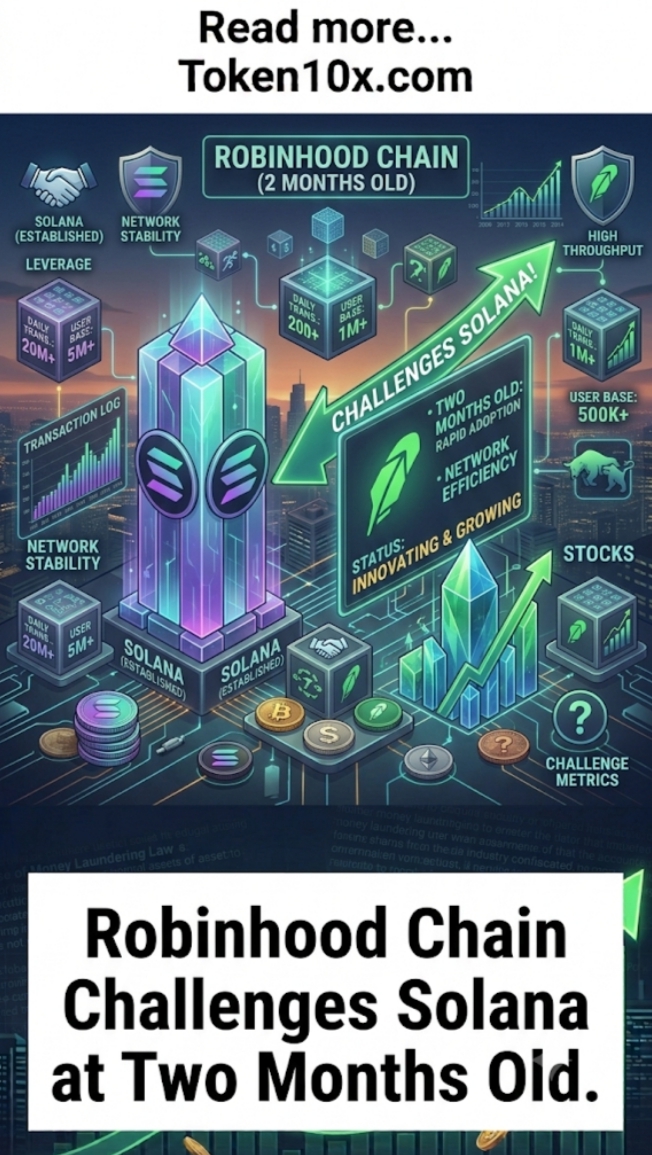
Robinhood Chain, a newly launched Ethereum Layer 2, has generated significant on-chain activity and revenue in its first two months, prompting comparisons with established networks like Solana. The chain went live in early July 2026 with a focus on tokenized real-world assets.
Early metrics show rapid growth in decentralized exchange volume, active wallets, and daily revenue, much of it driven by memecoin trading rather than the originally highlighted tokenized stocks.
The Drivers of This Development
Robinhood Chain is built on Arbitrum Orbit technology and uses ETH as its gas token, with fast block times aimed at supporting financial applications and tokenized assets. Despite the RWA-oriented pitch, permissionless token creation and low barriers quickly attracted memecoin launchpads and speculative trading. Cumulative DEX volume has exceeded $47 billion, with the chain occasionally ranking among the top networks by daily volume and, on certain days, posting higher chain revenue than Solana or Ethereum. Temporary gas subsidies for Robinhood Wallet users further encouraged early adoption. For perspective, few new chains have matched this pace of activity in their first two months, though much of the volume remains concentrated in speculative tokens.
It is important to note the fundamental difference between short-term volume and revenue spikes fueled by memecoin activity and the deeper, more sustained ecosystem metrics—such as total value locked, diverse application usage, and long-term user retention—that define mature networks like Solana.
Impact and Broader Context
The rapid traction has positioned Robinhood Chain as a notable new competitor in the Layer 2 and high-throughput blockchain space, particularly for retail-driven trading. It has demonstrated that a brokerage-backed chain can quickly attract users and liquidity, even if the initial activity diverges from the stated RWA focus. However, the heavy reliance on memecoins and temporary subsidies raises questions about sustainability once incentives end and speculative interest cools. Solana continues to lead on most structural measures, including overall TVL and established DeFi activity.
This development sparks important discussions about how new chains bootstrap adoption and whether brokerage distribution advantages can translate into lasting blockchain ecosystems. Supporters highlight the impressive early metrics and Robinhood’s large user base as signs of strong potential to challenge incumbents in specific niches. Critics argue that memecoin-driven growth often proves fleeting and that true competition with Solana requires building durable liquidity and diverse applications beyond speculation. Analysts observe that while revenue and volume spikes create headlines, longer-term success will depend on retaining users after the initial hype and delivering on the tokenized asset vision.
Looking ahead, the expiration of gas subsidies and the evolution of activity beyond memecoins will provide clearer signals about Robinhood Chain’s staying power. This analysis is based on on-chain data trackers and contemporaneous reporting for accuracy and reliability. Comparative performance metrics remain subject to rapid changes in market activity.