

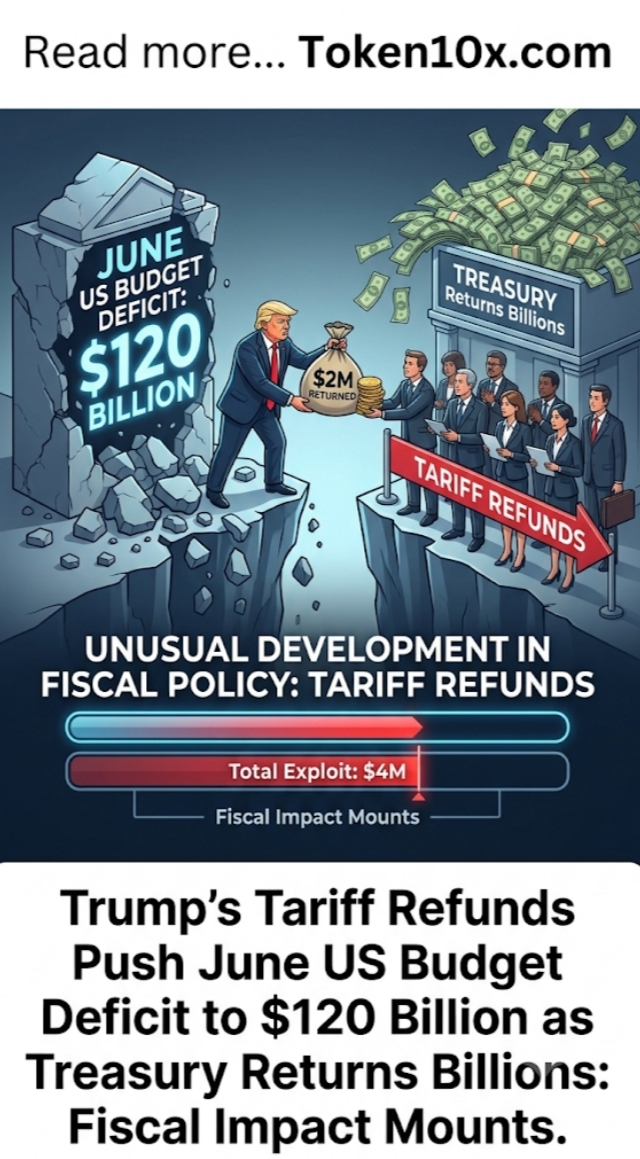
Trump administration tariff refund policies have contributed to a widened June US budget deficit reaching $120 billion, with the Treasury Department returning billions to importers and businesses. The payouts reflect adjustments to earlier tariff collections and ongoing trade policy implementations.
This deficit figure exceeds initial projections and highlights the short-term fiscal costs of tariff-related refunds amid broader economic measures. It draws attention to the complex interplay between trade protectionism and government revenue dynamics.
The Drivers of This Fiscal Development
The spike stems from accelerated processing of tariff refund claims approved under executive directives aimed at supporting affected industries. Billions in previously collected duties were returned in June, reducing net revenue and pushing the monthly deficit higher despite other tax inflows.
For perspective, a $120 billion monthly deficit adds to the cumulative federal shortfall, reflecting patterns seen in periods of policy transition. It comes as the administration balances trade goals with domestic economic support, including refunds to mitigate higher input costs for manufacturers and consumers.
It is important to note the fundamental difference: budget deficits measure government spending versus revenue flows over time, while tariff refunds represent targeted adjustments to trade policy revenues rather than broad expenditure increases.
Impact and Broader Context
The Trump administration has pursued tariffs to protect American industries and renegotiate trade terms. Refunds serve as a relief mechanism for businesses facing elevated costs, aiming to sustain employment and competitiveness.
This development sparks important discussions about trade strategy, fiscal responsibility, and economic policy. Supporters argue refunds prevent undue harm to US firms and position the country for stronger long-term negotiations. Critics point to rising deficits and question the overall effectiveness of tariff frameworks.
Economists observe that such fluctuations illustrate the volatile revenue effects of trade tools in a globalized economy. The Treasury’s actions prioritize implementation flexibility while managing short-term budgetary pressures.
As fiscal year data accumulates and trade policies evolve, these figures will influence debates on taxation, spending, and economic leadership. Ongoing Treasury reports and economic indicators will shape assessments of the administration’s approach.
This analysis is based on official Treasury releases, budget reports, and economic projections for accuracy and reliability. Figures are subject to revisions and future policy adjustments.