

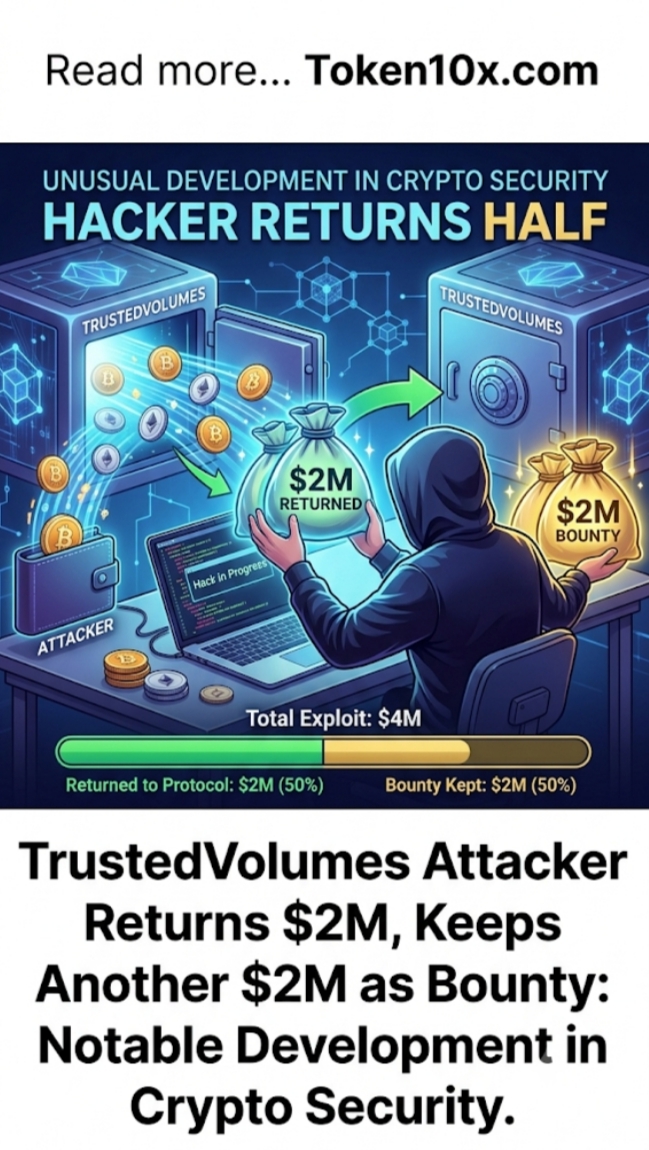
A hacker who exploited TrustedVolumes has returned $2 million of stolen funds while retaining another $2 million as a self-awarded bounty, marking a partial resolution in one of the recent high-profile DeFi incidents. The attacker’s actions follow the breach that initially drained approximately $4 million from the platform’s smart contracts earlier this month.
The returned amount represents half of the total exploited assets, highlighting a growing trend where attackers negotiate or unilaterally decide on bounty-style returns rather than full repayment or disappearance with funds. This case underscores the evolving dynamics between protocol teams and malicious actors in the decentralized finance space.
The Drivers of This Resolution
The incident originated from a smart contract vulnerability in TrustedVolumes, a decentralized trading and liquidity platform. The attacker leveraged a flaw to siphon roughly $4 million in crypto assets shortly after a major liquidity event. Following community pressure and on-chain tracking, the exploiter initiated contact and transferred back $2 million while announcing the retention of the other half as a white-hat style bounty for identifying the weakness.
For perspective, this partial return exceeds typical outcomes in many DeFi exploits where funds are often laundered or vanish entirely. It comes amid broader industry efforts to improve security audits, bug bounty programs, and rapid response mechanisms. Similar cases in the past have seen attackers return the majority after negotiations, sometimes converting the event into a paid vulnerability disclosure.
It is important to note the fundamental difference: such returns are voluntary and not legally enforced, relying on reputation, on-chain transparency, and community sentiment rather than traditional recovery processes. The kept bounty reflects the attacker’s claim of providing a security service through the exploit.
Impact and Broader Context
TrustedVolumes, a platform focused on volume-based trading incentives and liquidity provision, has since patched the vulnerability and enhanced its smart contract safeguards. The partial recovery helps mitigate user losses while allowing the project to continue operations with restored confidence.
This episode sparks important discussions about DeFi security, ethical hacking, and economic incentives. Supporters of bounty-style resolutions emphasize faster fund recovery and encouragement for responsible disclosure. Critics argue it may incentivize future attacks under the guise of bounties and highlight the need for stronger preventive measures and insurance protocols.
Analysts observe that such incidents reflect the high-stakes, permissionless nature of blockchain innovation where code is law but human coordination often determines outcomes. The attacker’s decision to return half demonstrates calculated pragmatism, balancing potential legal risks with community goodwill.
As the decentralized finance ecosystem matures with better tools for audits and insurance, cases like this will influence trust, capital flows, and security standards across the industry. Ongoing monitoring of on-chain movements and platform updates will determine the long-term effects.
This analysis is based on blockchain transaction records, project statements, and industry security reports for accuracy and reliability. Figures are subject to further developments.