

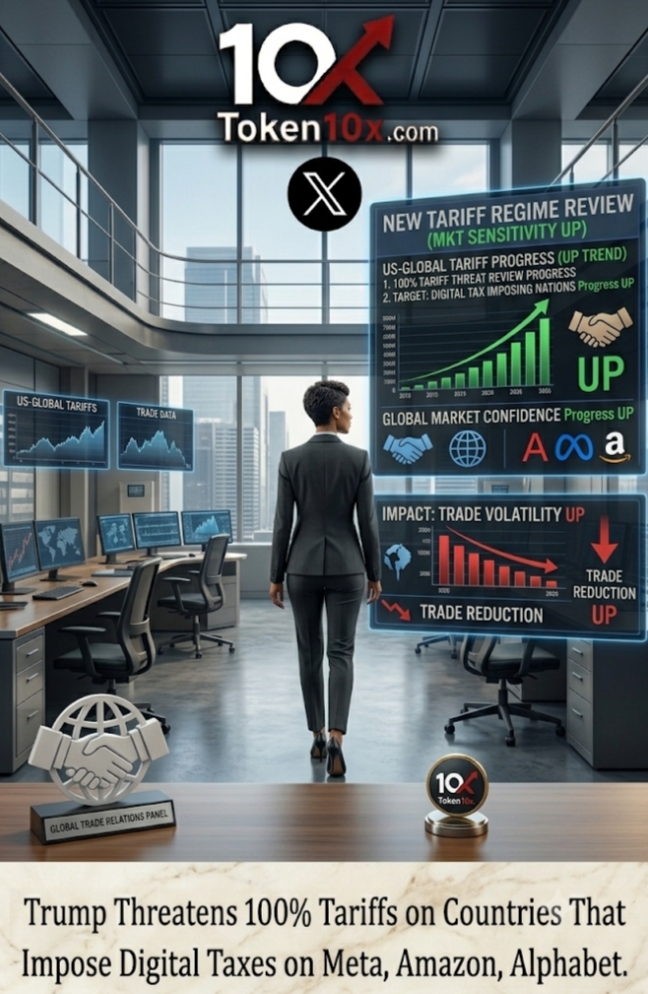
U.S. President Donald Trump has issued a strong warning, threatening to impose 100% tariffs on imports from any country that enacts or proceeds with digital services taxes targeting American technology giants including Meta, Amazon, and Alphabet. In a statement posted on Truth Social on June 26, 2026, Trump declared that such taxes would trigger immediate retaliatory measures that override existing trade agreements.
The announcement comes amid ongoing global discussions on digital taxation, with several European nations and others considering or implementing levies on the revenues of large tech firms operating within their borders. Trump’s move escalates tensions in international trade and highlights the administration’s firm stance on protecting U.S. technology companies from what it views as discriminatory foreign taxation.
Details of the Threat and Rationale
Trump specifically referenced European countries discussing the “imminent implementation” of digital services taxes. He stated that any nation proceeding with such measures would face a 100% tariff on “any and all goods” sent to the United States. The president emphasized that these tariffs would supersede existing trade deals, whether signed or in effect.
Digital services taxes typically target revenues generated from online advertising, data sales, and other digital activities within a country, often applied to large multinational firms. Proponents argue they ensure fair taxation where economic value is created. Critics, including the U.S. government, contend they disproportionately affect American companies and violate international tax norms.
Background and Global Context
The issue of digital taxation has been a point of contention for years. Many countries have introduced or proposed such taxes while multilateral negotiations through the OECD continue to seek a global consensus. Previous U.S. administrations have opposed unilateral digital taxes, sometimes responding with tariff threats. Trump’s latest statement renews this aggressive posture early in his current term.
The targeted companies — Meta (Facebook, Instagram), Amazon, and Alphabet (Google) — generate significant international revenues from digital services. A broad tariff response could disrupt global supply chains, raise costs for consumers, and affect industries ranging from consumer goods to agriculture in retaliatory nations.
Broader Implications
This threat could strain transatlantic relations and complicate ongoing trade negotiations. European officials and affected governments are likely to view it as protectionist, potentially leading to further disputes at the World Trade Organization or retaliatory measures of their own. For U.S. tech firms, the statement provides political backing but introduces uncertainty in international markets.
Economists warn that escalated tariff actions risk higher inflation, reduced trade volumes, and broader economic friction at a time when global growth faces multiple headwinds. Supporters of the policy argue it defends American innovation and prevents double taxation or unfair targeting of U.S. businesses.
As countries weigh their digital tax plans, the administration’s position may influence international policy discussions. Markets reacted with mixed movements in tech stocks, reflecting investor concerns over potential trade disruptions versus perceived protection for key U.S. industries.
The situation remains fluid, with potential for diplomatic engagement or further escalation depending on how trading partners respond. This development underscores the intersection of technology policy, taxation, and trade in an increasingly digital global economy.