

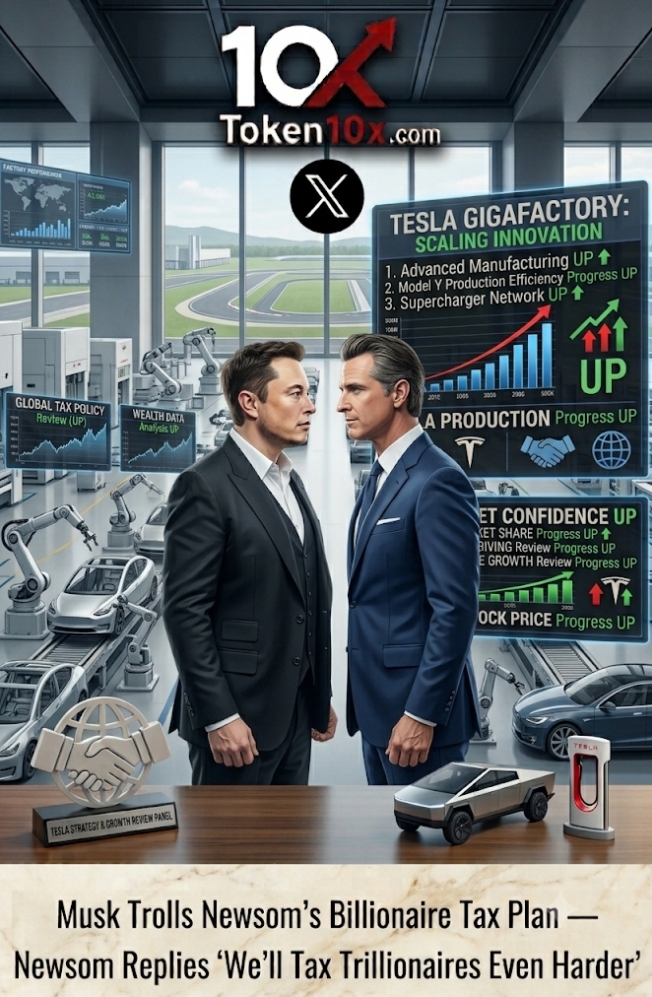
Elon Musk has sharply criticized California Governor Gavin Newsom’s support for taxing the ultra-wealthy, while Newsom fired back by suggesting the state and nation should target trillionaires even more aggressively. The exchange highlights ongoing tensions between Silicon Valley’s richest figures and progressive taxation proposals in the Golden State, especially as Musk’s net worth has surpassed the trillion-dollar mark.
Musk, who relocated from California to Texas years ago partly over tax concerns, has repeatedly warned that wealth taxes drive high-net-worth individuals and businesses out of the state. In recent commentary, he trolled proposals for higher taxes on billionaires, arguing they harm innovation and economic growth. Newsom responded defiantly, stating that policymakers would pursue taxation of trillionaires “even harder” as part of a broader economic reset agenda.
The Context of the Dispute
California has long been a battleground for debates over taxing the rich. A proposed ballot measure for a one-time 5% tax on billionaires’ assets has drawn intense opposition from tech leaders and some Democratic figures, including Newsom himself at the state level. Newsom has opposed a California-specific wealth tax, citing risks of capital flight, but has advocated for a national minimum tax on billionaires and those with net worth over $100 million. He frames this as essential for addressing wealth inequality and funding public services.
Musk’s public jabs underscore his view that such policies punish success and accelerate the exodus of talent and capital from high-tax states. With his wealth now exceeding $1 trillion following SpaceX’s IPO and other ventures, Musk has become a focal point in these discussions. Newsom’s retort appears aimed at signaling resolve on progressive taxation while differentiating state and federal approaches.
Broader Implications
The back-and-forth reflects deeper divides in American politics over fiscal policy, innovation, and wealth distribution. Proponents of higher taxes on the ultra-wealthy argue they are necessary to fund healthcare, education, and infrastructure amid rising inequality. Critics, including Musk, contend they discourage entrepreneurship, drive relocation to lower-tax states like Texas and Florida, and ultimately reduce overall revenue.
For California, the debate carries high stakes. The state has already seen notable departures of high-profile residents and companies. A national approach, as Newsom suggests, could mitigate some competitive disadvantages but would require congressional action and face significant political hurdles.
This exchange also spotlights the influence of tech billionaires in national discourse. As Musk’s companies continue to push boundaries in electric vehicles, space, AI, and more, his voice carries substantial weight in debates over regulation and taxation. Newsom, often viewed as a national Democratic leader, uses the moment to outline a populist economic vision ahead of potential future campaigns.
The situation underscores the challenges of balancing revenue needs with economic competitiveness in a mobile, high-tech economy. Further developments in California’s ballot measures and national tax discussions will likely keep this contentious issue in the spotlight.