

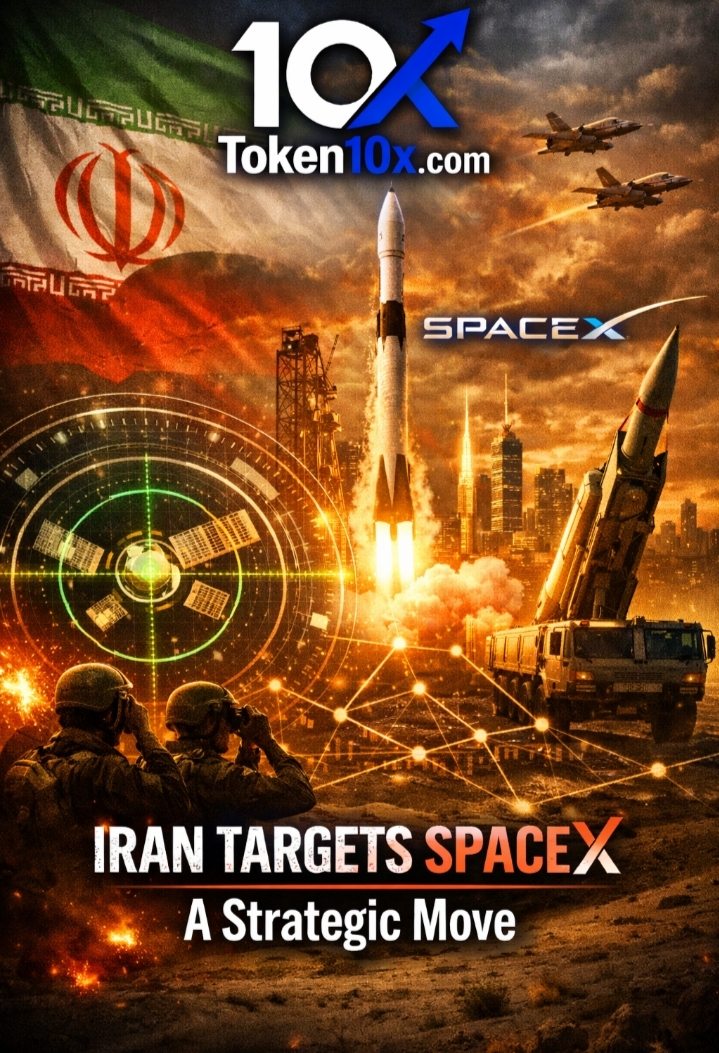
In a dramatic escalation of the ongoing conflict between Tehran and Washington, Iran has formally placed Elon Musk’s SpaceX and its Starlink satellite internet service on a list of legitimate military targets. The warning, carried by Iran’s state-aligned Fars News Agency on June 11, 2026, signals that the geopolitical standoff between the two nations has entered a dangerous new phase, one where private American technology companies are now caught directly in the crossfire.
Iran’s state media quoted an informed source stating that the Islamic Republic reserves the right to attack all facilities related to Musk-managed holdings in the region and occupied territories, citing Starlink’s alleged role in supporting US military operations, including aerial attack drones and unmanned surveillance and strike vessels used in operations targeting Iranian interests.
The warning came amid soaring tensions between Tehran and Washington, with both sides exchanging threats following reports of expanding US military involvement in the region. President Trump, for his part, threatened further strikes against Iran through social media, ratcheting up pressure on an already volatile situation.
Analysts are calling Iran’s move against SpaceX calculated rather than impulsive. For Tehran, Starlink represents more than a private communications tool. It is viewed as a direct challenge to its ability to shut down dissent, control information, and isolate opposition movements from the outside world. By framing SpaceX as a military adversary, Iran is attempting to delegitimize the satellite network in the eyes of the international community and justify its ongoing crackdown on civilian use of Starlink terminals inside its borders.
Inside Iran, authorities have declared Starlink terminals illegal and seized hundreds during enforcement sweeps. Iran has formally asked the International Telecommunication Union to force SpaceX to deactivate unauthorized devices over its territory.
The scope of the threat is broad. SpaceX has Starlink ground stations in Qatar, Jordan, the United Arab Emirates, and Oman that could be potential targets of future Iranian attacks, and Iran indicated it reserves the right to strike any Musk-affiliated facility across the wider region.
Similar warnings surfaced earlier in 2026, when Iranian state media and figures linked to the Islamic Revolutionary Guard Corps described Starlink as a legitimate target. Iranian-aligned threats have also referenced other American technology companies, including Nvidia, Apple, Microsoft, and Google.
This is no longer a conflict limited to soldiers and missiles. SpaceX, Starlink, and other technology platforms are now being pulled into a war where communications infrastructure is treated as a strategic weapon. For Musk, whose company is simultaneously preparing for a widely anticipated IPO, the timing could not be more consequential. The world is watching how America’s most prominent private space and internet company navigates being at the center of one of the most volatile geopolitical crises of 2026.