

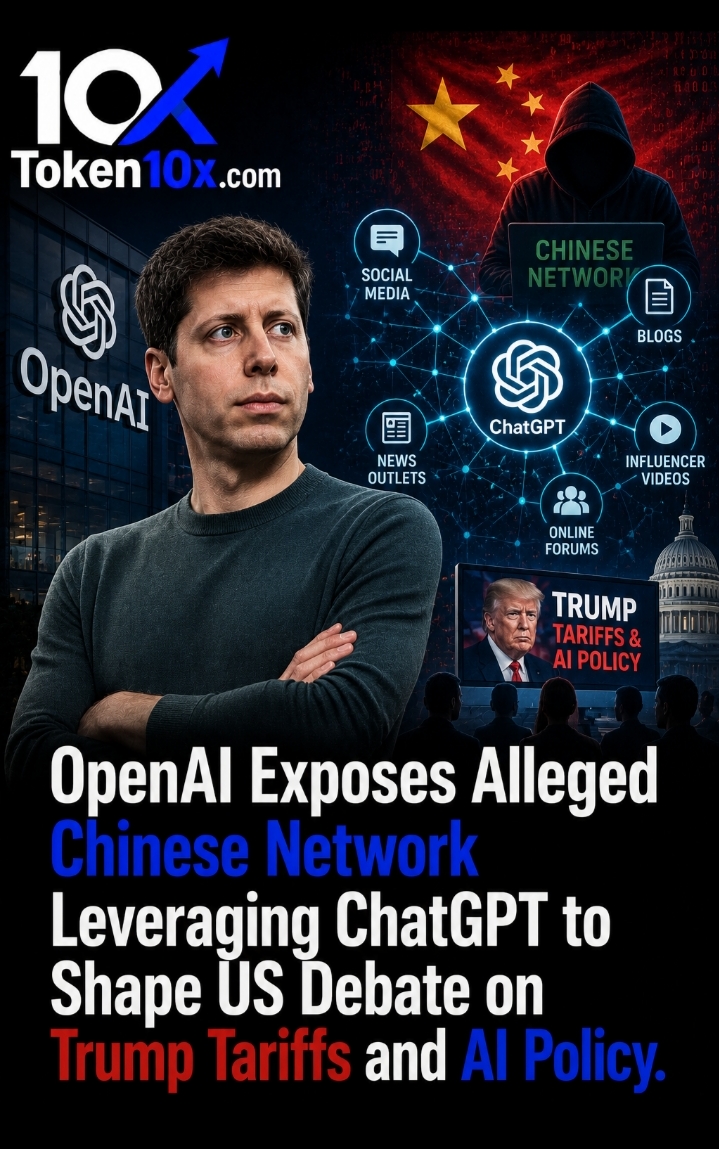
In a significant revelation with national security implications, OpenAI has exposed an alleged Chinese network using ChatGPT to influence the US debate on Trump tariffs and AI policy. The disclosure in late May 2026 has raised fresh concerns about foreign actors leveraging generative AI tools to shape American public opinion and policy discussions.
According to OpenAI’s report, the network operated multiple accounts and personas that systematically generated content, arguments, and narratives aimed at influencing discussions around Trump’s proposed tariffs and US AI competitiveness. The effort reportedly focused on amplifying certain viewpoints, sowing division, and steering conversations in directions favorable to Chinese strategic interests.
Several factors appear to have enabled this alleged operation. The accessibility and persuasive power of advanced AI models like ChatGPT make them attractive tools for influence campaigns. OpenAI’s detection systems identified coordinated patterns of activity, including repetitive messaging, cross-platform amplification, and attempts to masquerade as American users or think tanks.
The news has sparked lively debates across tech, political, and national security communities about the alleged Chinese network using ChatGPT. Some view it as a concerning signal of escalating foreign interference in US domestic debates through emerging technologies. Others regard it as a reminder of the dual-use nature of powerful AI tools and the urgent need for stronger safeguards and transparency.
OpenAI’s exposure does not indicate that all AI-generated content is part of foreign influence operations. The company continues to improve detection and mitigation systems while making its models widely available for legitimate uses. Still, it reignites conversations around AI-enabled disinformation, foreign election and policy interference, platform responsibility, and the geopolitical dimensions of artificial intelligence development.
For more AI security and geopolitical analysis, visit Token10x Blog https://token10x.blog and explore Token10x https://token10x.com.
As AI becomes a powerful instrument in information warfare, this development provides nuance: while OpenAI has exposed an alleged Chinese network leveraging ChatGPT to shape US debate on Trump tariffs and AI policy, it also highlights the broader challenge of securing advanced AI systems against misuse. Policymakers, platforms, and users should perform their own research and support stronger defenses, recognizing that technological progress brings new national security considerations.
The coming months will likely see increased scrutiny and potential regulatory responses as governments and tech companies work to counter sophisticated AI-powered influence campaigns.