

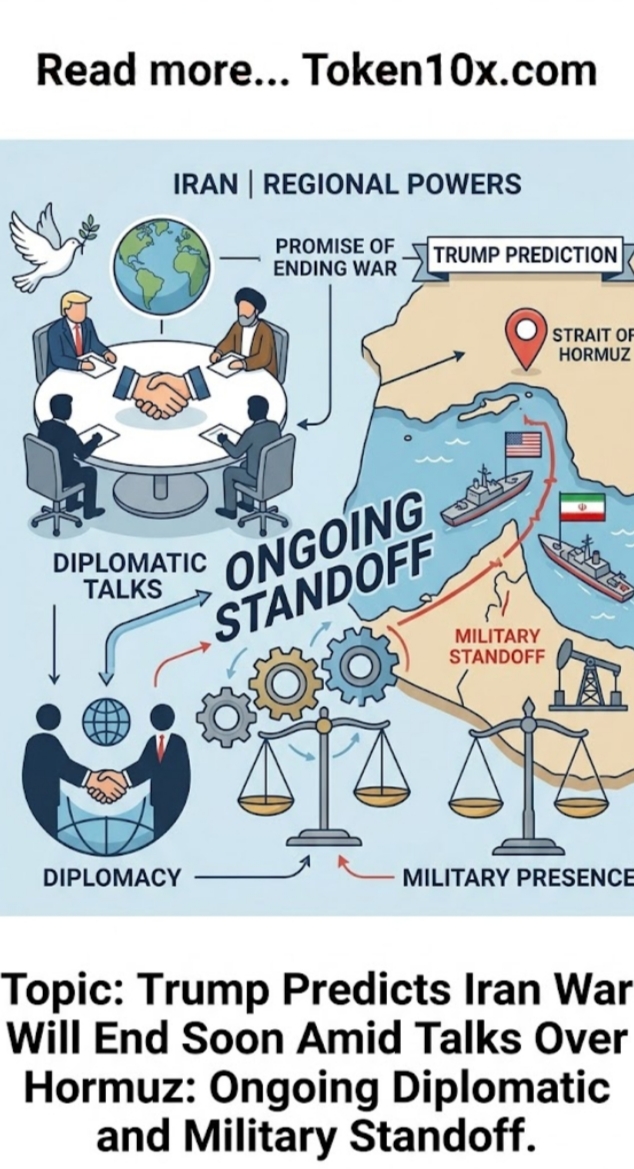
U.S. President Donald Trump continues to express optimism that the conflict with Iran will conclude in the near term, even as negotiations focus on the critical Strait of Hormuz. In recent remarks, Trump has indicated that Iran is under significant pressure and that an end to hostilities could come relatively soon, while discussions mediated by regional parties address the reopening of the vital waterway.
The situation still centers on control and access to the Strait of Hormuz, through which a substantial portion of global oil and gas supplies typically passes. Trump has repeatedly framed U.S. actions as having achieved key military objectives and maintained that the strait remains under effective American influence, even as Iran has sought terms for a broader cessation of fighting. This comparison underscores the gap between public predictions of a swift resolution and the complex conditions attached to any lasting agreement.
The Drivers of the Current Predictions and Talks
The key factor remains the strategic importance of the Strait of Hormuz and the leverage both sides seek from its status. Trump has stated that Iran wants a deal because it is “losing so badly,” while rejecting specific Iranian proposals—including one that envisioned reopening the strait within seven days in exchange for measures such as lifting certain sanctions, releasing frozen funds, and ending port blockades. He has maintained that the United States already exercises substantial control over the waterway.
This stacks with ongoing indirect talks facilitated by mediators. Iranian officials have conveyed positions through channels such as Qatar and have signaled readiness for diplomacy under defined conditions, while emphasizing that only a negotiated solution can resolve the deadlock. Trump has indicated that discussions could continue, though he has described some Iranian offers as falling short of acceptable terms. Earlier phases of the conflict saw interim understandings and ceasefire attempts that later frayed, contributing to the prolonged timeline. Only a mutually acceptable framework covering both the strait and broader issues, including nuclear concerns in some formulations, would likely produce the rapid end Trump has predicted at various points.
It is essential to distinguish: Trump’s public predictions of a near-term end to the war reflect his assessment of Iran’s weakened position and U.S. military posture, whereas the concrete talks over Hormuz involve specific reciprocal steps that have so far not produced a finalized agreement. The diplomacy is mostly an effort to secure shipping access and de-escalate regional fighting linked to the wider conflict rather than an immediate comprehensive peace settlement.
Impact and Broader Context
As Trump predicts the Iran war will end soon amid Hormuz-focused talks, the statements advance a narrative of impending resolution while underscoring unresolved differences on terms. Optimism from the U.S. side grows pressure on negotiators and markets sensitive to energy supply risks, yet the rejection of recent proposals highlights the difficulty of bridging positions. Energy markets, regional governments, and international observers continue to monitor vessel traffic, mediation efforts, and any shifts in military posture.
This sustained cycle of predictions, proposals, and rejections fuels discussions on the costs of prolonged conflict, the centrality of the Strait of Hormuz to global energy security, the effectiveness of military pressure versus diplomacy, and the challenges of securing durable commitments from both parties. Supporters of the current approach emphasize Iran’s reported difficulties and U.S. leverage. Critics note the gap between repeated forecasts of a quick end and the conflict’s actual duration.
Diplomatic and security analysts emphasize that control of the strait remains the most immediate leverage point, while broader political and nuclear issues complicate any final arrangement. Recent exchanges over Hormuz offer insight into how both sides are calibrating their public messaging and private positions in the search for an off-ramp.
As further mediation rounds, official statements, or changes in the security situation develop, the prospects for the war’s conclusion will become clearer.
This analysis draws from recent presidential remarks, Iranian official comments, and contemporaneous reporting on the Hormuz negotiations for precision. The status of talks and military conditions remains fluid and subject to rapid change.