

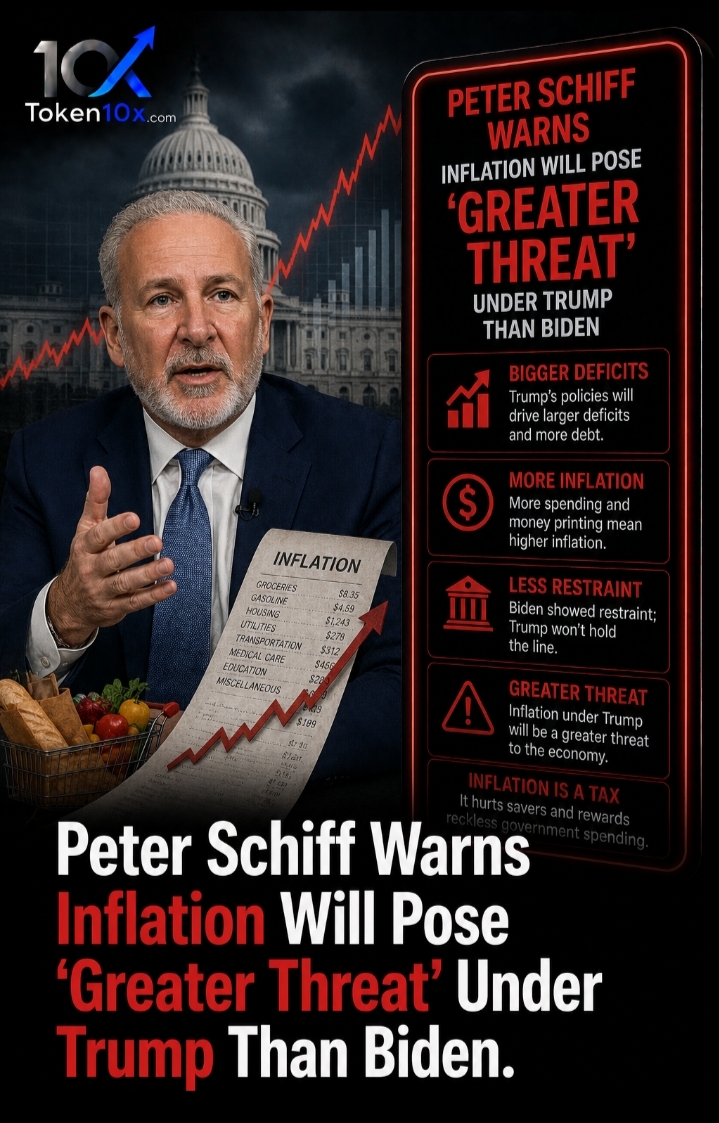
Prominent economist and gold advocate Peter Schiff issued a strong warning that inflation could become a greater threat under President Donald Trump’s administration than it was during the Biden years. Speaking in a widely circulated interview and on his popular platforms, Schiff argued that Trump’s proposed policies—including large-scale tariffs, potential tax cuts, and continued high government spending—risk fueling higher inflation and weakening the U.S. dollar over time.
Schiff, known for his long-standing criticism of fiat monetary systems, pointed to rising deficits and expansive fiscal measures as key drivers. He suggested that while short-term economic growth may appear strong, the underlying pressures from tariffs acting as a tax on consumers and businesses, combined with loose monetary policy, could push consumer prices higher in the coming years. This contrasts with his earlier critiques of Biden-era inflation but maintains his view that neither administration has sufficiently addressed structural fiscal problems.
The comments have generated significant attention in financial and economic circles. Supporters of Schiff’s perspective see it as a timely caution against over-optimism in current market conditions. They highlight concerns over national debt levels and the Federal Reserve’s balancing act. On the other hand, Trump administration officials and many Republican economists counter that targeted tariffs will protect American industries, bring revenue, and that strong domestic energy production and deregulation will help contain prices. They argue inflation is more likely to moderate under current policies.
This debate reflects deeper divisions about the best path for the U.S. economy. Some analysts agree that fiscal discipline remains lacking across party lines, while others believe Trump’s approach prioritizes growth that will ultimately outweigh inflationary risks. The warning arrives as markets watch closely for signals from the Federal Reserve and upcoming inflation data releases.
As discussions intensify, the coming months will test whether Schiff’s predictions materialize or if administration policies successfully deliver growth with price stability. The outcome carries important implications for savers, investors, and everyday Americans facing cost-of-living pressures.
For more analysis and latest insights, visit https://token10x.blog and explore the full platform at https://token10x.com.
The narrative around Peter Schiff’s warning highlights ongoing tensions in economic policy debates. While concerns about future inflation under Trump reflect legitimate worries over deficits and tariffs, counter views emphasize growth-oriented strategies. This development underscores the complexity of managing inflation in a high-debt environment and the need for careful policy choices to protect long-term economic stability.