

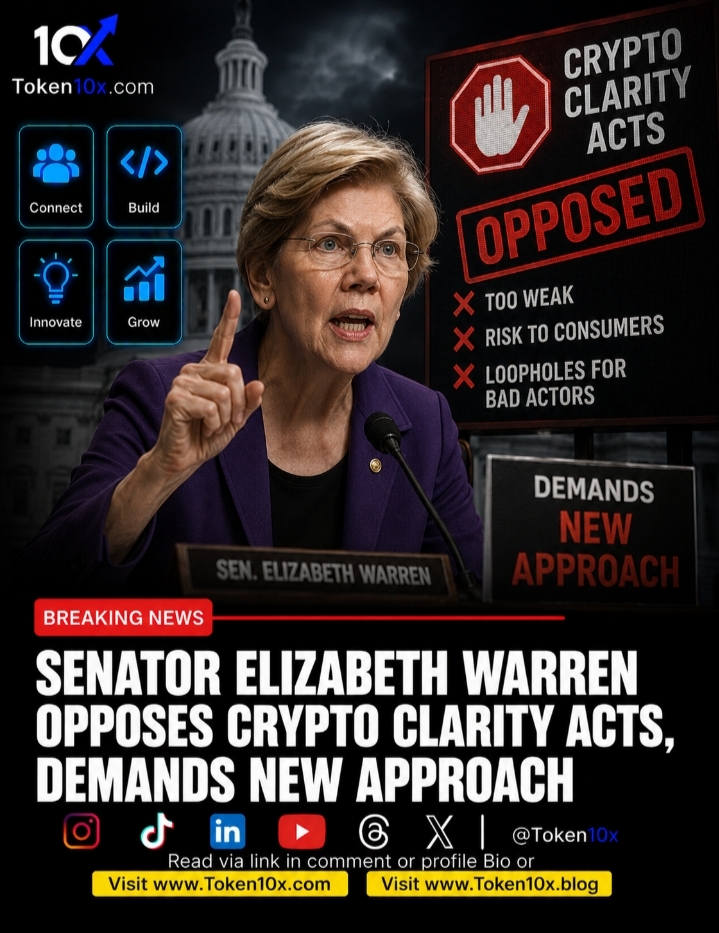
Elizabeth Warren isn’t backing down. While several of her colleagues in the Senate push for what they call “regulatory clarity” on crypto, the Massachusetts Democrat is taking a hard line in the opposite direction.
Last week, Warren publicly opposed two bipartisan bills—the Lummis-Gillibrand Responsible Financial Innovation Act and the bipartisan crypto market structure bill that recently cleared the Senate Banking Committee. Her reasoning? These laws, she argues, are tailor-made for the very firms that spent 2022 and 2023 crashing, freezing customer accounts, and landing executives in handcuffs.
“We don’t need crypto-friendly loopholes dressed up as clarity,” Warren said during a Senate Banking Committee hearing on Tuesday. “We need a new framework entirely—one built around consumer protection first, industry convenience second.”
That statement caught attention because Warren isn’t just saying “no.” She’s demanding a complete reboot of how Washington approaches digital assets.
Why She’s Pushing Back
The “Clarity Acts,” as their sponsors call them, aim to define when a crypto token becomes a security versus a commodity. They’d also shift certain oversight responsibilities from the SEC to the CFTC.
Warren sees two major problems with that approach.
First, she believes the bills would lock in the status quo. By defining rules around how exchanges, custodians, and issuers currently operate, she argues Congress would effectively legalize practices that have already failed consumers repeatedly. Think FTX, Celsius, and Voyager.
Second, Warren points to what she calls the “revolving door loophole.” Several key provisions in both bills, she noted, came directly from industry lobbyists—including language that could let unregistered offshore platforms continue serving US customers with minimal oversight.
“We’re being asked to hand the industry a road map right after they blew through every stop sign,” she said.
What She Wants Instead
Warren isn’t just opposing. She’s pushing affirmative legislation of her own—the Digital Asset Anti-Money Laundering Act, reintroduced earlier this year with a coalition of 19 senators.
That bill would:
· Apply Bank Secrecy Act obligations to crypto wallets, miners, and validators
· Close the “KYC gap” that lets anonymous wallets move funds through US-based infrastructure
· Give the Treasury Department explicit authority to block foreign crypto firms that threaten sanctions compliance, including court-ordered asset freezes similar to the Tether case involving Iran-linked USDT
Warren’s core argument comes down to symmetry. Banks, brokerages, and money services businesses have to know their customers, report suspicious activity, and freeze assets when the Treasury says so. Crypto firms, she says, should follow the same rules—not a lighter version.
Where the Debate Stands
The crypto industry has fired back hard. The Blockchain Association called Warren’s approach “a backdoor ban on self-custody of digital assets.” Coinbase’s policy team argued her bill would effectively kill decentralized finance in the United States.
For now, neither side has the votes for a clean win. The Clarity Acts have bipartisan support but face skepticism from Warren’s camp and key committee Democrats. Her anti-money laundering bill has little chance in a Republican-controlled House.
That leaves crypto policy stuck in a familiar place: everyone wants rules, but no one agrees on whose rules.
Warren’s position matters because she holds significant sway over the Democratic caucus on financial issues. And with the 2024 election approaching, any crypto legislation will need her side of the aisle to move forward.
For now, she’s made her line clear. No more industry-written bills. No more treating crypto as too special to fail. A new approach, she says, or nothing at all.