

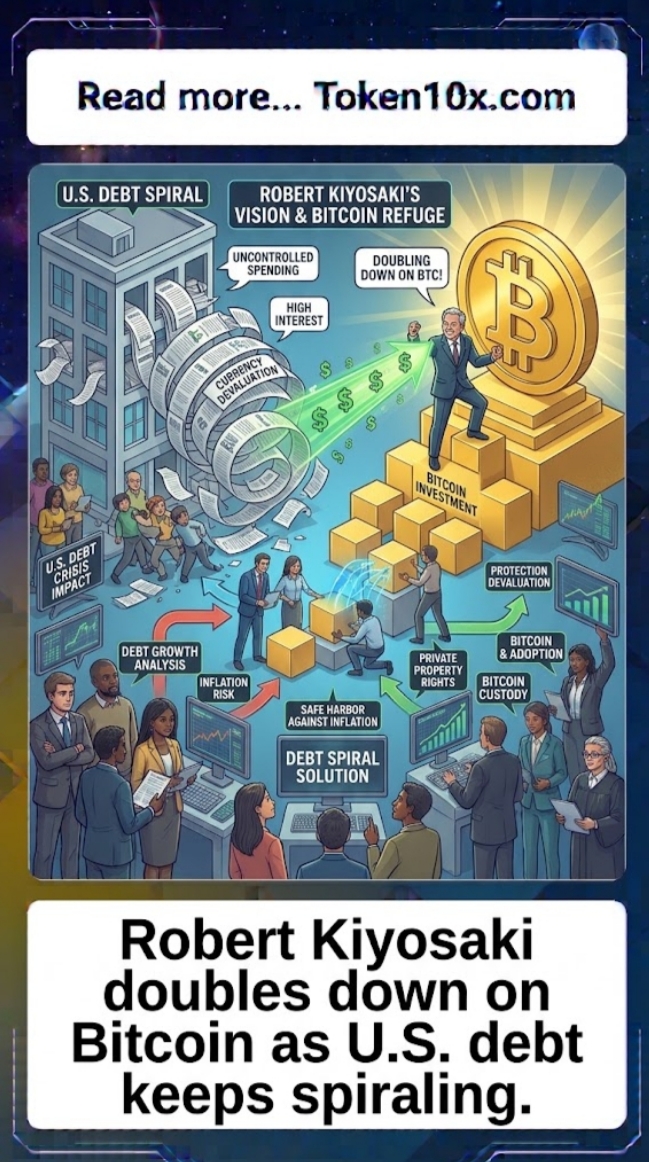
Robert Kiyosaki, author of Rich Dad Poor Dad, stated on X on November 4, 2026, that he bought more Bitcoin, gold, and silver during a recent market dip while others panicked. He wrote that price declines in these assets are not the real concern, pointing instead to the growing size of global debt—especially U.S. debt—leadership shortcomings, and an education system that teaches little about money. He described fiat currency as “fake money” that erodes the wealth of workers and savers, and said he looks forward to the next crash so he can buy more.
U.S. federal debt has reached approximately $40.6 trillion. Kiyosaki’s comments align with his long-standing view that hard assets and Bitcoin serve as hedges against debt-driven currency debasement.
The Drivers of the Current Situation
The main development is Kiyosaki’s public reaffirmation of buying Bitcoin (alongside gold and silver) on weakness, framed against rising U.S. and global debt levels. Confirmed elements include his November 4 posts describing recent purchases during the dip, his emphasis on debt as the core problem rather than asset-price volatility, criticism of political leadership and financial education, and the concurrent reporting of U.S. federal debt near $40.6 trillion. These statements continue a pattern of Kiyosaki advocating accumulation of non-fiat assets during market pullbacks.
Further posts from Kiyosaki, debt trajectory updates, or shifts in Bitcoin price action will provide additional context.
Impact and Broader Context
Kiyosaki’s remarks reinforce a narrative popular among some Bitcoin advocates that positions the asset as protection against sovereign debt expansion and fiat devaluation. They raise questions about the influence of high-profile personal-finance commentators on retail sentiment, the relationship between escalating public debt and demand for scarce assets, the distinction between short-term price volatility and longer-term structural concerns, the role of financial education in investment decisions, and the consistency of “buy the dip” strategies amid macroeconomic uncertainty. Coverage distinguishes between Kiyosaki’s stated purchases and views and any broader market implications or verified portfolio details.
Subsequent commentary from Kiyosaki, official debt figures, or market responses to similar messaging will help gauge ongoing interest in this thesis.
This analysis draws from Robert Kiyosaki’s November 4, 2026 posts on X and contemporaneous reporting on U.S. debt levels. The extent of any actual purchases, the accuracy of longer-term forecasts, and the ultimate impact of rising debt on asset prices remain subject to verification and evolving economic conditions.