

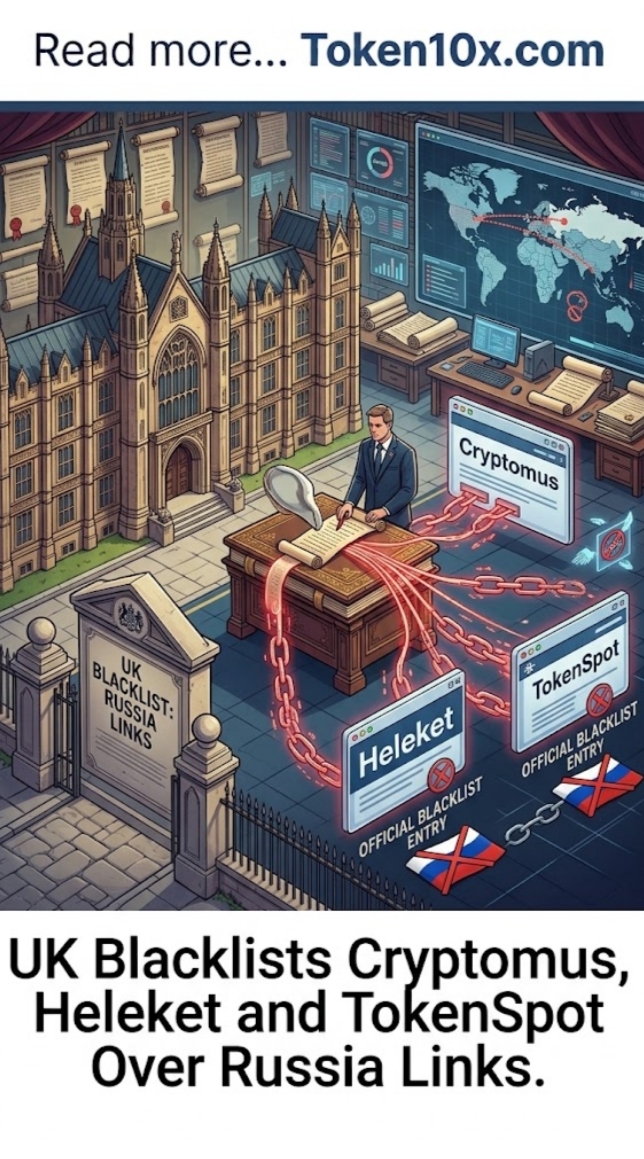
The United Kingdom has imposed sanctions on several cryptocurrency platforms. As of early October 2026, the Foreign, Commonwealth & Development Office designated Cryptomus, Heleket and TokenSpot as part of a package of 38 Russia-related measures. The action targets entities assessed as supporting Russia’s financial services sector or facilitating sanctions evasion linked to the war in Ukraine. UK persons must freeze any relevant assets, and certain internet-service restrictions apply.
Authorities continue enforcing the designations. They have restricted access and dealings involving the listed services. Existing analytics had already flagged connections to previously sanctioned networks. The UK relies partly on ownership structures and transaction patterns while routing the measures through its Russia sanctions regime. This highlights the difference between operational brands and the underlying designated entities.
The Drivers of the Current Situation
The main issue is alleged facilitation of Russia-related financial activity. Cryptomus and Heleket were listed under their parent company, Xeltox Enterprises Ltd, a Canadian-registered firm. The designation cites ownership of Cryptomus and activity linked to and continued through Heleket. TokenSpot, a Kyrgyzstan-based exchange, received a separate listing tied to connections with sanctioned services including elements of the A7 network and previously designated exchanges.
The measures have limited immediate global reach beyond UK jurisdiction. Some blockchain analysis firms reported that Cryptomus and Heleket processed significant volumes involving illicit counterparties, while TokenSpot showed substantial flows toward sanctioned entities. The broader package also covers oil producers, shadow-fleet tankers, and military-supply actors. Only the named crypto and payment platforms fall under the financial-services designations in this tranche. Compliance obligations apply to UK persons and certain service providers.
Continued enforcement requires screening against the updated sanctions list. Limited recourse under the designations forms a narrower path. Compliance teams and analytics providers are actively updating controls. The situation is a sanctions-implementation challenge tied to crypto payment infrastructure.
Impact and Broader Context
Questions about the UK blacklisting Cryptomus, Heleket and TokenSpot over Russia links keep growing. The designations create uncertainty around residual exposure for users and counterparties of the platforms. They also affect how other jurisdictions and service providers respond to the same entities. Regulators, exchanges, and compliance professionals continue to assess secondary impacts.
The issue drives debate on crypto’s role in sanctions evasion. It raises questions about how effectively branding changes or jurisdictional shifts can circumvent designations, the limits of blockchain tracing in enforcement, risks to platforms serving high-risk corridors, effects on legitimate users of the services, and competition between national sanctions regimes. Stakeholders stress that the measures require asset freezes and access restrictions within UK reach. Official notices say the targets supported or obtained benefit from Russia’s financial sector through the specified operations.
The October 8 package forced formal inclusion of these platforms on the UK sanctions list. The current enforcement review shows how subsequent compliance actions and any further designations will shape access to the services.
New guidance, additional listings, or responses from the platforms will clarify the practical scope of the restrictions.
This analysis uses UK Foreign Office designations, sanctions notices, and related blockchain analytics reporting. Designation effects and compliance obligations remain subject to the official sanctions regime and possible further updates.