

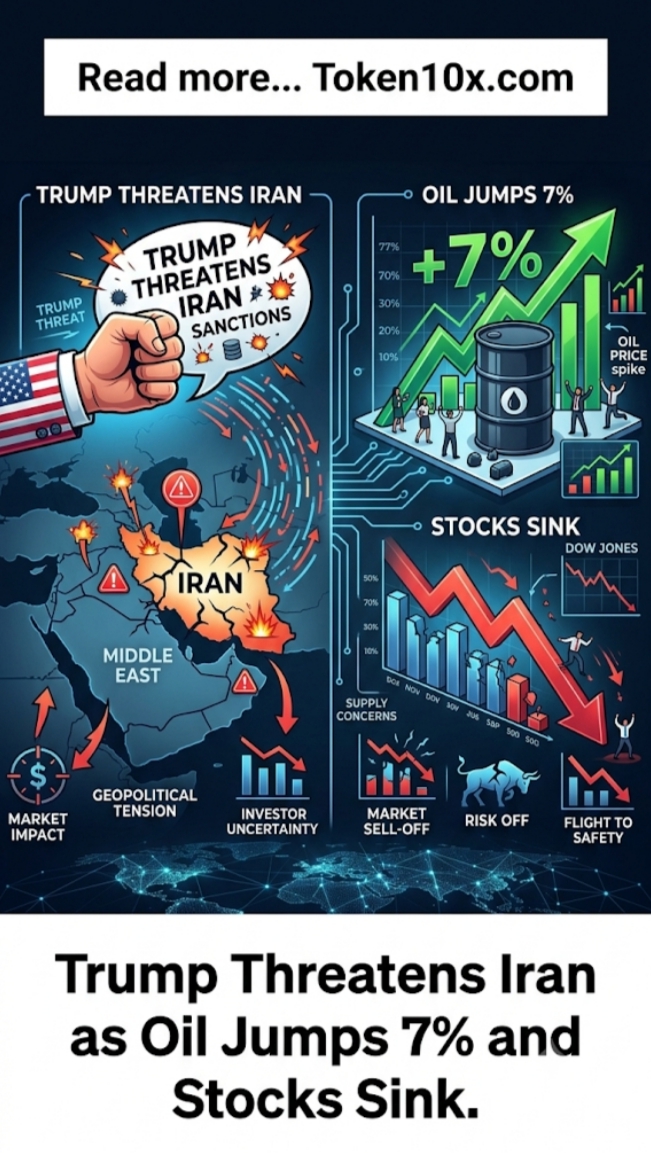
Donald Trump has issued threats against Iran amid rising tensions, coinciding with a 7% surge in oil prices and a decline in stock markets. The developments reflect heightened geopolitical risks rippling through global markets.
This situation underscores the sensitivity of energy and financial markets to Middle East instability.
The Drivers of This Market Reaction
Trump’s strong rhetoric has raised fears of potential escalation or supply disruptions in the Persian Gulf. Oil prices spiked on concerns over tighter global supply, while broader equities retreated as investors adopted a risk-off stance.
For perspective, a 7% one-day oil price jump is significant and typically signals acute market worries about supply security. Stock market declines reflect broader risk aversion.
It is important to note the fundamental difference: geopolitical threats drive short-term commodity spikes and equity volatility, while longer-term trends depend on actual supply outcomes, diplomatic resolutions, and economic fundamentals.
Impact and Broader Context
Trump’s comments have amplified uncertainty in energy markets and contributed to a cautious mood among investors. Energy-related sectors saw gains, while growth-oriented stocks faced pressure.
This episode sparks important discussions about geopolitical risk, energy security, and market resilience. Supporters of firm foreign policy argue it serves as necessary deterrence. Critics express concern over potential economic fallout and escalation risks.
Analysts observe that winner-take-most dynamics in energy markets can magnify price movements during geopolitical flare-ups. Markets remain highly attuned to developments in key oil-producing regions.
As the situation unfolds and new statements or actions emerge, oil prices and stock market movements will be closely monitored. Diplomatic progress and actual supply impacts will determine the duration and extent of current volatility.
This analysis is based on market data, geopolitical updates, and industry trends for accuracy and reliability. Prices and sentiment remain subject to rapid change.