

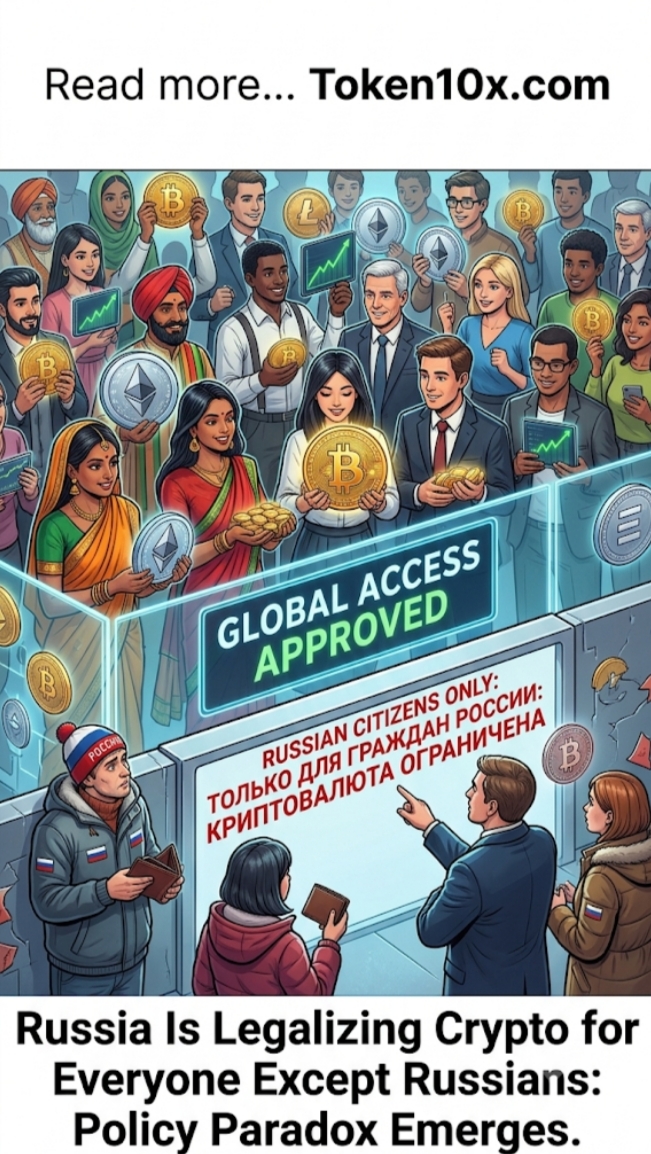
Russia is advancing plans to legalize cryptocurrency for international trade, foreign entities, and select operations while continuing to restrict ordinary Russian citizens from direct participation. The selective policy creates a two-tier system for digital asset usage within the country.
This approach allows strategic engagement with crypto on the global stage while maintaining domestic controls on retail activity and capital flows.
The Drivers of This Policy Decision
Authorities seek to facilitate cross-border payments, mitigate sanctions effects, and attract foreign business through crypto channels. At the same time, restrictions on Russian residents aim to limit speculation, prevent capital outflows, and preserve financial system stability.
For perspective, Russia holds significant mineral and energy resources that could integrate with tokenized or crypto-based trade mechanisms. The policy enables practical workarounds in international commerce while shielding the domestic economy from full crypto exposure.
It is important to note the fundamental difference: legalization for external use supports geopolitical and trade objectives, whereas domestic restrictions prioritize monetary control and risk mitigation for citizens.
Impact and Broader Context
Russian officials have shown increasing pragmatism toward crypto’s utility in global finance despite earlier skepticism. The framework permits sanctioned-friendly transactions via foreign intermediaries while limiting local retail access.
This selective legalization sparks important discussions about digital assets, sanctions resilience, and economic strategy. Supporters view it as a clever adaptation to external pressures. Critics highlight potential inconsistencies and risks of circumvention.
Analysts observe that such hybrid models reflect the realities of operating in a fragmented global financial system. Russia’s stance could influence similar approaches in other nations facing comparable constraints.
As implementation proceeds and international reactions develop, the policy will shape Russia’s crypto engagement and cross-border financial activity. Future adjustments may depend on economic results and geopolitical shifts.
This analysis is based on policy announcements, geopolitical context, and industry reports for accuracy and reliability. Details remain subject to final regulatory rollout.