

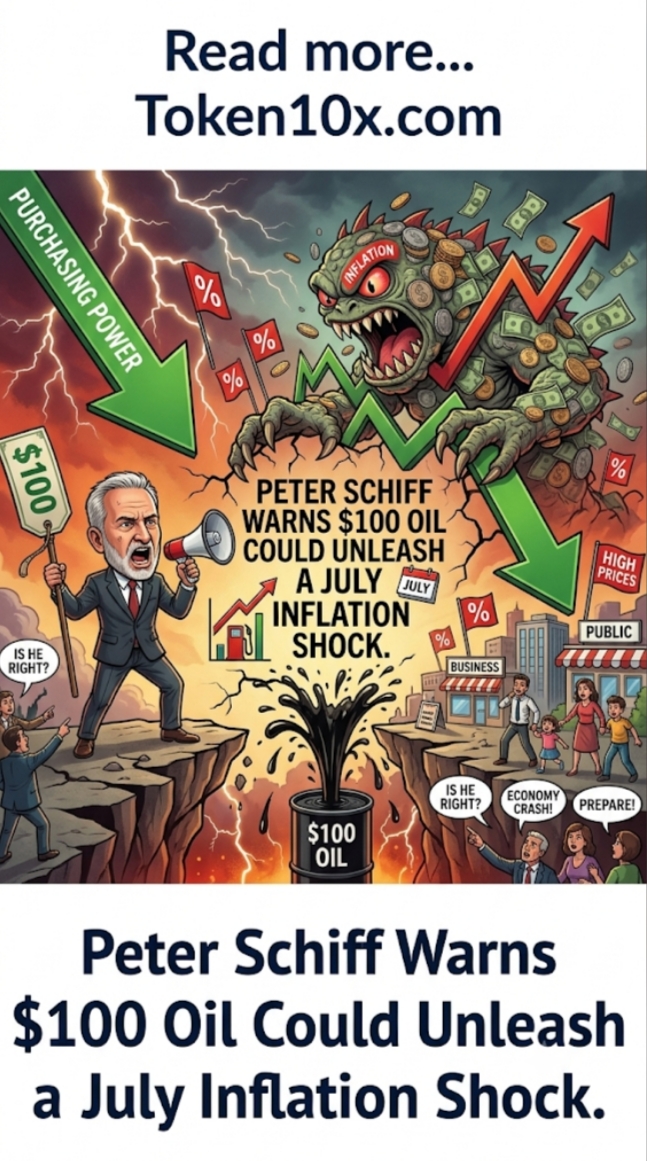
Peter Schiff has warned that oil prices approaching $100 per barrel could trigger a sharp July inflation shock. The economist and gold advocate highlights risks to consumer prices and broader economic stability from rising energy costs.
This caution comes as commodity markets tighten and inflationary concerns reemerge in key data releases.
The Drivers of This Warning
Surging oil prices, driven by supply risks, geopolitical tensions, and robust demand, threaten to push gasoline, transportation, and manufacturing costs higher. Schiff argues this could rapidly feed into CPI figures and reverse recent progress on disinflation.
For perspective, energy prices have outsized influence on near-term inflation readings. A move toward $100 oil would mark a significant escalation capable of affecting household budgets and corporate margins quickly.
It is important to note the fundamental difference: oil shocks act as direct cost-push factors, while overall inflation encompasses monetary policy, wage growth, and aggregate demand dynamics.
Impact and Broader Context
Peter Schiff has consistently highlighted vulnerabilities in fiat systems and benefits of hard assets. His warning aligns with debates over whether transitory or structural forces will dominate the inflation outlook.
This perspective sparks important discussions about energy markets, monetary policy challenges, and economic resilience. Supporters emphasize the need for energy security and prudent fiscal measures. Critics suggest offsetting factors and market adaptability may blunt the impact.
Analysts observe that commodity volatility remains a key variable for central banks targeting price stability. July inflation data will be scrutinized for evidence of energy pass-through.
As oil prices fluctuate and monthly reports near, Schiff’s forecast will be tested in real time. Energy trends and policy reactions will shape the inflation path through the remainder of the year.
This analysis is based on market commentary, economic indicators, and commodity trends for accuracy and reliability. Projections remain subject to geopolitical and market developments.