

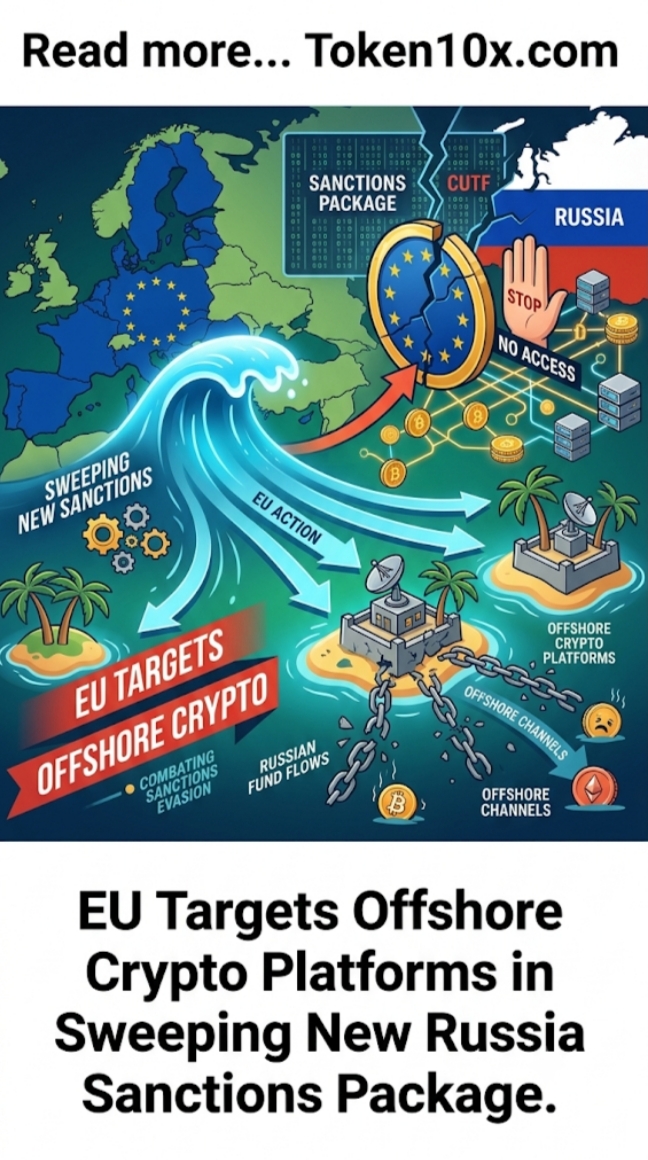
The European Union has targeted offshore crypto platforms in its latest sweeping sanctions package against Russia. The measures aim to close loopholes and restrict digital asset channels that could facilitate sanctions evasion.
This expansion demonstrates the EU’s determination to adapt sanctions tools to evolving financial technologies.
The Drivers of This Sanctions Package
Authorities identified offshore crypto platforms as potential conduits for bypassing restrictions through stablecoins, transfers, and trading services linked to Russian users or entities. The new package includes specific designations and prohibitions to disrupt these flows while intensifying overall economic pressure.
For perspective, crypto has increasingly been viewed as a workaround in heavily sanctioned environments. The EU’s proactive inclusion of offshore platforms seeks to preserve the effectiveness of its broader sanctions framework.
It is important to note the fundamental difference: sanctions prioritize geopolitical objectives and enforcement, while crypto platforms primarily enable trading, payments, and asset management for global users.
Impact and Broader Context
The sanctions will affect offshore exchanges and service providers with notable Russian exposure. European firms and individuals face heightened compliance requirements and potential restrictions on interactions with designated platforms.
This package sparks important discussions about digital finance regulation, sanctions adaptation, and global financial fragmentation. Supporters emphasize the necessity of closing evasion routes to maintain policy credibility. Critics raise concerns over overreach and collateral effects on legitimate activity.
Analysts observe that targeting crypto infrastructure signals a maturing phase in modern sanctions strategy. The EU’s approach could set precedents for other jurisdictions facing similar challenges.
As implementation begins and compliance adjustments take effect, the focus on offshore platforms will influence crypto market behavior in Europe and internationally. Future package refinements will depend on enforcement results and geopolitical shifts.
This analysis is based on official EU announcements and geopolitical reports for accuracy and reliability. Impacts remain subject to detailed implementation and ongoing developments.