

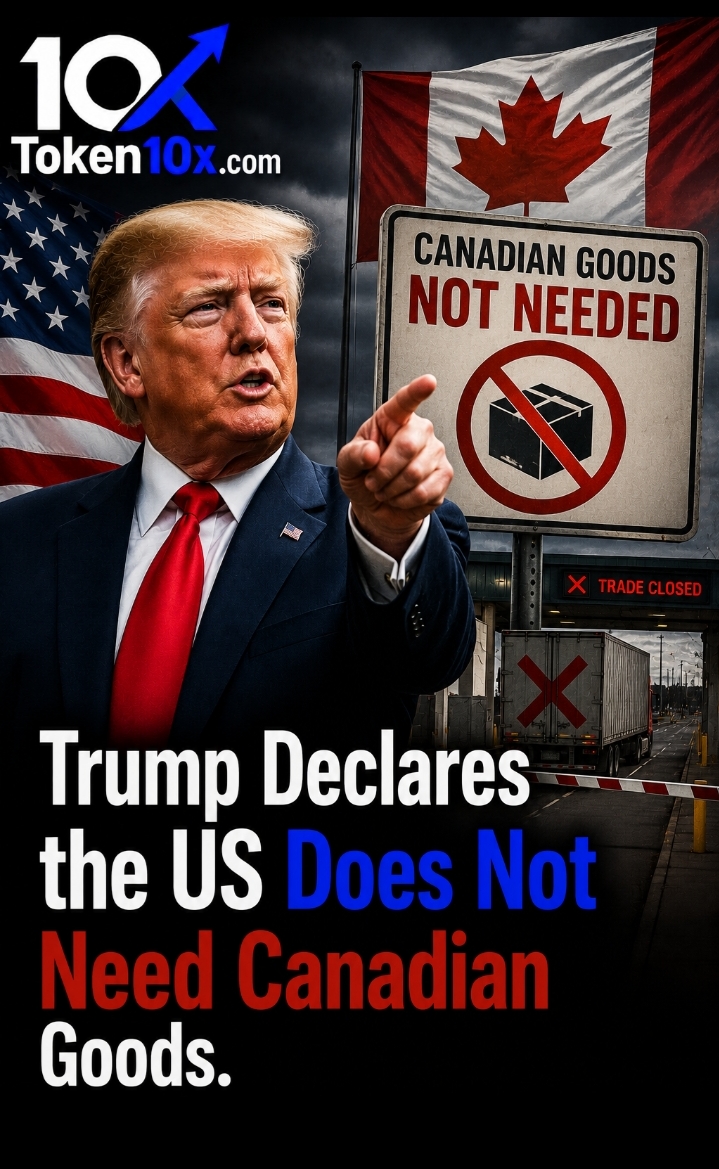
In a bold statement that has escalated trade tensions, President Donald Trump has declared that the United States does not need Canadian goods. The remarks, made in late May 2026, come amid ongoing disputes over tariffs, border security, and cross-border trade between the two neighboring countries.
Trump emphasized that the US economy is strong enough to reduce reliance on Canadian imports, particularly in sectors such as energy, lumber, automobiles, and agriculture. He argued that domestic production and alternative trading partners can sufficiently meet American needs, signaling a potential push for higher tariffs or renegotiated trade terms under the USMCA framework.
Several factors appear to have influenced Trump’s declaration. Long-standing concerns over trade imbalances, Canadian dairy and softwood lumber policies, and recent disagreements on border security and fentanyl trafficking have heightened friction. Trump’s “America First” approach continues to prioritize reducing dependence on foreign supply chains and protecting US industries.
The news has sparked lively debates across political, business, and economic communities about Trump’s statement on Canadian goods. Some view it as a concerning signal that could disrupt integrated North American supply chains and raise costs for American consumers and manufacturers. Others regard it as a necessary negotiating tactic to secure better trade terms and protect domestic jobs.
Trump’s declaration does not indicate a complete breakdown in US-Canada relations. The two countries remain close allies and major trading partners, with billions in daily cross-border commerce. Still, it reignites conversations around protectionism, supply chain resilience, the future of USMCA, and the economic interdependence between the United States and Canada.
For more trade policy analysis and latest economic insights, visit Token10x Blog https://token10x.blog and explore Token10x https://token10x.com.
As trade rhetoric intensifies, this development provides nuance: while President Trump declares the US does not need Canadian goods, the reality of deeply integrated economies suggests any major policy shifts would carry significant costs and consequences for both nations. Businesses, investors, and policymakers should perform their own research and monitor developments closely, recognizing that strong statements often serve as opening positions in complex negotiations.
The coming weeks will reveal whether this declaration leads to concrete tariff actions or renewed diplomatic negotiations between Washington and Ottawa.