

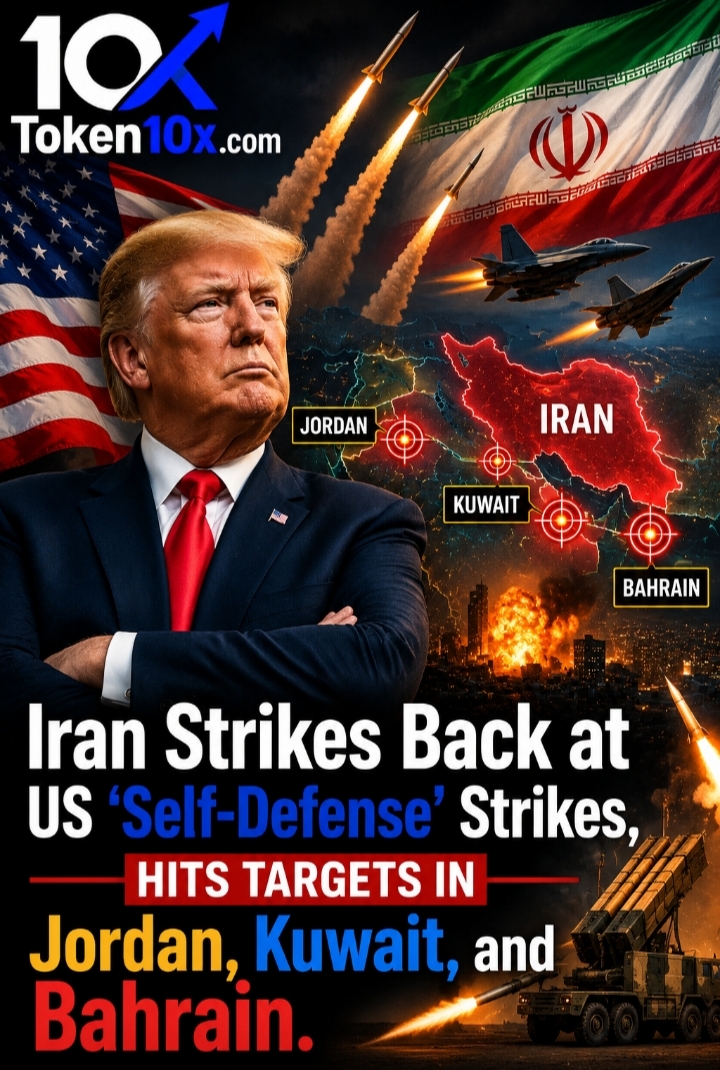
Iran has launched retaliatory strikes on U.S. military targets in Jordan, Kuwait, and Bahrain following American attacks on Iranian assets near the Strait of Hormuz, sharply escalating tensions across the Middle East.
Iran’s Islamic Revolutionary Guard Corps (IRGC) claimed responsibility for coordinated drone and missile attacks targeting the U.S. Fifth Fleet facilities in Bahrain, Ali Al Salem Air Base in Kuwait, and an airbase in Azraq, Jordan. The response followed closely after U.S. self-defense strikes triggered by the downing of a U.S. Army Apache helicopter.
Regional defense systems intercepted many incoming projectiles, resulting in limited damage and no major U.S. casualties reported so far. The swift tit-for-tat exchange highlights the fragile security situation even as backchannel diplomatic efforts for de-escalation reportedly continue.
Geopolitical and Economic Ripple Effects
This broadening of the conflict raises alarms for global stability as multiple Gulf nations hosting American forces are now directly involved. The developments threaten to pull in additional regional players and further complicate international relations at a critical time.
Financial markets are feeling the pressure from renewed economic uncertainty. Threats to the Strait of Hormuz — through which roughly one-fifth of global oil passes — have driven crude prices upward, adding to inflationary concerns and impacting energy-sensitive industries. Stock markets, commodities, and other risk assets are experiencing increased volatility as investors recalibrate portfolios.
Bitcoin and the wider cryptocurrency sector remain sensitive to these macroeconomic shocks. Safe-haven flows toward gold and the U.S. dollar often strengthen during such periods, while technology companies with global supply chains could face rising energy costs and logistical challenges.
Market Implications and Investor Considerations
Past episodes of U.S.-Iran confrontations have typically produced short-term gains in defense and energy stocks alongside broader risk-off sentiment. Any signs of diplomatic progress, however, could help stabilize markets relatively quickly.
The situation underscores the deep connections between geopolitics, energy security, and both traditional and digital financial markets. Crypto traders and equity investors alike are monitoring developments for effects on volatility, liquidity, and asset correlations.
For comprehensive coverage of how blockchain, AI, and emerging technologies respond to these global macro forces, readers can explore expert insights at token10x.blog and strategic market analysis at token10x.com.
The coming hours and days will be decisive as military actions and diplomatic negotiations shape the trajectory for international relations and global investor confidence.
Disclaimer: This content is provided for informational and educational purposes only and should not be considered financial, investment, legal, or trading advice. Always conduct your own research and consult qualified professionals before making any financial decisions.