

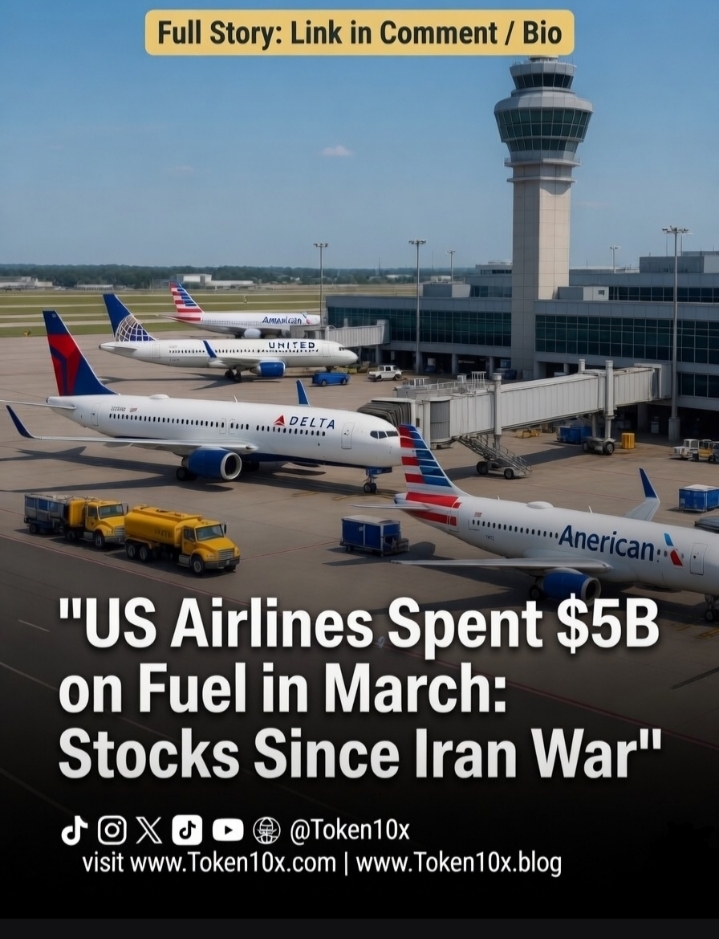
Major U.S. airlines collectively spent more than $5 billion on jet fuel in March as escalating energy market disruptions linked to the Iran conflict intensified pressure across the aviation sector. According to transportation data, fuel expenses surged roughly 56% from the previous month as oil prices climbed sharply following disruptions in shipping routes through the Strait of Hormuz.
Jet fuel prices reportedly rose to approximately $3.13 per gallon during March, while total fuel consumption also increased significantly due to strong travel demand. Analysts note that fuel costs can account for up to a quarter of airline operating expenses, making the recent spike one of the most serious challenges for the industry since the COVID-19 era.
The impact on airline stocks has been mixed. Shares of major carriers including Delta Air Lines, United Airlines, and American Airlines initially declined as investors reacted to fears of shrinking profit margins and higher operating costs. However, some stocks later stabilized as strong travel demand and fare increases helped offset part of the fuel burden.
Several airlines responded by raising baggage fees, trimming routes, reducing capacity growth plans, and implementing additional cost-cutting measures. The pressure has been particularly severe for low-cost carriers, with some operators warning that sustained fuel inflation could threaten long-term financial stability.
Industry analysts believe airline stocks will remain highly sensitive to geopolitical developments, oil market volatility, and consumer travel demand in the months ahead. Investors are closely monitoring whether energy prices stabilize or continue rising as tensions in the Middle East evolve.
Explore the latest energy crisis analysis, airline market insights, and high-conviction opportunities: www.Token10x.com
Read our full breakdown of airline stocks and the Iran war impact: Airline Sector Analysis at Token10x.blog
Several Factors Are Reinforcing This Story Right Now
Several factors are reinforcing this story right now. Rising crude oil prices, geopolitical uncertainty surrounding Iran, disruptions to global shipping lanes, and elevated jet fuel costs are all amplifying pressure on the airline industry. Investors are also watching consumer spending trends and travel demand as airlines attempt to offset higher expenses through fare increases and operational adjustments.
Random Investment Trading Secrets for Higher Yields (Crypto 1000x Version)
Periods of geopolitical instability and energy market disruption often create ripple effects across both traditional finance and crypto markets. When sectors like aviation experience stress from rising fuel costs, investors frequently rotate capital toward assets perceived as more resilient or less dependent on commodity-driven operating expenses.
In crypto markets, Bitcoin often gains attention during macro uncertainty because of its decentralized nature and fixed supply dynamics. Meanwhile, ecosystems like Ethereum continue attracting development activity tied to decentralized finance and tokenized infrastructure.
High-performance blockchain ecosystems such as Solana may also benefit as liquidity rotates toward sectors associated with technological innovation and digital infrastructure growth.
Understanding how macroeconomic shocks influence liquidity flows can help traders identify emerging opportunities early. However, heightened volatility during geopolitical crises makes disciplined risk management essential.
Live Top 20 Cryptocurrencies by Market Cap (Updated: May 7, 2026 ~09:40 UTC)
| Rank | Crypto | Price (USD) | Market Cap |
|---|---|---|---|
| 1 | BTC | $91,200 | $1.96T |
| 2 | ETH | $3,260 | $389B |
| 3 | USDT | $1.00 | $195B |
| 4 | XRP | $2.10 | $129B |
| 5 | BNB | $812 | $124B |
| 6 | SOL | $155 | $90B |
| 7 | USDC | $1.00 | $85B |
| 8 | DOGE | $0.156 | $28.1B |
| 9 | TRX | $0.420 | $50B |
| 10 | ADA | $0.398 | $17.1B |
| 11 | AVAX | $17.40 | $8.5B |
| 12 | SHIB | $0.000047 | $26.8B |
| 13 | LINK | $33.20 | $24.5B |
| 14 | BCH | $742 | $19.9B |
| 15 | DOT | $10.50 | $20.0B |
| 16 | LEO | $14.10 | $14.8B |
| 17 | NEAR | $2.72 | $5.8B |
| 18 | UNI | $6.15 | $6.6B |
| 19 | LTC | $120.00 | $9.8B |
| 20 | TON | $2.72 | $7.8B |
Last Updated: May 7, 2026 ~09:40 UTC
Trading Tips for 1000x Profits (Crypto High-Profit Strategy Explained)
The turbulence facing airline stocks demonstrates how quickly geopolitical events can reshape market sentiment and capital flows. Rising energy costs tend to pressure sectors with high operational expenses, while investors often seek exposure to alternative growth narratives during periods of uncertainty.
In crypto markets, Bitcoin frequently acts as a macro-sensitive asset that reacts to changes in liquidity, inflation expectations, and geopolitical stress. At the same time, Ethereum continues to attract innovation through decentralized applications, while networks like Solana may capture momentum from increasing ecosystem activity.
Identifying opportunities during volatile periods often requires understanding how fear and liquidity move across global markets. Traders who monitor macroeconomic trends, energy prices, and institutional capital flows may gain an advantage in spotting emerging narratives before they become mainstream.
Still, heightened volatility can create rapid reversals. Long-term success depends on disciplined positioning, careful risk management, and avoiding excessive leverage during unstable market conditions.
Read News from previous week from www.Token10x.blog
- Cloudflare, ServiceNow, and Guardant Health were among the top 10 large-cap losers last week
- Lockheed Martin Nails Historic Orion Splashdown With NASA, Paving Way for Moon Return
- US-Iran Talks Fail After 21 Hours, With Vance Calling It ‘Bad News for Iran’
- Nvidia’s CEO Encourages California Relocation Despite Billionaires’ Plans to Flee the State’s Proposed Wealth Tax
- Trump Warns China of ‘Big Problems’ Over a Reported Plan to Supply Iran with Anti-Air Missiles
- US Official Rejects Iranian Media Report Claiming It Agreed to Unfreeze Iranian Assets
- Michael Saylor’s Strategy May Surpass BlackRock’s BTC Holdings in Weeks
- Disney Announces Plan to Cut Nearly 1000 Jobs Under New CEO
- Binance April Delisting: Six Cryptocurrencies in Pipeline
Airline investors remain focused on whether fuel prices stabilize in the coming months or if prolonged geopolitical tensions continue to pressure profitability across the sector.
Want a breakdown of airline stocks, oil prices, and the Iran war impact? Watch this:
Airline Stocks vs Oil Shock: Winners, Risks & Recovery Scenarios
🚀 Full analysis + exclusive high-conviction ideas at www.Token10x.com
Daily guides, free resources & deep dives → www.Token10x.blog
Join for Exclusive Alpha & Free Training
Join WhatsApp channel + group for free trading education → Click Here
🚨 Missing gains? Follow @token10x on TikTok → Click Here
Secret plays daily on Instagram! Follow @token10x → Click Here
Explosive strategies & live trades on YouTube! Subscribe @Token10x → Click Here
Live signals in Discord! Join @token10x server → Click Here
Disclaimer: This article is for informational and educational purposes only. It is not financial advice or investment advice. Always conduct your own independent research and consult a qualified financial professional before making investment decisions.