

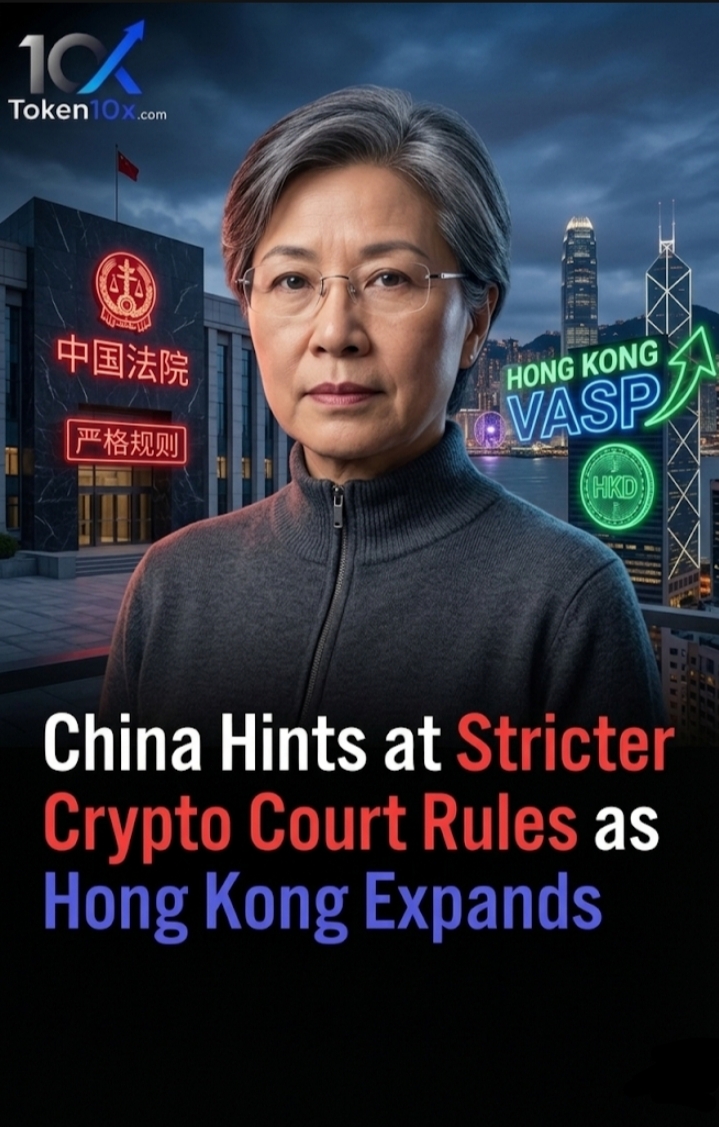
In a notable development highlighting the diverging paths within Greater China, mainland authorities have hinted at stricter crypto court rules while Hong Kong continues to expand its regulated digital asset ecosystem. The signals from Beijing in late May 2026 have triggered discussions about China crypto policy and its implications for the broader industry.
Recent judicial interpretations and regulatory updates suggest Chinese courts may adopt even tougher stances on cryptocurrency-related cases. This includes clearer guidelines treating most crypto transactions as illegal and potentially expanding enforcement against illegal fundraising, offshore activities, and virtual asset disputes. The moves aim to reinforce financial stability and crack down on risks associated with unregulated crypto trading.
Several factors appear to drive China’s cautious approach. Mainland authorities maintain a firm ban on crypto trading and mining, viewing decentralized assets as threats to capital controls and monetary sovereignty. Updated notices in 2026 emphasize preventing risks, with stronger extraterritorial reach targeting Chinese entities involved in overseas crypto activities. This comes amid ongoing concerns over money laundering, fraud, and speculative bubbles.
In contrast, Hong Kong is actively expanding its crypto framework. The city continues to roll out licensing for virtual asset dealers, custodians, and trading platforms, while exploring perpetual contracts for professional investors. Recent announcements focus on enhancing secondary market liquidity, tokenized assets, and sustainable market development under robust oversight from the Securities and Futures Commission.
This tale of two jurisdictions underscores China’s dual strategy: strict prohibition on the mainland paired with controlled innovation in Hong Kong as a testing ground and gateway. Hong Kong’s progress in areas like stablecoins and institutional products highlights its ambition to become a leading crypto hub in Asia without challenging Beijing’s core policies.
The news has sparked lively debates across crypto communities about China crypto regulations. Some view the stricter court hints as a concerning signal that could limit regional growth. Others regard it as a consistent policy that separates speculative risks from regulated innovation, potentially benefiting Hong Kong’s position.
China’s evolving court rules do not indicate a complete rejection of blockchain technology. The mainland continues to advance state-backed digital initiatives and explores tokenized real-world assets within approved frameworks. Still, it reignites conversations around regulatory clarity, cross-border enforcement, and the balance between innovation and control.
For more China crypto analysis and latest digital asset insights, visit Token10x Blog https://token10x.blog and explore Token10x https://token10x.com.
As the crypto market watches developments in Greater China, this contrast provides nuance: while mainland rules tighten in courts and enforcement, Hong Kong’s expansion offers opportunities under licensed structures. Investors should perform their own research and consider professional advice, recognizing that policy signals do not always dictate immediate market outcomes.
This dynamic may shape the future of crypto in Asia, with Hong Kong positioned as a bridge while Beijing maintains firm oversight. The coming months will reveal how stricter court rules and Hong Kong’s growth influence regional adoption and investment flows.