

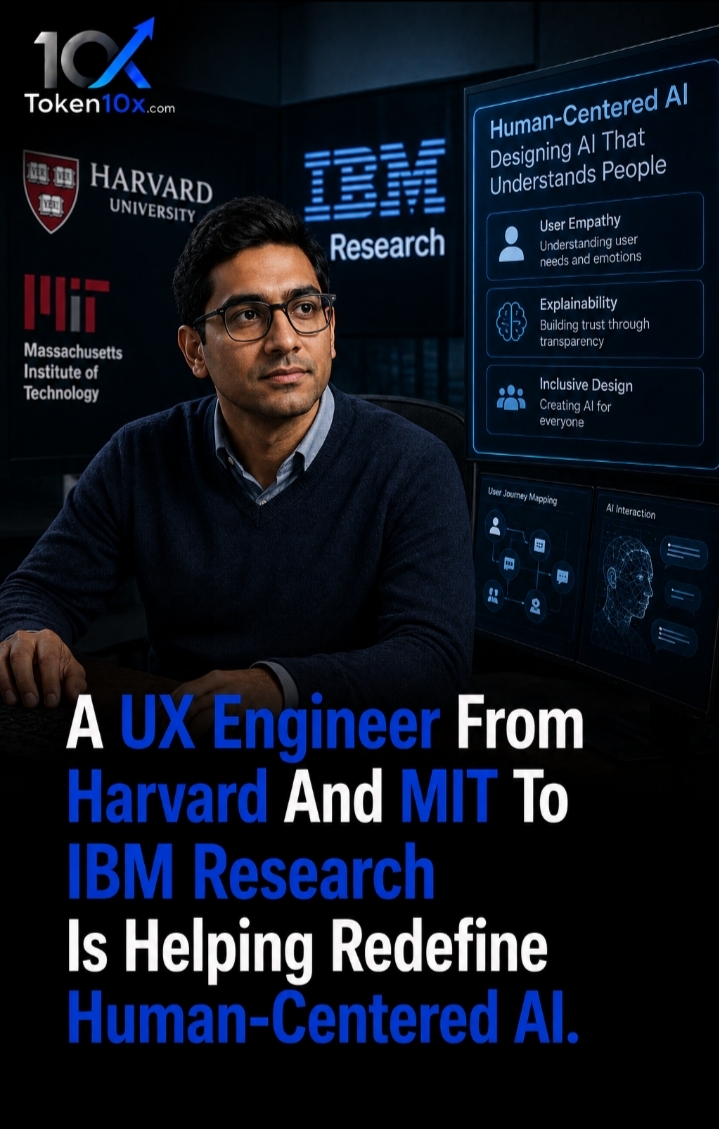
In a notable story bridging elite academia and cutting-edge industry research, a UX engineer with experience from Harvard and MIT is making significant contributions at IBM Research to redefine human-centered AI. The developments, highlighted in late May 2026, showcase how interdisciplinary expertise is shaping the next generation of ethical and intuitive artificial intelligence systems.
The engineer, whose work spans user experience design from Harvard and MIT programs to advanced projects at IBM Research, focuses on creating AI systems that prioritize human values, transparency, and usability. Their efforts emphasize designing AI that augments human capabilities rather than replacing them, with innovations in explainable interfaces, bias mitigation, and emotionally intelligent interactions.
Several factors appear to have positioned this UX engineer as a key voice in human-centered AI. Growing public concern over AI ethics, regulatory pressure for responsible AI development, and IBM’s commitment to trustworthy technology have created fertile ground for such work. The combination of rigorous academic training from Harvard and MIT with IBM Research’s resources enables practical breakthroughs that address real-world usability challenges in enterprise AI deployments.
This work highlights the increasing importance of human-centered design in artificial intelligence development. As companies race to deploy powerful models, experts with strong UX backgrounds are helping ensure technology remains accessible, fair, and aligned with societal needs.
The news has sparked lively debates across tech, design, and AI communities about the role of UX engineers in redefining human-centered AI. Some view it as a strong signal that multidisciplinary talent is essential for building beneficial AI. Others regard it as highlighting the gap between technical capabilities and genuine human alignment.
This contribution does not indicate a slowdown in raw AI capability development. IBM Research and the broader industry continue pushing performance boundaries while incorporating human-centered principles. Still, it reignites conversations around ethical AI, user experience in intelligent systems, and the critical role of design in technology’s future.
For more AI and technology insights, visit Token10x Blog https://token10x.blog and explore Token10x https://token10x.com.
As the AI industry matures, this development provides nuance: while technical advances grab headlines, UX engineers from prestigious backgrounds like Harvard, MIT, and IBM Research are quietly helping build AI that truly serves humanity. Researchers and professionals should perform their own research and follow these human-centered initiatives, recognizing that thoughtful design will shape long-term adoption and trust.
The coming months will reveal further projects and publications from this work. Their influence may help set new standards for how the industry approaches human-centered AI development.