

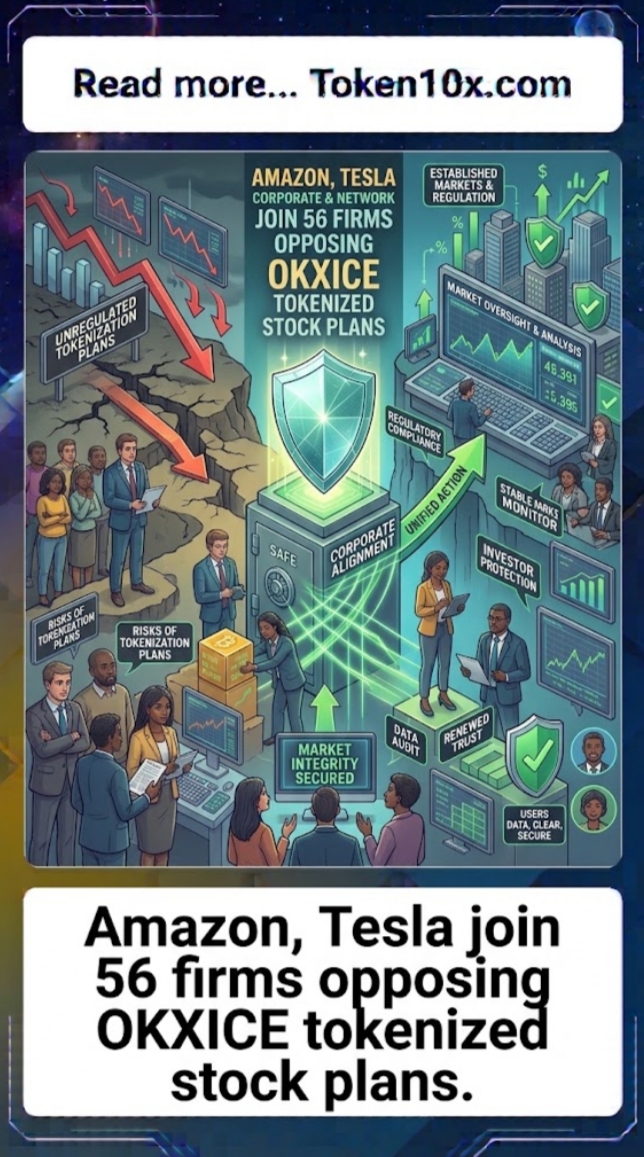
Amazon, Tesla, and SpaceX have joined a growing list of companies objecting to the tokenization of their shares on OKXICE, a planned blockchain-based venue for trading tokenized U.S. stocks. The latest public notice from the joint venture, dated November 2, 2026, added these three along with Netflix, SoFi Technologies, and Lam Research, bringing the total number of disclosed objections to 56.
OKXICE is a Texas joint venture equally owned by Intercontinental Exchange Holdings (parent of the New York Stock Exchange) and an OKX-related entity. It plans to offer secondary trading of third-party tokenized versions of U.S. stocks paired with stablecoins via permissioned automated market maker pools, without operating a traditional order book or holding customer assets. Under the SEC’s September 2026 innovation exemption for tokenized securities venues, issuers must be given written notice and have 30 calendar days to object; a timely objection prevents the venue from listing an unaffiliated third-party tokenized version of that stock. Companies remain free to tokenize and list their own shares.
Of the 62 companies initially selected for potential trading, approximately 49 (about 79%) have now objected.
The Drivers of the Current Situation
The central issue is the rapid accumulation of formal objections from major U.S. companies to OKXICE’s plans for third-party tokenized stock trading. Confirmed elements include the November 2 notice adding Amazon, Tesla, SpaceX, Netflix, SoFi, and Lam Research; the rise in total objections to 56; the high percentage of the original selection that has opted out; the structure of the OKX–ICE joint venture; and the SEC innovation-exemption rules that give issuers a clear path to block unaffiliated tokenization on the venue. These developments occur as the 30-day response windows for early notifications approach or pass.
Further notices, remaining deadlines, or statements from the joint venture will indicate the final scope of available stocks.
Impact and Broader Context
The scale of opposition highlights significant issuer reluctance toward third-party tokenization of their equity on this platform. It raises questions about the practical viability of launching a tokenized stock venue when a large majority of targeted blue-chip names have objected, the balance between innovation in 24/7 blockchain trading and corporate control over how their shares are represented, the effectiveness of the SEC’s notice-and-objection mechanism, the potential for companies to pursue their own tokenization instead, and the longer-term prospects for bridging traditional equities with crypto market infrastructure. Coverage distinguishes between the documented objections (which block only third-party versions on this specific venue) and any broader rejection of tokenization itself.
Additional issuer responses, regulatory clarifications, or updates from OKXICE on its revised lineup will determine the project’s next steps.
This analysis draws from OKXICE’s public notices, contemporaneous reporting on the objection list, and the framework of the SEC’s innovation exemption. The final set of available tokenized stocks, any adjustments to the venture’s plans, and the ultimate launch timeline remain subject to ongoing issuer decisions and regulatory processes.