

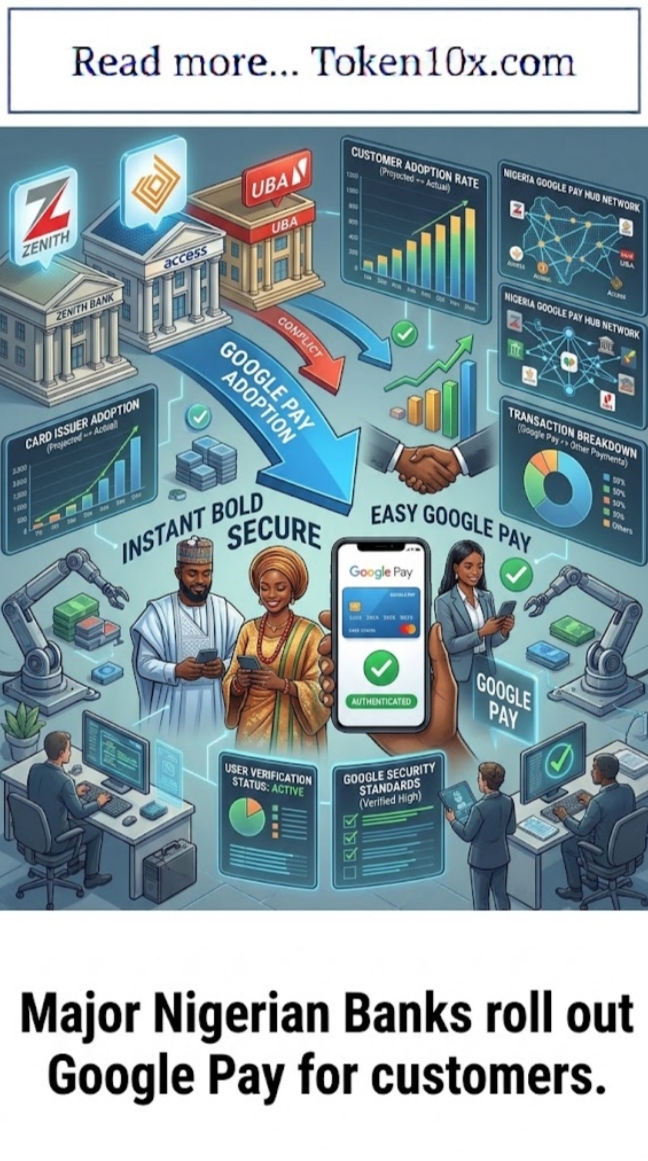
Several major Nigerian banks, including United Bank for Africa (UBA), Guaranty Trust Bank (GTBank/GTCO), FirstBank, and Zenith Bank, have enabled Google Pay for eligible cardholders following the service’s launch in Nigeria around October 27–28, 2026. Customers with supported Visa and Mastercard debit, credit, or prepaid cards can add them to Google Wallet on compatible Android devices and make payments online or via contactless terminals where accepted.
UBA described itself as the first Nigerian bank to go live, enabling Google Pay for eligible Visa and Mastercard users for local and international contactless payments. FirstBank confirmed support for eligible cardholders to make secure contactless payments at supported terminals worldwide. GTBank focused on online checkout for subscriptions, travel, food delivery, and bills, while its parent GTCO extended acceptance to merchants via HabariPay’s Squad payment gateway. Zenith Bank enabled eligible Mastercard cards for both contactless and online use.
The rollout relies on tokenization for security, replacing actual card details with a digital token. Support is limited to specific cards from these banks; Verve and other domestic schemes, as well as cards from additional banks, were not included at launch. Contactless (tap-to-pay) terminals remain limited in many locations, so online checkout is expected to see initial primary use.
The Drivers of the Current Situation
The main development is the activation of Google Pay by leading Nigerian banks shortly after the digital wallet’s official availability in the country. Confirmed elements include the participation of UBA, GTBank, FirstBank, and Zenith Bank; support primarily for Visa and Mastercard products; the dual online and contactless capabilities (where terminals exist); merchant acceptance via GTCO’s infrastructure; and the use of tokenization for security. These steps expand digital payment options in Africa’s largest economy.
Further bank integrations or broader terminal adoption will mark the next phase.
Impact and Broader Context
The introduction aims to simplify payments by reducing the need for physical cards or repeated card-detail entry, while competing with existing local payment platforms. It raises questions about the pace of additional bank and card-scheme support, the density of contactless terminals across Nigeria, customer adoption rates on Android devices, merchant readiness for online acceptance, and the overall effect on digital payment volumes. Coverage highlights the distinction between the initial four-bank launch and the potential for wider ecosystem expansion.
Subsequent bank announcements, usage data, or infrastructure improvements will determine the lasting effect.
This analysis draws from bank statements reported by BusinessDay, Daily Trust, and other Nigerian outlets, along with coverage of Google Pay’s Nigeria launch. Exact eligibility for individual cards, full terminal coverage, and longer-term adoption metrics remain subject to ongoing rollout and user experience.