

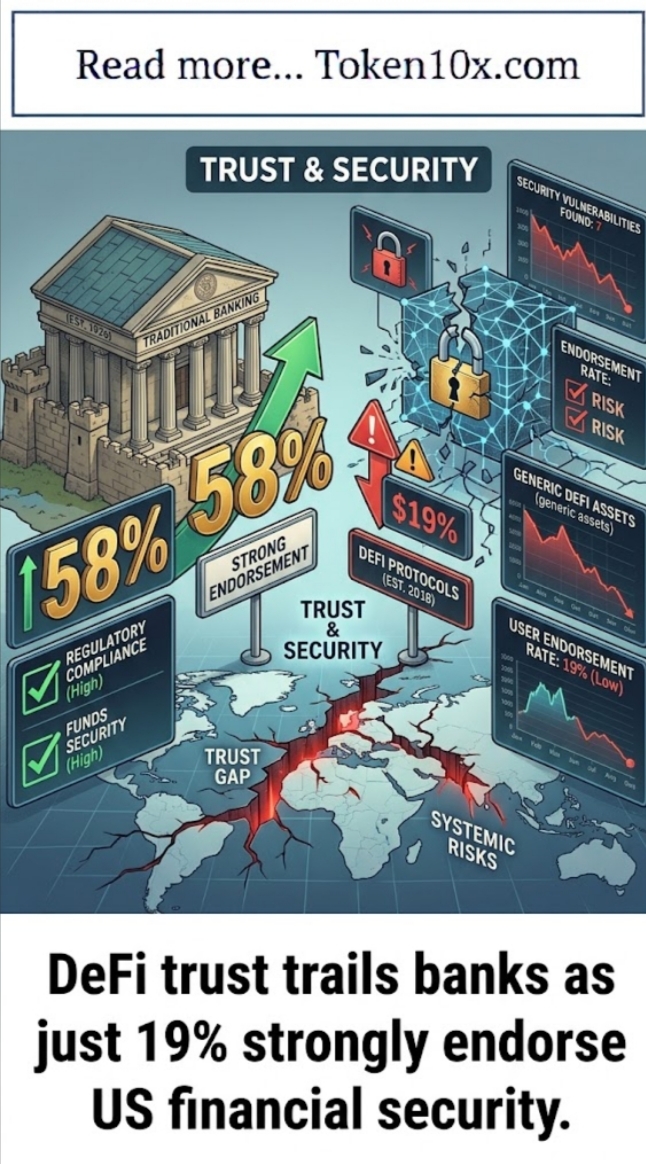
A new Ipsos survey conducted for the DeFi Education Foundation found that only 19% of Americans strongly endorse the security of the U.S. financial system, while just 5% express complete or high trust in decentralized platforms. The national study surveyed 1,545 U.S. adults from September 8–16, 2026, using a probability-based sample weighted to the adult population, with a margin of sampling error of ±2.8 percentage points.
Complete or high trust stood at 42% for large national banks, 41% for regional or community banks, and 48% for credit unions. In contrast, 73% of respondents reported little or no trust in decentralized platforms that allow users to retain control of their funds, with another 19% expressing only some trust.
Lifetime crypto ownership or use reached 22%, while past-year participation remained at 13%. Financial privacy mattered to 74% of respondents, and 62% preferred keeping transaction-related personal information private. Among those open to trying DeFi, saving money was the top attraction at 85%, compared with 24% for crypto lending or borrowing. Nearly two-thirds (63%) said the financial system needs an upgrade to combat emerging threats such as cybercrime and AI.
The Drivers of the Current Situation
The main finding is the low public confidence in overall U.S. financial security (19% strong endorsement) alongside significantly lower trust in DeFi platforms (5% high trust) relative to traditional banks and credit unions. Confirmed elements include the survey methodology and sample size, the comparative trust figures across institution types, flat recent crypto participation, and strong stated interest in privacy and control. These results occur amid ongoing debates about the readiness of both traditional finance and decentralized systems to address new technological risks.
Further demographic breakdowns or follow-up studies will add nuance to the trust gap.
Impact and Broader Context
The survey highlights a persistent trust deficit for DeFi despite public desire for greater control and privacy. It raises questions about barriers to broader adoption, the role of familiarity (most respondents reported low awareness of DeFi), the potential for practical use cases such as saving to drive future interest, and the challenge for both traditional institutions and decentralized platforms in addressing security perceptions. Coverage notes the distinction between lukewarm confidence in the existing system and the even lower figures for user-controlled alternatives.
Subsequent surveys, education efforts, or regulatory developments will help determine whether the trust gap narrows.
This analysis draws from the Ipsos/DeFi Education Foundation survey results and contemporaneous reports. Exact question wording variations, full demographic crosstabs, and any shifts in sentiment remain subject to the complete study data and future polling.