

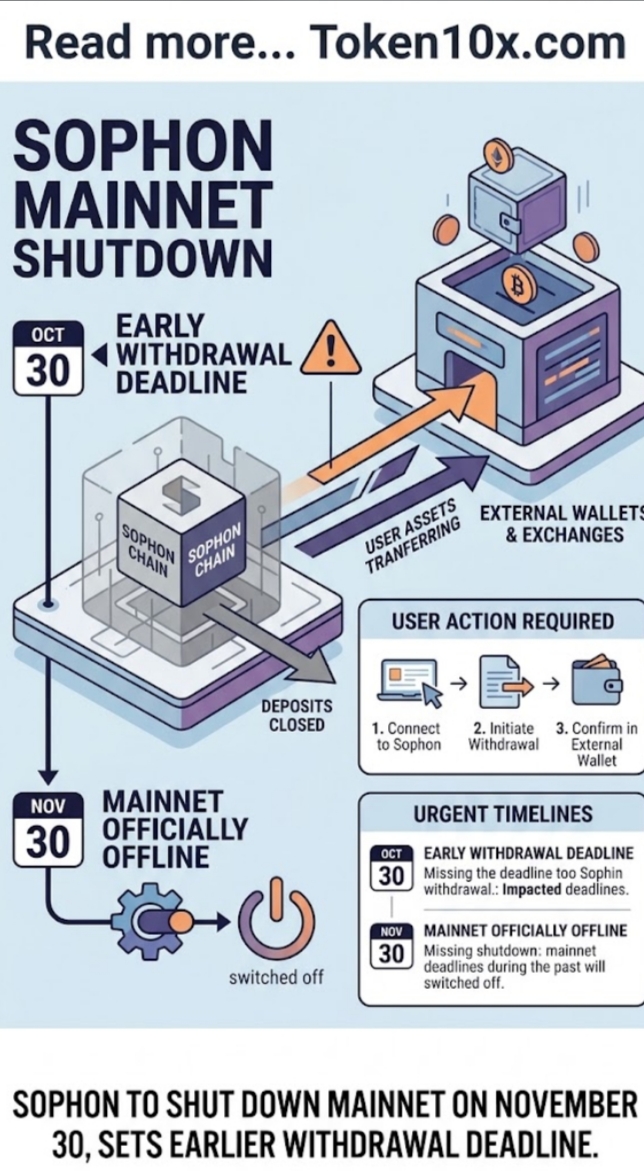
Sophon has confirmed the final shutdown of its mainnet for November 30, 2026. The project, which previously announced a wind-down of Sophon Chain, set November 25 as the hard deadline for users to withdraw assets. After that date, key infrastructure and related websites will begin closing ahead of the full network shutdown. Assets remaining on Sophon Chain after the deadline risk becoming permanently inaccessible.
Users are directed to withdraw liquid assets such as SOPH, ETH, and USDC via the official claim portal, claim any outstanding staking or Guardian rewards, and retrieve unclaimed farm assets through the designated farm interface. The team emphasized using only official links and warned against fraudulent migration sites. The announcement follows an earlier decision to discontinue the independent chain and shift focus toward consumer applications on Base.
The Drivers of the Current Situation
The main issue is Sophon’s decision to permanently retire its mainnet after determining that the costs of operating a standalone blockchain no longer justified the benefits. The project had already signaled a phased wind-down and a pivot toward consumer experiences and applications built on Base. The November 30 shutdown date finalizes that process, while the earlier November 25 withdrawal cutoff accounts for the sequential decommissioning of bridges, RPC nodes, front-end sites, and related infrastructure.
Related factors have limited the operational window. Once infrastructure begins shutting down after November 25, users may lose practical access even if the chain has not fully powered down. Remaining balances in contracts could become technically unreachable without functioning relays. Only the official timeline, the two key dates, and the listed withdrawal channels are confirmed. Broader competitive pressure among modular and consumer-focused chains, along with the desire to conserve resources for new products, contributed to the schedule.
Continued monitoring requires observation of actual withdrawal volumes, infrastructure decommissioning progress, and any residual support after November 25. Limited immediate disclosure on exact migration volumes or residual asset handling forms a narrower path for precise forecasting. Sophon is actively communicating the deadlines while preparing for the final shutdown. The situation is a scheduled mainnet retirement with an earlier withdrawal cutoff designed to prevent permanent loss of user assets.
Impact and Broader Context
Questions about Sophon’s planned mainnet shutdown on November 30 and the earlier withdrawal deadline keep growing. The compressed timeline creates uncertainty for holders who have not yet moved funds. It also elevates attention on the risks of stranded assets when infrastructure is phased out ahead of full network closure. Users, ecosystem participants, and other chain operators continue to assess the implications.
The issue drives debate on the sustainability of independent Layer-2 and modular chains in a consolidating market. It raises questions about the durability of user funds during wind-downs, the limits of extended support windows, risks of phishing during migration periods, effects on near-term confidence in similar consumer-focused networks, and competition among teams choosing to migrate rather than maintain standalone infrastructure. Official statements stress the need to act by November 25 rather than waiting until the final shutdown date. Coverage notes that the decision follows an earlier strategic pivot away from operating the chain itself.
The mid-October timeline confirmation forced renewed focus on asset recovery. The current review shows how subsequent withdrawal activity, infrastructure status updates, or any residual recovery options will determine the lasting effect.
New withdrawal statistics, final infrastructure status reports, or post-shutdown communications will clarify the outcome for remaining assets.
This analysis uses Sophon’s official announcement and contemporaneous reporting. Asset recovery success and the precise sequence of infrastructure closures remain subject to user action and operational execution.