

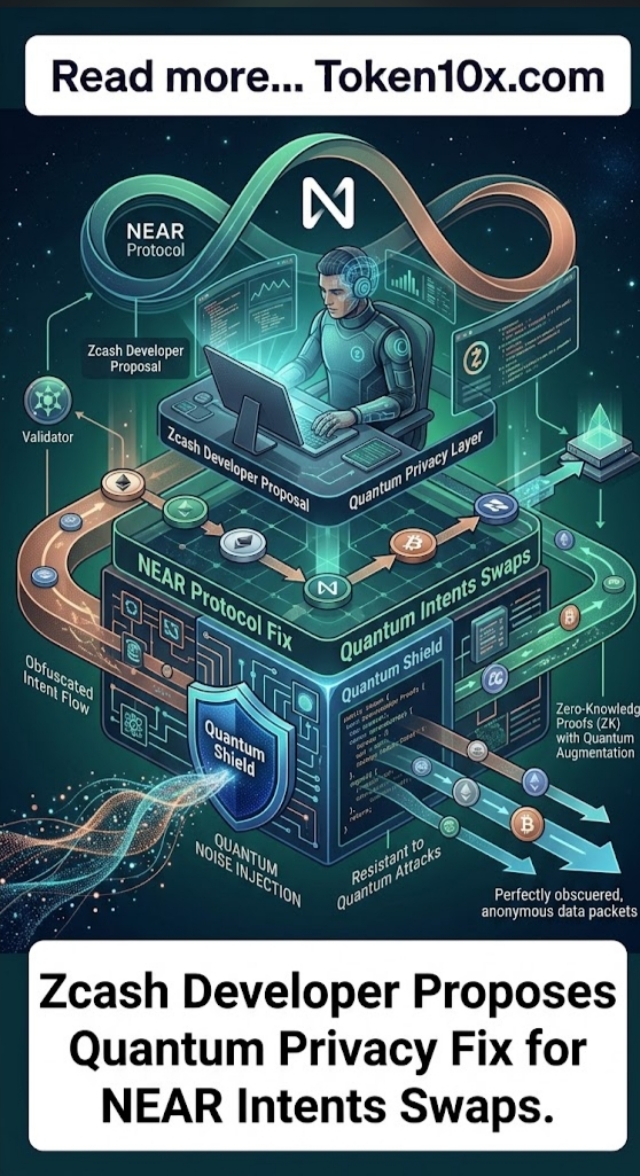
Zakura, a Zcash infrastructure team building node and wallet software, has proposed a design that assigns a separate incoming viewing key to every ZEC swap executed through NEAR Intents. The change aims to limit what a future quantum computer could learn from any single publicly posted shielded address. As of mid-October 2026, the proposal remains in review and has not yet shipped. Developer Adam Tucker explained that, until broader upgrades such as Tachyon arrive, a single published shielded address could allow a quantum attacker to link every payment that address’s key has ever received.
The proposal keeps the user’s existing spending key intact while isolating viewing keys on a per-swap basis. Compatible software wallets using Zakura’s open-source libraries, including Vizor, could integrate the feature within weeks; hardware wallet support would follow once firmware updates are available. The design requires no network upgrade.
The Drivers of the Current Situation
The main issue is a privacy gap that arises when users swap ZEC via NEAR Intents. The cross-chain service permanently publishes certain Zcash refund addresses on NEAR’s public blockchain, even when no refund is needed. Those addresses share an incoming viewing key. A sufficiently powerful quantum computer running Shor’s algorithm could theoretically recover that key from the public data and thereby identify all payments received by the account, including amounts and memos.
Related factors have shaped the response. Spending keys remain separate, so funds themselves would stay secure even if a viewing key were compromised. Zakura’s approach derives a fresh viewing key for each swap from a hashed index while leaving the main spending authority unchanged. Wallets leave an encrypted memo noting the swap index, check published filters, and use private information retrieval to locate matching NEAR bridge payouts without revealing which addresses they queried. For incoming ZEC swaps the wallet checks addresses sequentially and stops after a run of unused ones. Only the engineering proposal and the planned wallet-side rollout timeline are confirmed. Broader confidence in Zcash’s privacy model and the January target for quantum-resistant payments contributed to the constructive framing.
Continued monitoring requires observation of actual wallet integrations and any further technical refinements. Limited immediate disclosure on exact hardware-wallet timelines forms a narrower path for precise forecasting. Zakura and other Zcash developers are actively advancing related quantum-resistant work. The situation is a targeted wallet design that closes a quantum-era linkage risk for NEAR Intents swaps while preserving existing spending keys.
Impact and Broader Context
Questions about the Zcash developer proposal for a quantum privacy fix on NEAR Intents swaps keep growing. The design creates uncertainty about how quickly software and hardware wallets will adopt it. It also elevates attention on “harvest now, decrypt later” risks that arise when shielded addresses appear on public chains. Users, cross-chain service operators, and competing privacy protocols continue to assess the implications.
The issue drives debate on quantum resilience for privacy-focused cryptocurrencies. It raises questions about the durability of shielded-transaction privacy under future quantum advances, the limits of client-side mitigations before network-wide upgrades, risks of similar address exposure in other bridges, effects on near-term confidence in ZEC cross-chain activity, and competition among post-quantum roadmaps. Zakura stresses that the change isolates any recovered key to a single swap. Coverage notes that the fix could reach users ahead of the broader January target for quantum-resistant payment support.
The mid-October engineering post forced renewed focus on Zcash’s quantum-readiness strategy. The current review shows how subsequent wallet releases, Tachyon progress, or additional cross-chain disclosures will determine the lasting effect.
New wallet implementations, updated technical specifications, or further quantum-related proposals will clarify the practical contribution of the per-swap viewing-key design.
This analysis uses Zakura’s engineering post and contemporaneous reporting. Adoption timelines and the ultimate effectiveness against future quantum capabilities remain subject to software releases and technological developments.