

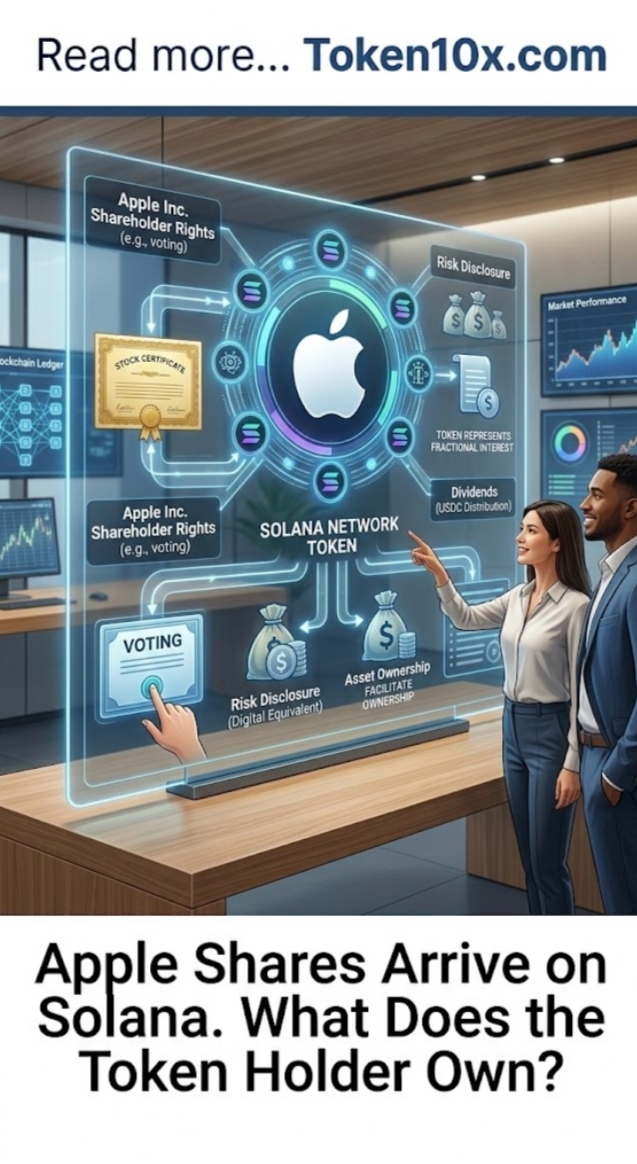
Tokenized versions of major U.S. equities, including Apple, have launched on Solana. As of early October 2026, Securitize introduced its Securitize Stocks product covering 12 companies such as Apple, Microsoft, Nvidia, Tesla, and others. Each token is structured as a security entitlement backed one-for-one by an underlying share held through the firm’s regulated brokerage. Trading occurs on the platform with settlement in USDC.
The offering continues under a regulated framework for eligible investors. It has restricted direct registration on the issuers’ shareholder lists in the initial form. Existing economic benefits are passed through according to the product terms. Securitize relies partly on custody arrangements and UCC Article 8 entitlements while routing trading through its Solana-based venue. This highlights the difference between holding a tokenized claim and being a registered shareholder of Apple itself.
The Drivers of the Current Situation
The main issue is the precise legal nature of ownership in the tokenized shares. Securitize states that each token represents an Article 8 security entitlement backed by a real underlying share that is not lent out. No endorsement or sponsorship comes from Apple or the other companies. Holders receive applicable economic benefits such as dividends and, where available, voting rights, but they are not automatically listed on the issuer’s books.
Investors have limited conversion options under the current structure. Some pathways allow conversion into direct registered shares if issuer-sponsored tokenization becomes available. Trading begins during extended market hours with plans to expand toward continuous availability. Liquidity is supported by partners including Jump Trading. Only eligible participants in permitted jurisdictions can access the product. Broader regulatory conditions, including temporary SEC-related exemptions for on-chain trading of certain tokenized NMS stocks, shape the offering. The tokens remain distinct from pure synthetic price trackers.
Continued access requires compliance with the platform’s eligibility and operational rules. Limited direct share registration under the entitlement model forms a narrower path. Market participants and legal observers are actively examining the custody documents. The situation is an ownership-structure question tied to regulated tokenization.
Impact and Broader Context
Questions about Apple shares arriving on Solana and what the token holder owns keep growing. The launch creates uncertainty around the practical differences between tokenized entitlements and traditional brokerage holdings. It also affects comparisons with other on-chain equity products. Investors, regulators, and tokenization platforms continue to assess the rights and risks.
The issue drives debate on the substance of on-chain equity ownership. It raises questions about how securely the 1:1 backing is maintained, the limits of voting and economic rights without registered status, risks associated with intermediary custody, effects on liquidity and settlement speed, and competition among different tokenized-stock models. Stakeholders stress that the underlying companies have not sponsored the tokens. Securitize says the structure provides a backed claim with pass-through benefits while enabling blockchain-based trading and potential future conversion.
The October launch forced public scrutiny of the entitlement design. The current product review shows how conversion mechanisms, trading expansion, and any issuer responses will shape holder rights.
New platform updates, conversion events, or regulatory clarifications will clarify the exact ownership position of token holders.
This analysis uses Securitize product announcements, legal structure descriptions, and related market coverage. Ownership rights and product terms remain subject to the governing documents and ongoing regulatory conditions.