

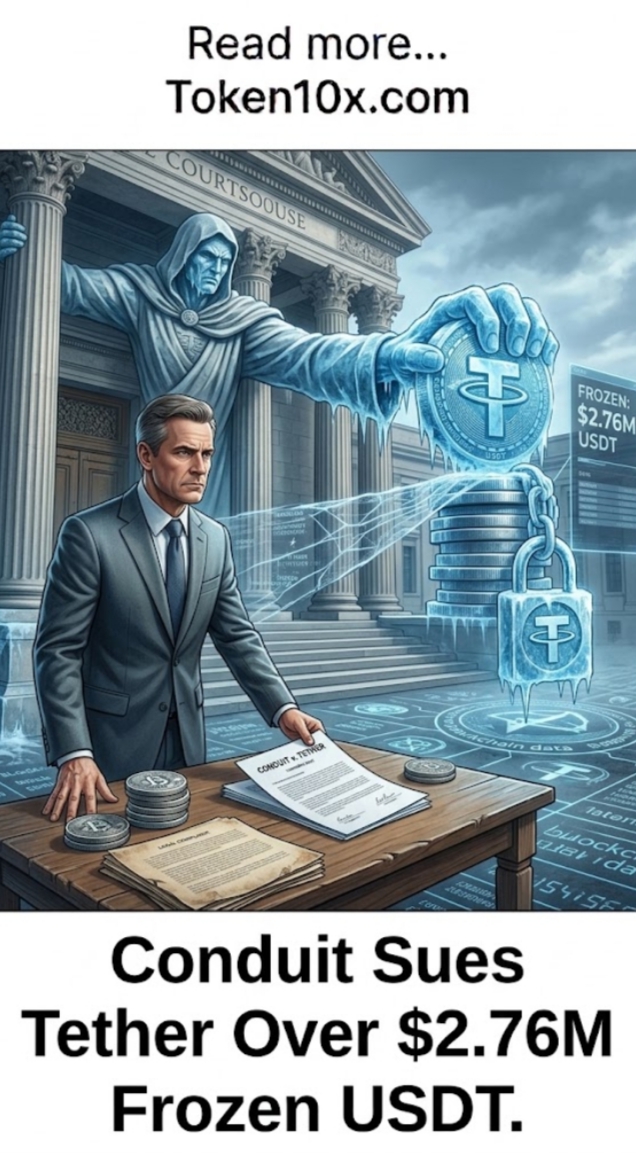
Cross-border payments firm Conduit Technology has filed a lawsuit against Tether. As of early October 2026, the complaint was lodged in the U.S. District Court for the Southern District of New York over $2.76 million in USDT frozen since September 24, 2025. Conduit alleges the issuer restricted access to its corporate treasury wallet without a court order, without naming the company in any investigation, and without providing an explanation or release. The funds are described as the company’s own working capital.
The dispute continues without resolution more than a year after the freeze. Conduit has restricted its ability to access a significant portion of operating capital. Existing terms of service for USDT allow freezes under certain conditions. Conduit relies partly on communications with Brazilian authorities while routing its claims through federal court. This highlights the difference between issuer-controlled blacklisting and judicially supervised asset freezes.
The Drivers of the Current Situation
The main issue is Tether’s unilateral freeze of Conduit’s wallet. The company states that Brazilian Federal Police investigating a former customer never identified or requested action against its treasury address. No court order directed the freeze. Conduit asserts it owes nothing to Tether and has no obligation to the issuer.
Tether has limited public response in available records. Some investigative processes involve lists of addresses sent to the issuer’s financial-crime unit, which then applies its own criteria. Conduit’s wallet processed substantial volume prior to the freeze and was not linked to the underlying investigation according to the complaint. The company repeatedly requested an unfreeze and received referrals back to Brazilian police. Only litigation remains as the path to potential recovery after an unanswered demand letter. Broader questions about the scope of issuer freeze authority persist.
A full resolution requires court determination of the freeze’s legitimacy. Limited recourse under current stablecoin terms forms a narrower path. Legal observers are actively reviewing the claims. The situation is a custody-and-control dispute tied to blacklisting practices.
Impact and Broader Context
Questions about Conduit suing Tether over $2.76 million in frozen USDT keep growing. The case creates uncertainty around the practical limits of issuer freeze powers. It also affects operational planning for businesses that hold significant stablecoin balances as working capital. Payments firms, stablecoin users, and legal analysts continue to monitor the proceedings.
The issue drives debate on stablecoin governance and user rights. It raises questions about how issuers select addresses for freezes, the limits of reliance on foreign investigative lists, risks to companies whose wallets are restricted without direct involvement, effects on confidence in USDT as operational liquidity, and competition between centralized freeze capabilities and more transparent judicial processes. Stakeholders stress that Conduit seeks both restoration of access and damages, including any profits earned on the backing reserves. The complaint says Tether has no legal entitlement to the funds and that the freeze has materially impacted the business.
The October filing forced the dispute into open court after more than a year of restricted access. The current legal review shows how judicial scrutiny will test the boundaries of issuer discretion.
New court filings, a response from Tether, or any interim orders will clarify the status of the frozen USDT and related claims.
This analysis uses the federal complaint, contemporaneous reporting, and related case details. Case outcomes and fund access remain subject to ongoing litigation and possible further developments.