

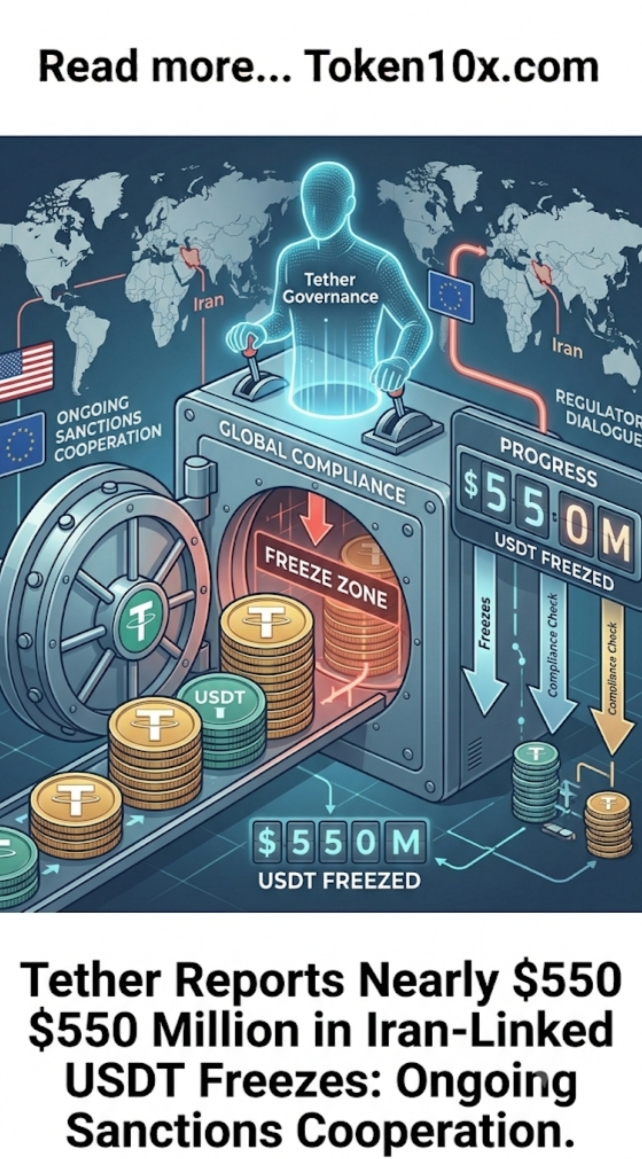
Tether continues to highlight its role in supporting U.S. and international sanctions enforcement, disclosing that actions involving its USDT stablecoin have resulted in approximately $550 million in Iran-linked assets being frozen during 2026. As of the company’s announcement on September 28, 2026, these freezes targeted wallets identified by U.S. authorities as connected to Iran’s Central Bank and related sanctions networks.
The figure still reflects major coordinated actions earlier in the year. In April, Tether supported the freezing of more than $344 million in USDT across two addresses based on information from OFAC and U.S. law enforcement; those addresses were subsequently added as digital currency identifiers for the Central Bank of Iran. In July, more than $130 million across four additional wallets was frozen as the Treasury expanded the designation. This comparison underscores Tether’s emphasis on active cooperation amid broader scrutiny of stablecoin use in sanctioned jurisdictions.
The Drivers of the Reported Freezes
The key factor remains Tether’s stated collaboration with U.S. authorities in targeting addresses linked to Iranian sanctions-evasion networks. The company reported that the April and July actions alone account for the bulk of the nearly $550 million total for 2026. CEO Paolo Ardoino reiterated that USDT “is not a haven for sanctioned actors, terrorist organizations or criminal networks,” framing the freezes as evidence of consistent compliance support.
This stacks with additional cooperation metrics cited by Tether, including assistance in more than 2,900 investigations globally and over 1,600 involving U.S. law enforcement. The company also referenced separate freezes related to cases referred by Israeli authorities. Only wallets designated or identified by official channels as Iran-linked form the basis of the $550 million figure; the freezes were executed in response to specific governmental requests rather than unilateral action. The announcement coincided with a Senate staff report examining USDT’s prevalence in sanctioned Iran-related wallets, providing Tether an opportunity to detail its enforcement record.
It is essential to distinguish: the nearly $550 million represents the value of USDT frozen in 2026 across addresses tied to Iran’s Central Bank and sanctions networks, as reported by Tether, whereas broader critiques focus on the overall volume of USDT activity observed in designated wallets prior to freezes. The disclosure is mostly a compliance update linked to ongoing U.S. efforts against Iranian financial networks rather than a comprehensive accounting of all historical freezes.
Impact and Broader Context
As Tether reports nearly $550 million in Iran-linked USDT freezes, the announcement advances the company’s public positioning on sanctions cooperation. Detailing large-scale freezes in coordination with OFAC grows visibility into the practical enforcement tools available to stablecoin issuers. Regulators, lawmakers, and market participants continue to evaluate the effectiveness and timeliness of such actions within the wider context of crypto-enabled sanctions evasion.
This sustained emphasis on freeze volumes fuels discussions on the responsibilities of major stablecoin issuers, the challenges of monitoring high-liquidity dollar-pegged tokens, the role of public-private partnerships in targeting designated wallets, and the balance between rapid compliance responses and preventing initial misuse. Tether highlights the scale of assets immobilized as proof of its commitment. Observers note that freezes, while significant, occur after funds have already moved and that prevention remains a parallel priority.
Compliance and policy analysts emphasize that large, coordinated freezes demonstrate technical capability and willingness to act on official designations. The September 28 disclosure offers insight into the magnitude of Iran-linked USDT activity that U.S. authorities have successfully targeted through Tether’s cooperation in 2026.
As further freeze actions, official confirmations, or related regulatory developments emerge, the full scope of these enforcement efforts will become clearer.
This analysis draws from Tether’s official September 28, 2026 announcement and contemporaneous reporting for precision. Freeze figures are as reported by the company and remain subject to verification by the relevant authorities.