

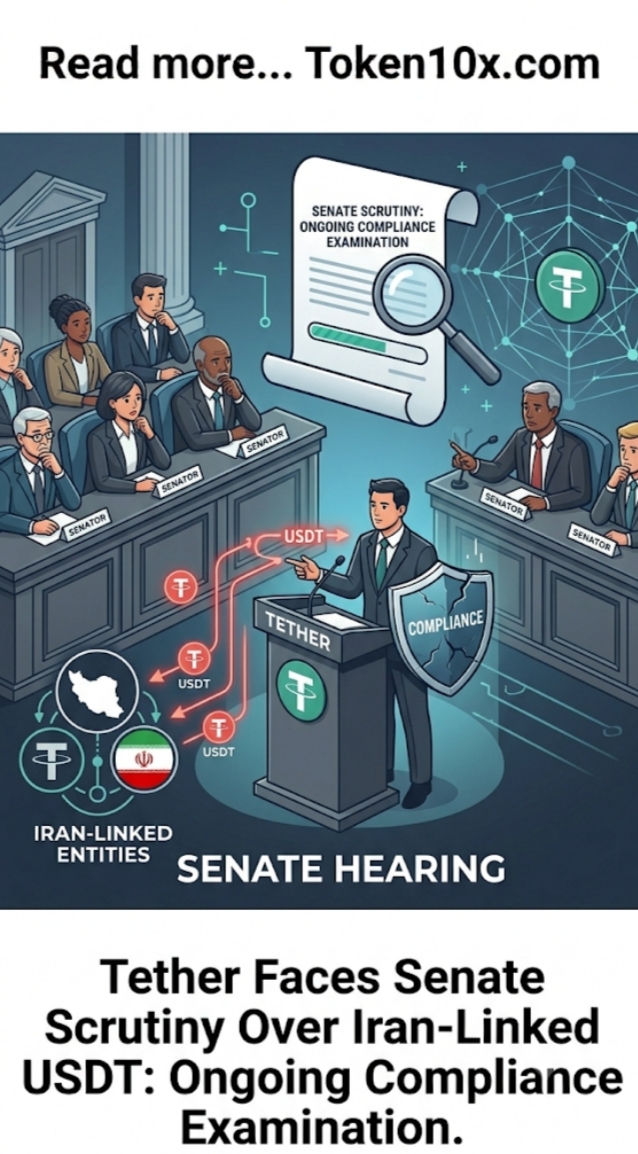
Tether continues to face heightened U.S. congressional attention following a new preliminary report examining the use of its USDT stablecoin by Iran-linked entities. As of the release on September 28, 2026, Democratic staff of the Senate Permanent Subcommittee on Investigations found that 84% of 846 sanctioned or seizure-targeted crypto wallets connected to Iran and regional groups transacted exclusively or nearly exclusively in USDT.
The report still describes USDT as a “significant financial lifeline” within Iran’s shadow banking network and calls on federal authorities to review Tether’s sanctions compliance and anti-money-laundering controls. Senator Richard Blumenthal, the ranking Democrat on the subcommittee, formally transmitted the findings to the Treasury Department and Department of Justice. This comparison underscores the tension between Tether’s stated cooperation record and lawmakers’ concerns over the stablecoin’s prevalence in designated wallets.
The Drivers of the Senate Scrutiny
The key factor remains the analysis of blockchain data covering wallets designated by U.S. and Israeli authorities between June 2021 and August 2026. Investigators reported that 87% of 757 wallets identified by the Israeli agency conducted more than 80% of their transaction value in USDT, while 57% of 101 OFAC-designated wallets linked to Iran or related organizations predominantly used the stablecoin. Bitcoin ranked a distant second in both datasets.
This stacks with the broader allegations in the preliminary report that USDT has facilitated cross-border value transfer, currency support, and financing activities tied to Iranian entities and proxies despite existing sanctions. Blumenthal has requested that Treasury and the DOJ examine Tether’s controls and report back on the status of any related inquiries. Tether responded the same day, with CEO Paolo Ardoino stating that USDT “is not a haven for sanctioned actors, terrorist organizations or criminal networks” and noting that company actions had supported nearly $550 million in Iran-linked asset freezes during 2026. Only wallets already designated or targeted for seizure form the basis of the staff analysis; the report itself is described as preliminary.
It is essential to distinguish: the Senate staff findings highlight the high concentration of USDT activity within a specific set of sanctioned Iran-linked addresses, whereas Tether emphasizes its cooperation with freezes and rejects the characterization of the stablecoin as a preferred tool for illicit networks. The scrutiny is mostly a congressional examination of compliance effectiveness linked to sanctions evasion concerns rather than a formal enforcement action at this stage.
Impact and Broader Context
As Tether faces this Senate scrutiny, the report advances ongoing debates over the role of the world’s largest stablecoin in sanctioned jurisdictions. Highlighting the dominance of USDT in the examined wallets grows pressure on issuers, regulators, and intermediaries to demonstrate robust monitoring and rapid response capabilities. Market participants, compliance teams, and policymakers continue to assess the implications for stablecoin oversight and cross-border enforcement.
This sustained congressional focus fuels discussions on the effectiveness of existing sanctions tools against crypto-enabled shadow banking, the responsibilities of stablecoin issuers in screening and freezing, the comparative use of different digital assets by designated actors, and the balance between permissionless technology and national-security priorities. Lawmakers behind the report emphasize the need for stronger accountability. Tether and industry supporters point to the volume of freezes already executed as evidence of active cooperation.
Analysts note that concentration of activity in a widely used, highly liquid dollar-pegged token is consistent with broader patterns observed in sanctions-evasion cases, while also underscoring the challenges of fully preventing misuse at global scale. The September 28 staff report and accompanying requests to Treasury and the DOJ offer insight into how U.S. lawmakers are examining the intersection of stablecoins and Iran-related financial networks.
As any formal responses from the agencies, additional data, or further congressional action emerge, the trajectory of this scrutiny will become clearer.
This analysis draws from the Senate Permanent Subcommittee on Investigations Democratic staff report, Tether’s public response, and contemporaneous coverage for precision. The findings remain preliminary and subject to further review by the relevant authorities.