

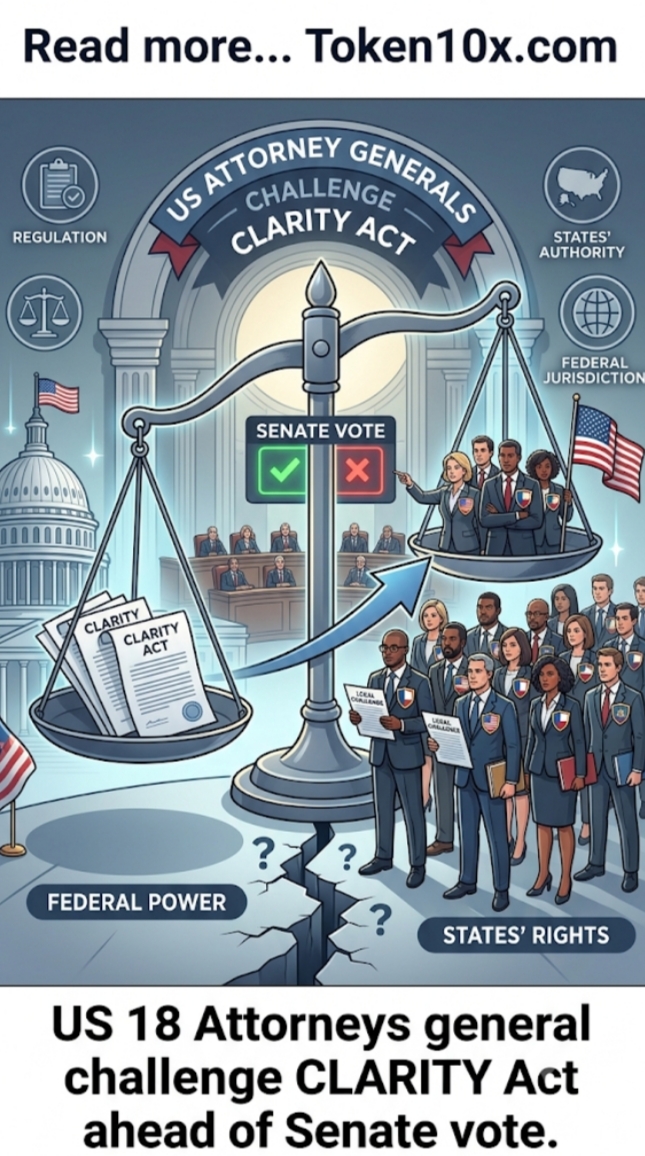
Washington — A bipartisan group of 18 state attorneys general, led by New York’s Letitia James, has urged the U.S. Senate to reject the Digital Asset Market Clarity Act in its current form, warning that the legislation could weaken states’ ability to combat cryptocurrency fraud and protect investors.
In a letter sent Monday to Senate Banking Committee Chairman Tim Scott and Ranking Member Elizabeth Warren, the coalition argued that provisions in the bill risk limiting or preempting state enforcement powers at a time when crypto-related scams are rising.
Core concerns
The attorneys general said the Clarity Act, as drafted, could restrict their authority to bring antifraud cases and enforce state securities and commodities laws against digital asset platforms and scammers. They pointed to language that may allow the Securities and Exchange Commission to override aspects of state registration regimes and create ambiguity that defendants could exploit to delay or challenge state actions.
James stated: “As written, the Clarity Act would embolden scammers and potentially strip attorneys general of our authority to protect our states’ investors and their wallets. Together with my attorney general colleagues, I urge Congress not to pass the Clarity Act.”
The group noted that states have pursued more than 330 anti-fraud enforcement actions involving digital assets since 2017. They cited FBI data showing $11.4 billion in reported cryptocurrency-related losses in 2025, a 22% increase from the prior year.
Who signed
The bipartisan coalition includes attorneys general from Arizona, California, Connecticut, Delaware, Illinois, Kansas, Maryland, Massachusetts, Michigan, Minnesota, Nevada, New Jersey, Ohio, Virginia, Washington, Wisconsin, and the District of Columbia, alongside New York.
Timing and context
The letter arrives as the Senate prepares for a key procedural vote on the Clarity Act, expected Tuesday. The bill, which would establish a clearer regulatory framework for digital assets by dividing oversight between the SEC and the Commodity Futures Trading Commission, requires 60 votes to advance.
Senate Republicans released a revised version of the legislation over the weekend that included additional ethics rules and other changes. The attorneys general said those updates did not resolve their core objections regarding state police powers and investor protection.
The coalition called on lawmakers to preserve states’ ability to serve as the first line of defense against online crypto scams or to reject the current text.